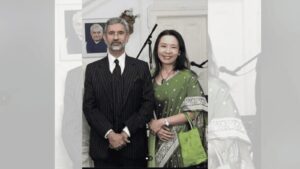
External Affairs Minister S. Jaishankar and his wife, Kyoko Somekawa Jaishankar, have been identified in the draft electoral rolls issued under the Special Intensive Revision (SIR) as being part of the notice list for discrepancies. This revelation raises concerns about the electoral process and its impact on both prominent figures and ordinary citizens alike.
Discrepancies in Electoral Rolls
Released on September 20, the Delhi draft electoral rolls have become the subject of scrutiny as they list prominent names, including that of Jaishankar and his wife, under the notice category for being “unmapped with the last SIR.” Mohammed Zubair, the co-founder of AltNews, shared this information on X, pointing out that even well-connected individuals like Jaishankar encounter issues with electoral documentation.
It is noteworthy that Jaishankar was serving as India’s Ambassador to the Czech Republic during the previous SIR in 2002. Zubair highlighted this to question the efficacy of the electoral mapping process: “If prominent and well-connected citizens like S. Jaishankar face such discrepancies, imagine the ordeal confronting crores of ordinary Indians,” he stated.
Response from Delhi CEO Office
The Delhi Chief Electoral Officer (CEO) has clarified the situation, asserting that the Electoral Commission of India (ECI) requires all names of prominent voters—spanning various fields including judiciary, arts, sports, and public services—to be included in the electoral database. This inclusion allows for better documentation during the claims and objections phase.
In addition to Jaishankar, other notable figures such as former Deputy Prime Minister L.K. Advani and former Delhi Deputy Chief Minister Manish Sisodia are also on the notice list. Advani, along with his family members, received notices due to similar mapping issues with the 2002 SIR electoral roll, while Sisodia and his family face the same predicament.
Expedited Validation and Electoral Process
Despite these discrepancies, the verification process seems to be efficient in some cases. The Delhi Chief Minister’s name was validated quickly, and she is set to be included in the final voter list for the Shalimar Bagh constituency, which will be published on November 4. This showcases a commitment to ensuring that eligible voters are accounted for, even amid the challenges presented by the electoral roll mappings.
On the other hand, the presence of such issues for well-known figures raises questions about the broader electoral system and its capacity to handle potential errors for ordinary voters who may lack resources or support to rectify discrepancies.
Why This Matters
The issues highlighted in the current electoral roll situation are emblematic of larger concerns regarding electoral integrity and accessibility in India. As the democratic foundation relies heavily on the accuracy of voting lists, discrepancies for high-profile individuals serve as a concerning indicator of what ordinary citizens might face.
Moreover, this situation reflects on the electoral processes and their implications for political representation. If prominent leaders encounter challenges, it raises the stakes for the engagement and participation of the broader electorate, especially marginalized sections of society who rely on governmental systems being transparent and fair.
Frequently Asked Questions
What is the Special Intensive Revision (SIR)?
The Special Intensive Revision (SIR) is an exercise conducted by the Election Commission of India to update electoral rolls, ensuring that all eligible voters are accurately recorded and discrepancies are minimized.
Who else is affected by the discrepancies in the electoral rolls?
In addition to S. Jaishankar, former Deputy Prime Minister L.K. Advani and former Deputy Chief Minister Manish Sisodia are among others to receive notices regarding discrepancies in their electoral documentation.
What steps can individuals take if they find discrepancies in their electoral details?
Individuals can file claims and objections during the designated phase as announced by the electoral authorities, where necessary documentation can be submitted for corrections and validations.
How does this impact the upcoming electoral process?
The discrepancies may lead to complications in the electoral process, influencing voter confidence and participation rates, especially if the issues are not resolved swiftly.