
Indian American Muslims Showcase Heritage Amid Discrimination Concerns
Indian American Muslims made a bold statement by participating in New York City’s India Day Parade, emphasizing their integral role in India’s cultural mosaic. This vibrant showing, however, unfolds against a backdrop of rising discrimination and marginalization faced by Muslims in India under the Bharatiya Janata Party (BJP) and affiliated organizations.
Celebrating Cultural Heritage While Facing Exclusion
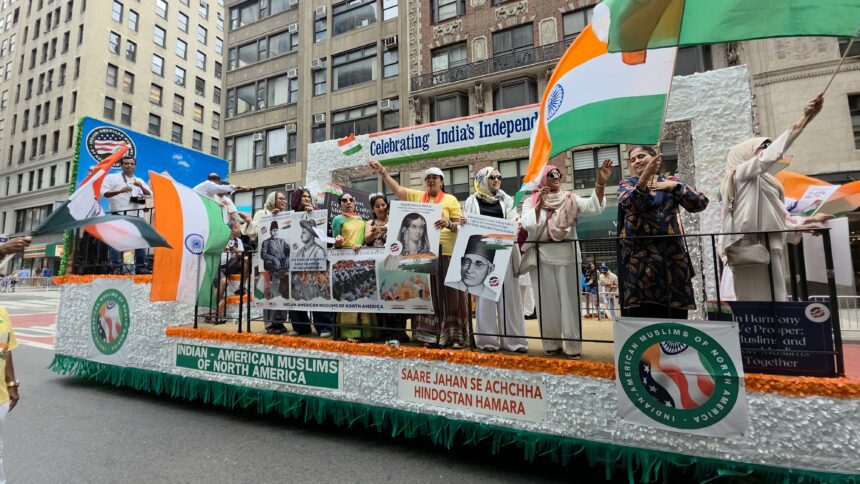
Members and supporters of the Indian American Muslims of North America (IAMNA) joined thousands in a display of unity, culture, and heritage. Clad in traditional attire and waving tricolor flags, participants highlighted voices from India’s history, including freedom fighters and scholars who contributed significantly to the independence movement.
Yet, the festival also reflects a stark reality. Under the current BJP regime, incidents of social exclusion and discrimination against Muslims have increased. Studies show a trend of economic boycotts targeting Muslim businesses, echoing a wider climate of intolerance. The IAMNA’s presence at the parade serves not just as a celebration of heritage, but also as a poignant reminder of the challenges arising from growing religious nationalism in India.
A Message of Inclusion and Patriotism
The IAMNA float carried a powerful message with the declaration, “Muslims Are an Integral Part of India.” This statement comes at a time when the narratives surrounding Indian identity are becoming increasingly polarized. The float’s theme, “Celebrating Our Past, Building Our Tomorrow,” signifies IAMNA’s dedication to honoring Indian Muslims’ contributions while fostering connections to their cultural roots.
Participants proudly displayed portraits of influential figures such as Maulana Abul Kalam Azad and A.P.J. Abdul Kalam, reinforcing their historical significance. The display of unity and the chant “Saare Jahan Se Achha Hindustan Hamara” highlighted the participants’ love for India, transcending religious divides even as such inclusivity is challenged in today’s political landscape.
The Role of Community Leaders and Future Aspirations
Leading the parade was IAMNA founder Ilayas Quraishi, who emphasized the need for greater visibility of Indian Muslims in America. Quraishi noted, “It was an honor to represent Indian American Muslims and celebrate our heritage,” signaling an affirmation of pride in their dual identities. This highlights the commitment to not just progress but also to combatting perceived marginalization.
The focus on family involvement and youth participation underscores a crucial aspect of IAMNA’s mission: to bridge the cultural heritage of Indian Muslims with younger generations in the U.S. The organizers aim to instill a sense of belonging while emphasizing the importance of acknowledging their unique narrative in both the Indian and American context.
Why It Matters
The challenges faced by Indian Muslims resonate beyond cultural celebrations, impacting socio-economic dynamics in India and the broader diaspora. As communities grapple with marginalization, this narrative shapes public sentiment and policy. For developers and stakeholders in social justice, understanding these issues is vital for creating platforms and tools that support inclusivity and cultural appreciation. The resilience shown by communities like IAMNA can inspire solutions aimed at achieving social harmony while addressing discrimination and isolation.
Frequently Asked Questions
What is the significance of IAMNA’s participation in the India Day Parade?
IAMNA’s participation highlights the cultural contributions of Indian Muslims and aims to counteract narratives that exclude them from the Indian identity, especially in the current political context marked by rising discrimination.
How have Indian Muslims faced discrimination in recent years?
Reports indicate an increase in economic boycotts and targeted violence against the Muslim community in India, exacerbated by policies from the current BJP government that promote a majoritarian agenda.
What does the theme “Unity in Diversity” mean in this context?
This theme signifies the celebration of India’s pluralistic heritage, advocating for understanding and acceptance across different communities, especially in response to the challenges of rising intolerance.
Why is the involvement of younger generations crucial for IAMNA?
Involving younger generations ensures the continuation of cultural knowledge and identity while fostering a dual sense of belonging to both Indian heritage and American society, crucial for their future engagement in social dialogues.