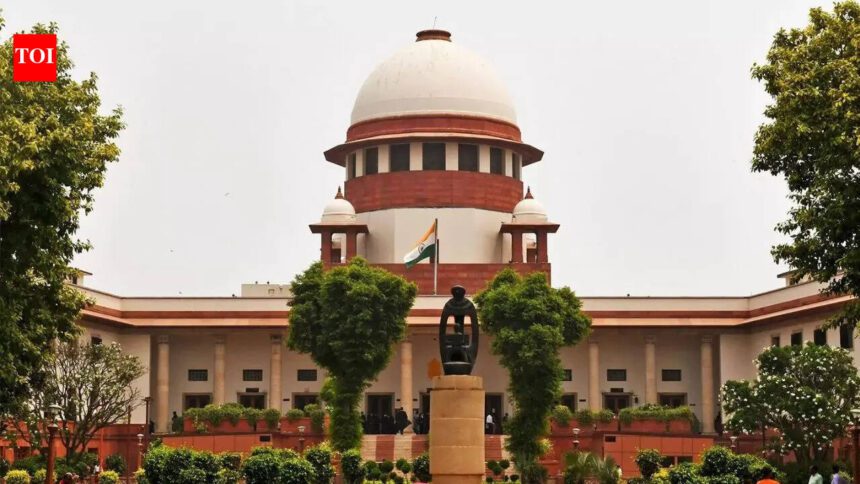

MUMBAI/NEW DELHI: In a groundbreaking ruling impacting motorists, hospitals, and emergency responders, the Supreme Court has recognized access to trauma care as a fundamental component of the Right to Life under Article 21 of the Constitution. The decision, made in the case of SaveLIFE Foundation & Anr. vs Union of India & Ors on May 26, aims to overhaul India’s fragmented emergency care system within a specified timeframe.
The ruling could significantly alter the treatment of accident and trauma victims across the country, spanning the entire spectrum of trauma, including falls, burns, drownings, industrial accidents, fires, explosions, and disaster-related injuries. Importantly, the court’s directives are binding on all 36 states and Union Territories.
India records nearly 467,000 accidental deaths annually, with road crashes alone accounting for approximately 177,000 of these fatalities, according to data from the National Crime Records Bureau (NCRB). Long-standing evidence suggests that many of these deaths are preventable. The Law Commission’s 201st report estimated that nearly half of road crash fatalities could be avoided through timely medical intervention, while the NITI Aayog-AIIMS Emergency and Injury Care Report of 2021 highlighted that delays in emergency treatment contribute to at least 30% of trauma-related deaths.
Despite this severe burden, the country lacked a unified and enforceable trauma-care system. Responses from 34 states and Union Territories revealed a disjointed system characterized by various emergency numbers, inconsistent ambulance standards, inadequate trauma registries, and uneven implementation of existing central schemes. This systemic deficiency led the SaveLIFE Foundation to approach the apex court in October 2024, seeking constitutional recognition of trauma care and stricter enforcement of current emergency frameworks.
The bench, comprising Justices J.K. Maheshwari and Atul S. Chandurkar, refrained from creating an entirely new statutory framework but issued extensive directives designed to convert policy guidelines into enforceable obligations. A notable change for citizens will be the consolidation of multiple emergency helplines into a single national number, 112, within three months. This integration will combine existing numbers such as 100, 101, 102, 108, 1033, and 1091, alongside mass media awareness campaigns.
Furthermore, the court has mandated states to establish both physical and digital grievance redressal frameworks for Good Samaritans—bystanders who assist trauma victims at accident scenes. While Section 134A of the Motor Vehicles Act and Good Samaritan Rules offer legal protection, many bystanders still fear repercussions.
The ruling also emphasizes the need for ambulance reforms. All registered ambulances, both public and private, must comply with the National Ambulance Code, implement GPS tracking systems, and connect with the helpline 112. States are directed to conduct structured audits of response times, equipment quality, and patient outcomes.
Additionally, the court has addressed a long-standing shortage of trained emergency personnel, directing states to adopt a standardized Emergency Medical Technician curriculum as notified by the National Commission for Allied and Healthcare Professions within three months.
Another significant reform outlined in the ruling is the establishment of state trauma registries linked to a national registry. Health experts have consistently argued that India’s inability to systematically record trauma cases has inhibited effective policy planning and resource allocation. The court also instructed states to classify and designate public and private hospitals based on their trauma-care capacities, extending this classification beyond National Highways to include state highways and urban areas—an essential provision for cities such as Mumbai, where serious trauma cases often occur outside highway corridors.
Moreover, the court has called for the operationalization of the PM RAHAT scheme, which provides cashless treatment for road-accident victims. States have been given eight weeks to finalize hospital designations and related digital systems, with non-compliance constituting a violation of the Motor Vehicles Act.
The Supreme Court will maintain oversight of this matter, with copies of the order to be sent to chief secretaries of all states and UTs. They are required to submit action-taken reports within specified timelines, with the court scheduled to reassess the situation in four months.
Piyush Tewari, founder of SaveLIFE Foundation, hailed the verdict as a pivotal moment for public health and constitutional rights, asserting that it ensures timely emergency care for all citizens suffering traumatic injuries. For India—where trauma poses a significant public health crisis and survival often hinges on various factors—the judgment represents a shift from policy goals to constitutional guarantees.