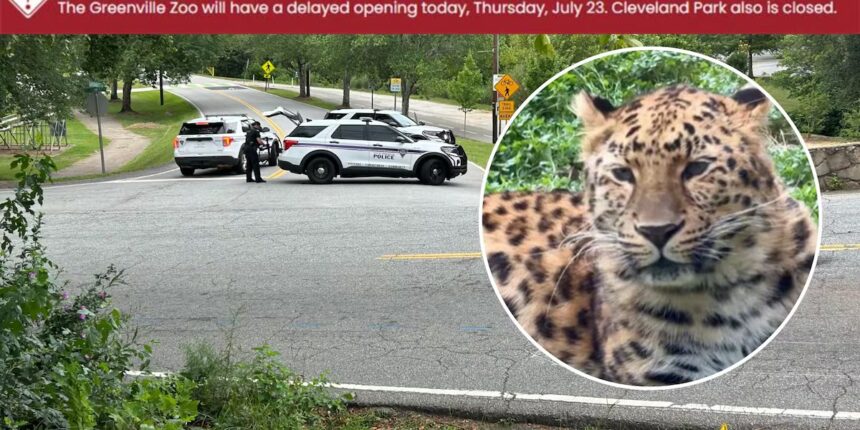

In a surprising incident at the Greenville Zoo, a four-year-old Amur leopard named Irina escaped her enclosure, prompting immediate evacuation protocols for staff and guests. The situation was swiftly contained, with Irina successfully tranquilized and returned to safety.
The Incident and Response
On Thursday morning at approximately 8:42 a.m., Irina the leopard managed to leave her exhibit, causing a stir among zoo-goers. City officials acted swiftly, evacuating both guests and staff to ensure safety. With the help of Greenville police, a perimeter was set up around the zoo and the adjacent Cleveland Park area to monitor the situation.
Emergency response teams from the Greenville Zoo were on-site shortly after the evacuation. At around 9:20 a.m., officials reported that they successfully tranquilized Irina, administering a precautionary second injection before taking her back to the secure leopard den. Fortunately, no injuries were reported, and the zoo’s male leopard and two cubs remained safe within their exhibit.
Understanding Amur Leopards
Amur leopards are critically endangered, with an estimated population of fewer than 150 left in the wild. Their decline is largely due to habitat loss, poaching, and prey depletion. The significance of Irina’s escape goes beyond a momentary panic; it highlights the challenges zoo authorities face in ensuring the safety of both animals and visitors in an increasingly complex environment. Irina arrived at the Greenville Zoo from St. Louis in October 2024 when she was just two years old and is currently expecting her first litter of cubs.
As one of the rarest big cats in the world, Amur leopards are under constant surveillance by wildlife conservationists. Their presence in zoos like Greenville provides essential support for conservation efforts, helping to educate the public while ensuring the survival of the species.
The Zoo’s Future and Safety Measures
The Greenville Zoo will remain closed as officials conduct a thorough investigation into the circumstances that led to Irina’s escape. Authorities are expected to review safety protocols and enclosure designs to prevent similar incidents in the future. This incident raises pertinent questions about animal management and visitor safety, particularly in facilities housing endangered species. Maintaining secure habitats is critical for both the well-being of the animals and the peace of mind of visitors.
Officials have assured the public that they are committed to ensuring that both the animals and the community are safe. Discussions about enhancing enclosure security and protocols for emergency situations are likely to follow. The zoo’s commitment to animal care and public safety will be tested as they navigate the implications of this recent event.
Why This Is Trending
This incident has sparked considerable interest in India, a country where wildlife and conservation are hot topics. Following high-profile cases of animal rescues, escapes, and the ongoing campaign for wildlife protection, people are keenly interested in how zoos and conservation efforts are managed. The plight of critically endangered species such as the Amur leopard resonates deeply with Indian audiences, many of whom advocate for wildlife preservation. Furthermore, the dramatic narrative of an animal escape fuels people’s intrigue about the dynamics between wild animals and human intervention.
Frequently Asked Questions
What is the status of Irina after the escape?
Irina has been successfully tranquilized and returned to her secure leopard den. No injuries were reported during the incident.
Why are Amur leopards endangered?
Amur leopards are critically endangered due to habitat loss, poaching, and depletion of prey, with fewer than 150 individuals remaining in the wild.
What precautions does the zoo take for animal escapes?
The Greenville Zoo is reviewing its safety protocols and enclosure designs to prevent future incidents and ensure the safety of both animals and visitors.
Why is this incident significant for animal conservation?
This incident sheds light on the ongoing challenges faced in wildlife conservation, particularly in maintaining secure habitats for critically endangered species like the Amur leopard.