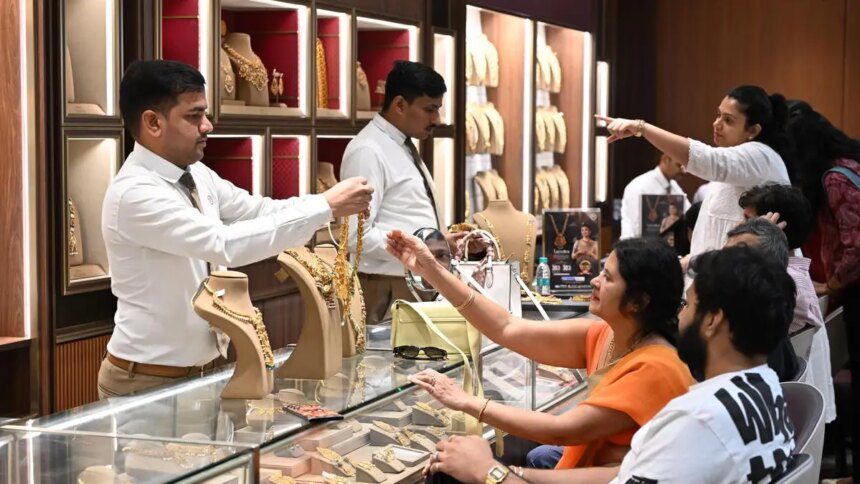

India’s jewellery consumers are shifting from impulse purchasing to a more deliberate approach. In a landscape where digital browsing prevails, buyers are exploring various options before committing to a purchase, leading to increased online traffic but decreased conversion rates.
According to Gaurav Singh Kushwaha, Founder and CEO of Bluestone, traditional offline visits to jewellery stores are not yielding sales as they once did. “You cannot walk into a jewellery store 10 times a month and not buy anything. Online browsing is now prevalent, particularly among women, who are engaging in research significantly more—10 to 30 times more than actual purchases,” he stated.
This trend is confirmed throughout the industry. Suvankar Sen, MD and CEO of Senco Gold and Diamonds, emphasized that today’s consumers are more research-oriented: “Customers are comparing designs, tracking prices, and planning purchases with more consideration. Intent remains strong, but the purchasing journey has become increasingly focused on research.”
The volatility of gold prices significantly influences this behaviour. As prices fluctuate, many consumers opt to delay purchases or wait for potential corrections. “Consumers have a strong emotional connection to gold, but significant price fluctuations compel them to wait or buy closer to special occasions,” Sen explained.
This shift has extended the purchasing cycle. While foot traffic and digital engagement are robust, the conversion rates—especially online—have slowed. Buyers are increasingly blending online and offline experiences, often researching online before finalizing their purchases in-store, where tactile experiences and trust play a crucial role.
Executives at Tanishq view this increase in browsing as a positive development. CEO Arun Narayan remarked that online platforms are fundamental for engaging customers, even if purchases ultimately occur elsewhere. “Traffic to our website continues to grow, demonstrating strong consumer interest,” he said.
Furthermore, the nature of purchases is evolving. There is a notable lean towards lighter, lower-ticket jewellery items, such as 9K and 14K pieces for daily wear, as well as coins and smaller investments. Although consumers remain active in the gold market, they are doing so with tighter budgets and more defined intentions.
Traditionally significant triggers such as weddings and festive seasons now reflect more strategic purchasing behaviour, with buyers postponing decisions until closer to events for better timing on their purchases.
For jewellers, this evolving consumer profile necessitates adapting strategies to cater to a well-informed, patient, and increasingly digital-savvy clientele. The challenge lies not only in stimulating demand but also in converting informed browsers into buyers, often at the last possible moment.
Published on May 3, 2026.