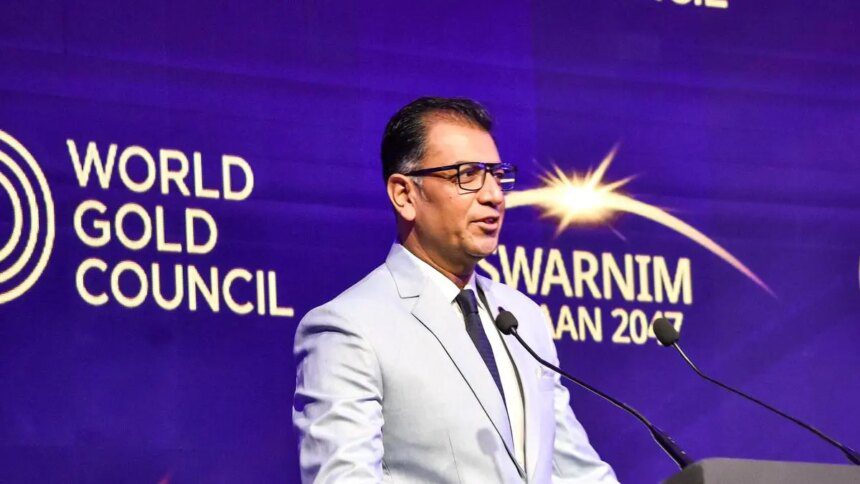

The demand for gold in India shows resilience despite rising prices, with consumer spending nearing ₹2 lakh crore in recent months. The World Gold Council’s report outlines strategic initiatives to position gold as a key driver of India’s economic growth by 2047.
Understanding the ‘Swarna Bharat 2047’ Initiative
The ‘Swarna Bharat 2047’ report serves as a comprehensive framework aimed at integrating gold into the broader vision for a developed India by 2047. As the country targets a $25-trillion economy, the report argues for a paradigm shift in how gold is perceived—from merely an import commodity to a vital component supporting sectors like manufacturing, exports, and financial services. The report is a collaborative effort, compiled after consultations with important stakeholders, including the Prime Minister’s Office and various ministries.
Key Pillars of Gold’s Economic Strategy
The report identifies several key pillars essential for strengthening India’s gold industry:
- Domestic Gold Mining: The report suggests that India could potentially meet 10-20% of its gold demand through domestic mining, which would create both investment and jobs.
- Boosting Exports: Currently, India imports 700-800 tonnes of gold but exports only around 100 tonnes of value-added jewelry. The goal is to raise exports to 300-400 tonnes over the next decade through enhanced manufacturing capabilities.
- Financialising Household Gold: India’s households hold immense quantities of gold, primarily in an informal context. Unlocking this wealth by formalizing it can inject substantial capital into the economy.
- Targeting Younger Consumers: With a median age of 28, the gold industry must innovate to capture the younger demographic through new product lines and digital retail experiences.
- Innovating in Technology: India’s gold demand is increasingly impacted by sectors like semiconductors and aerospace, indicating potential for new applications and markets.
Proposed Institutional Changes
The report argues for the establishment of a Gold Board of India to centralize policy under a single umbrella. Currently, gold-related policies are dispersed across various ministries, leading to inefficiencies. With a structure akin to the Tea Board, this new entity could streamline decision-making with input from both the government and the gold industry. To foster better governance, input from institutions like the RBI will also be crucial.
What This Means
The strategies outlined in the report could significantly alter India’s gold landscape, enhancing both domestic production and international competitiveness. On the ground, increased domestic mining and export capabilities could lead to job creation, fostering a more sustainable economy. Additionally, the financialisation of gold could offer a new avenue for investment, allowing households to leverage their gold assets for liquidity. This shift aligns with India’s larger economic goals, potentially transforming gold from a passive asset into a catalyst for economic growth.
Frequently Asked Questions
What is the current demand for gold in India?
Despite a recent 6% decrease year-on-year in gold demand, consumer spending surged by 50% to ₹1.98 lakh crore in the recent June quarter, highlighting resilience in consumer behavior.
Why is domestic gold mining important?
Domestic gold mining has the potential to supply 10-20% of India’s gold demand, creating jobs and reducing reliance on imports, which currently account for most of the country’s gold consumption.
What role could a Gold Board play?
A Gold Board of India would centralize gold-related policies, improving efficiency and enabling coordinated efforts to develop the gold sector by bringing together governmental and industry stakeholders.
How can households benefit from financialising their gold?
Financialising household gold allows families to unlock capital potentially worth trillions of rupees, making it easier to access liquidity and invest in various sectors of the economy.