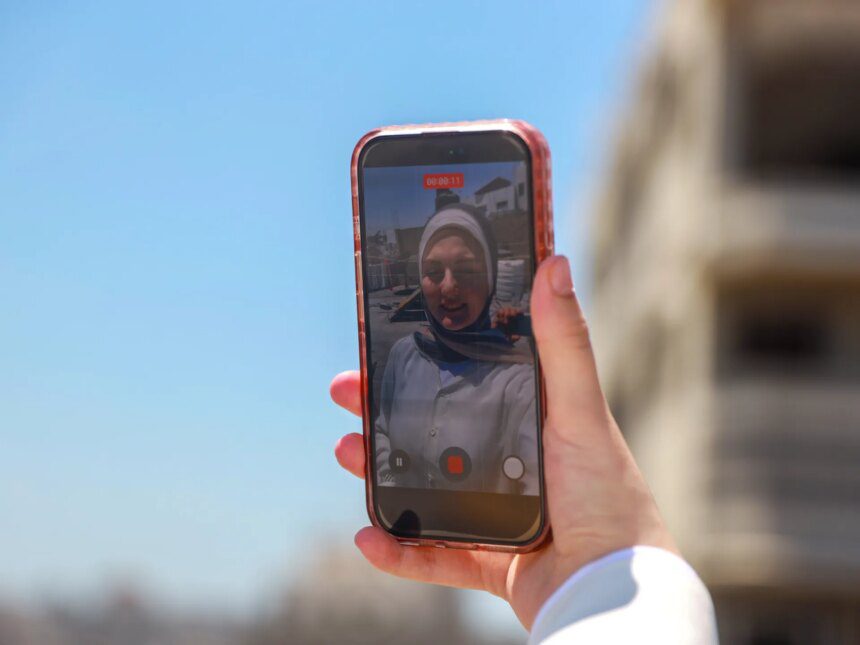

The journey of fifteen-year-old Eman Lulu from a sheltered life in Gaza to becoming a social media voice amid turmoil highlights the stark contrasts of a young girl’s aspirations against the backdrop of war. Her story underscores the impact of technology in conflict zones, showcasing how a personal device transformed into a lifeline and a platform for resilience.
A Struggle for Independence and Connectivity
In Eman’s world, the rules surrounding technology were strict. Growing up in Gaza, her parents imposed a firm guideline: no personal phone until she turned 18 and finished secondary school. Despite arguments and her stubborn nature, Eman respected these boundaries, believing they stemmed from her parents’ desire to protect her.
This reality is not unique to Eman. In Gaza, the decision to grant children smartphones is often influenced more by parental approval than wealth. Many teens under 16 rely on their parents’ devices, with only a few possessing their phones. Eman’s long wait was shaped by the routines of life before conflict erupted.
The Transformative Power of Technology in Crisis
When the Israeli bombardment began, Eman’s long-awaited phone quickly transformed from a coveted device into a critical tool for survival and expression. Armed with her mother’s old iPhone 11 Pro Max, she documented her family’s harrowing escape from their home, capturing moments no one else could see as communications blackouts and chaos engulfed Gaza.
For Eman, the phone morphed into more than a communication tool; it became a video camera, a notebook, and a bridge to the world outside. As her family faced destruction, the device enabled her to share their experiences with a global audience, turning private struggles into public testimonies.
The Impact of Social Media on War Narratives
As Eman began sharing videos, she found herself at the center of a new narrative. Initially, her content attracted minimal attention, simple records of daily life against a backdrop of destruction. However, with international media barred from Gaza, her videos provided a rare glimpse into the reality of war, captivating millions and leading to a transformation in her follower count—from thousands to millions within weeks.
A pivotal moment came when she filmed her family navigating Gaza on a donkey cart, a necessity due to the destruction around them. This relatable and authentic portrayal resonated widely, earning her a platform that grew exponentially, ultimately reaching five million followers. This shift revealed not only the power of social media in storytelling but also the human determination to communicate life amid adversity.
What This Means
For Indian readers, Eman’s story illustrates the intersection of youth, digital communication, and crises. In a world where technology bridges gaps, her experience highlights the potential for ordinary individuals to share their stories and realities, enabling awareness and fostering empathy across borders. As India navigates its own challenges related to youth engagement with technology, Eman’s journey serves as a reminder of the importance of safeguarding freedom of expression while being mindful of the consequences technology can have during conflict.
Frequently Asked Questions
1. What age do children typically get smartphones in Gaza?
In Gaza, many children under 16 do not possess personal smartphones, with ownership often depending on parental approval. This can lead to scenarios where devices are shared among family members.
2. How did Eman Lulu’s social media presence develop during the conflict?
Eman’s presence grew significantly as she shared her experiences during the Israeli bombardment, producing videos that documented her family’s challenges and reaching a global audience seeking insight into life in Gaza.
3. What is the significance of Eman’s videos during the conflict?
Eman’s videos became vital sources of information and connection, offering firsthand accounts of the war in Gaza, especially as international media were restricted from covering the events directly.
4. How does Eman’s story reflect broader themes in conflict zones?
Eman’s journey underscores the role of technology in conflict, showcasing how social media can empower individuals to communicate their experiences and shape narratives in the absence of traditional media coverage.