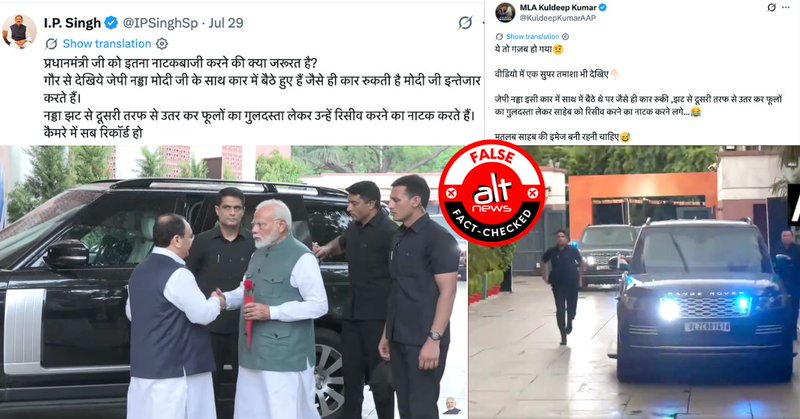

A video of Prime Minister Narendra Modi arriving at an event in a black Range Rover is circulating on social media, accompanied by claims that BJP President J P Nadda exited the vehicle to welcome Modi with flowers. However, these claims have been debunked, with evidence confirming that the man seen with Modi is not Nadda. This misinformation highlights the challenges of verifying political narratives in the digital age.
Social Media Claims and Fact-Checking
The viral video, initially reported with an ANI logo, shows a black Range Rover stopping at an event, and a man is seen stepping out to greet Modi with flowers. Many users on platforms like Twitter and Facebook quickly assumed the identity of this individual as J P Nadda based on the context of the footage. However, following rigorous fact-checking efforts, organizations like Alt News have clarified the video’s authenticity, revealing that the person in question is not Nadda.
The Role of Misinformation in Politics
This incident underscores the role of misinformation in shaping public perception. In politically charged environments, videos and images can be manipulated or misinterpreted to fit narratives that may not reflect reality. Such instances are particularly insidious as they harness pre-existing biases among the audience, potentially affecting their opinions and responses toward key political figures.
Responsibility of Political Commentary
Political commentators and analysts play a crucial role in dissecting these narratives. Figures like @zoo_bear often provide insight into the implications of such misinformation. Their analyses can help clarify the narrative, but as in this case, it is vital for them to rely on substantiated facts to dispel falsehoods. The responsibility extends beyond the commentators to the media outlets and platforms hosting this content, emphasizing the need for robust fact-checking mechanisms.
Why This Matters
For Indian readers, this incident is significant due to the pervasive influence of social media on political discourse. As seen in previous elections and political events, misinformation can sway public opinion and impact electoral outcomes. The rapid spread of false claims requires not only vigilance from readers but also accountability from platforms and media sources. Ensuring accurate representations of political events is vital for maintaining a well-informed citizenry capable of engaging in meaningful discourse.
Frequently Asked Questions
What did the viral video claim?
The video claimed that J P Nadda exited Prime Minister Modi’s car to welcome him with flowers, suggesting a staged photo opportunity.
Is the claim about J P Nadda true?
No, fact-checking by organizations like Alt News has established that the man in the video is not J P Nadda, thus debunking the viral claim.
Why is misinformation harmful in politics?
Misinformation can distort public perception and influence opinions, which can lead to misguided discussions and decisions among the electorate, ultimately affecting democratic processes.
How can one verify information found on social media?
It is essential to consult trusted fact-checking organizations, cross-reference with credible news sources, and look for verification from multiple outlets to confirm the authenticity of information found online.