
Doctors addressing the Ebola outbreak in the Democratic Republic of Congo (DRC) are encountering significant challenges as violent incidents at healthcare facilities and the flight of patients hinder response efforts in the northeastern part of the country, according to a report by Reuters.
At least three such incidents have occurred in Ituri province, where the first cases of Ebola were identified. Over the recent weekend, two attacks targeted the Mongbwalu General Referral Hospital, resulting in the escape of more than two dozen patients. Dr. Richard Lokodu, medical director of the hospital, expressed concerns to Reuters regarding widespread mistrust and denial within the community about the disease. “There is denial of the disease within the population, with some members wanting to claim the bodies of suspected and/or confirmed cases,” he stated.
On Saturday, 18 Ebola patients fled following an incident where unidentified individuals set fire to tents erected by Médecins Sans Frontières for patient isolation. Subsequent tests revealed that one of the fleeing patients was confirmed to have Ebola. Dr. Lokodu remarked, “So we have one confirmed case of Ebola that continues to circulate in the community and evade the response.”
The situation escalated further on Sunday with four additional waves of attacks allegedly led by youths associated with the relatives of a Christian religious leader who succumbed to Ebola. Seven more patients escaped during this unrest; notably, a seriously ill suspected Ebola patient, who was experiencing hemorrhaging, died while attempting to flee during one of the assaults.
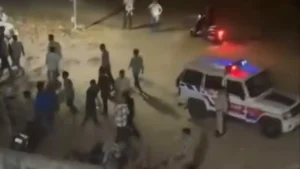
Local media, including BBC reports, indicated that police in eastern Congo fired warning shots to disperse angry crowds trying to reclaim the bodies of relatives who had died at an Ebola treatment center in Mongbwalu. These recent developments echo the violence seen during the 2018-2020 Ebola outbreak in eastern Congo, which resulted in the deaths of over 25 healthcare workers in similar attacks on treatment centers.
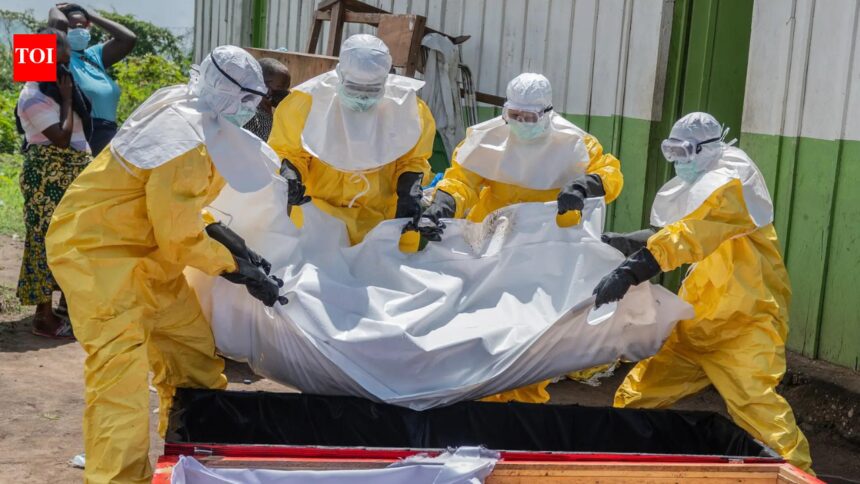
In addition to the violence, healthcare providers are facing shortages of essential supplies as the virus spreads rapidly in the region. Dr. Lokodu highlighted that attackers were demanding the release of Ebola victims’ bodies for burial, cautioning that unsafe burial practices—where family members handle bodies without protective equipment—are a significant factor in Ebola transmission.
Earlier this week, unrest also erupted in Rwampara, approximately 85 km southeast of Mongbwalu, where crowds set fire to isolation tents after being denied the opportunity to take the body of a suspected Ebola victim for burial.
The World Health Organization (WHO) has classified the ongoing outbreak as the third-largest recorded instance of the Bundibugyo strain and declared it a public health emergency of international concern. WHO Director-General Tedros Adhanom Ghebreyesus indicated that to date, over 900 suspected cases have been logged, which includes 101 confirmed infections and at least 220 suspected fatalities.
In related developments, Uganda, a neighboring country, reported two additional Ebola cases earlier on Monday, raising its total number of confirmed infections to seven.