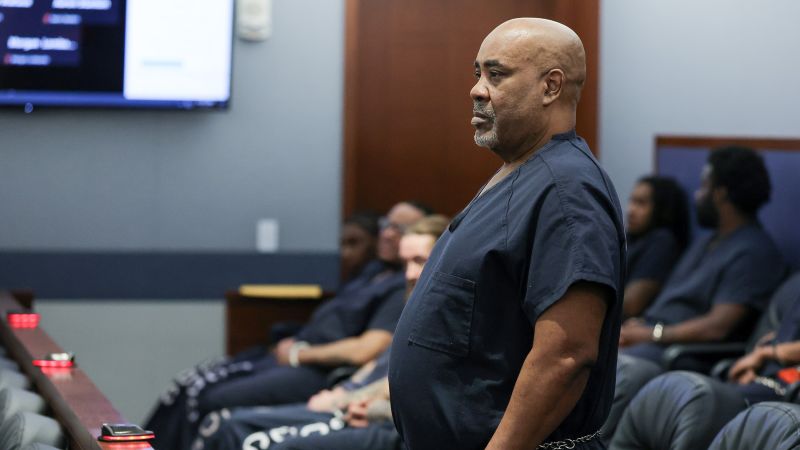

Duane “Keffe D” Davis faces trial for the 1996 murder of hip-hop legend Tupac Shakur, a case that remains a significant topic in the public eye decades later. Davis’s own admissions, including those in his book, are central to the prosecution’s case, setting up a courtroom battle over credibility as he pleads not guilty.
The Murder Case Revisited
Duane Davis, who has been implicated as a key figure in the murder of Tupac Shakur, wrote a tell-all book titled “Compton Street Legend” in 2019. In this book, Davis recounted the events of September 7, 1996, when he, along with accomplices, confronted Tupac and Death Row Records CEO Marion “Suge” Knight. He describes obtaining a gun and setting out in a Cadillac to avenge an earlier altercation with his nephew Orlando Anderson, who was assaulted by Tupac and Knight.
As he describes this night, Davis wrote, “No words exchanged, the time for talking had passed, the sh*t was about to go down!” This chilling narrative is now a pivotal piece of evidence against him as he prepares for trial.
Building the Prosecution’s Case
The prosecution’s strategy heavily relies on Davis’s own words from his book, various podcasts, and interviews. Notably, they lack a murder weapon, getaway vehicle, or surveillance footage of the shooting. The jury will focus on Davis’s statements, which the prosecution argues are credible. In a recent filing, they stated, “almost all of the evidence the state will seek to introduce will be to establish the credibility of Defendant’s various accounts.”
Meanwhile, 63-year-old Davis has changed his narrative, claiming his previous statements were exaggerated for commercial gain and blaming his co-author for inaccuracies. This results in a complex dynamic where the prosecution labels him as a credible witness while the defense undermines that very credibility.
The Role of Public Perception
Public fascination with the Tupac case lies not just in the sensational nature of the murder but also the ongoing mystery surrounding it. The trial’s outcome could finally bring some closure to one of America’s most notorious unsolved murders. Legal experts note that fading memories of witnesses and Davis’s own inconsistent accounts will pose challenges for the prosecution. Yet, the detailed accounts in Davis’s book may solidify the case against him.
Trial observers note the unusual situation where the defendant is also a key witness in his own prosecution. CNN legal analyst Laura Coates remarked, “It’s quite the reversal. You rarely see something like that.”
Why This Is Trending
The renewed focus on Tupac’s murder case in India can be attributed to several factors. First, the influence of hip-hop culture globally has brought awareness to Tupac’s legacy. His impact on music and social issues resonates with Indian youth, making the case particularly relevant. Additionally, the intrigue surrounding unsolved mysteries captivates audiences. Datelines, podcasts, and documentaries have spawned renewed interest in the events leading to Tupac’s tragic death, prompting discussions on social media and news platforms.
Frequently Asked Questions
What is the current status of Duane Davis’s trial?
The trial is set to begin with jury selection, lasting approximately one month. Davis faces serious charges, potentially resulting in life imprisonment if convicted.
What evidence will the prosecution present against Davis?
The prosecution plans to use Davis’s own statements from his book and media interviews as key pieces of evidence, as they do not possess a murder weapon or surveillance video.
How has Davis responded to the charges against him?
Davis has pleaded not guilty and claims that his previous statements about Tupac’s murder were fabricated and influenced by his desire to sell books.
Why is there significant public interest in Tupac’s murder after so many years?
The enduring mystery of Tupac’s murder continues to fascinate audiences, particularly with the cultural impact of his music and persona. Furthermore, the trial presents a chance to finally shine a light on what has remained unresolved for decades.