
Recent opinion polls are forecasting a significant defeat for the AIADMK-BJP alliance in Tamil Nadu, prompting the Dravid Munnetra Kazhagam (DMK) to adopt an aggressive campaign strategy. With elections scheduled for April 6, the DMK is capitalizing on this political situation while also reacting to recent Income Tax Department raids linked to the family of its leader, MK Stalin.
Background Context: The Political Landscape in Tamil Nadu
In Tamil Nadu’s competitive political environment, the DMK and the AIADMK have been traditional rivals. The AIADMK, which has formed an alliance with the BJP, has been in power since 2016. However, a series of opinion polls suggest that the ruling coalition is losing ground to the DMK, which has mobilized its resources for the upcoming assembly elections.
The DMK’s campaign took a proactive turn with the release of front-page advertisements portraying the ruling coalition in a negative light, labeling their governance as “the dreams of the fascists and their slaves.” This aggressive messaging not only aims to sway undecided voters but also energizes the party’s base.
Recent Developments: Income Tax Raids and Social Media Tactics
Complicating matters, the Income Tax Department recently conducted raids on properties owned by Sabareesan, the son-in-law of MK Stalin. Such actions have fueled accusations from the DMK that the BJP is misusing governmental power to weaken their position ahead of the polls. In response, the DMK is seeking intervention from the Election Commission of India to address these perceived abuses.
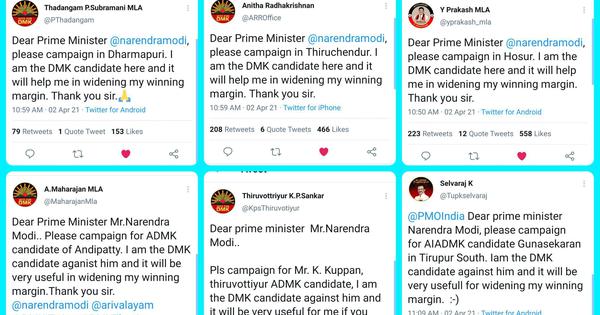
On social media, DMK candidates have taken a satirical approach by inviting Prime Minister Narendra Modi to campaign in their constituencies, humorously indicating that his presence would only help the DMK increase its winning margins. This online campaign highlights the interplay between local and national politics and serves to both mock the BJP’s efforts and assert confidence in their electoral prospects.
Public Reaction: Viral Social Media Campaigns
The DMK’s clever use of Twitter not only allows them to engage with voters but also creates a buzz around their campaign. Tweets from DMK candidates requesting the Prime Minister’s campaign efforts have gone viral, capturing public attention and pushing back against the ruling coalition’s narrative. These messages underline the DMK’s strategy of highlighting weaknesses in the opposition while putting forth their candidates’ capabilities.
One notable tweet humorously requested Modi to campaign for DMK candidates by stating it would help them increase their lead, showcasing a head-on strategy that blends humor with political critique. Such tactics effectively resonate with younger and tech-savvy voters, marking a modern campaign approach in a historically traditional state.
Why This Matters
The unfolding political battle in Tamil Nadu carries significant implications not just for state politics but also for national dynamics. A strong performance by the DMK could signal a shift in voter sentiment against the BJP, impacting the party’s strategy in southern India, where it has struggled.
Moreover, the outcome could influence forthcoming elections in other states and affect perceptions of the central government’s power and effectiveness. The DMK’s agile campaign strategies and adaptability amid political challenges shed light on the increasingly critical role social media plays in modern electoral politics.
Frequently Asked Questions
What are the key issues in the Tamil Nadu elections?
Key issues include governance, economic performance, social welfare programs, and allegations of corruption. The DMK is focusing on the failures of the AIADMK-BJP alliance, while the ruling coalition aims to highlight its achievements.
When are the elections taking place?
The Tamil Nadu Assembly elections are set for April 6, 2021.
What are the implications of the Income Tax raids?
The DMK alleges that the raids are politically motivated to undermine their campaign. They are seeking the Election Commission’s intervention to address what they consider an abuse of power by the BJP.
How is social media influencing the campaign?
Social media, particularly Twitter, is being used by the DMK to engage voters and create viral content that critiques the ruling party. This has helped them rapidly disseminate their message and challenge the effectiveness of their opposition.