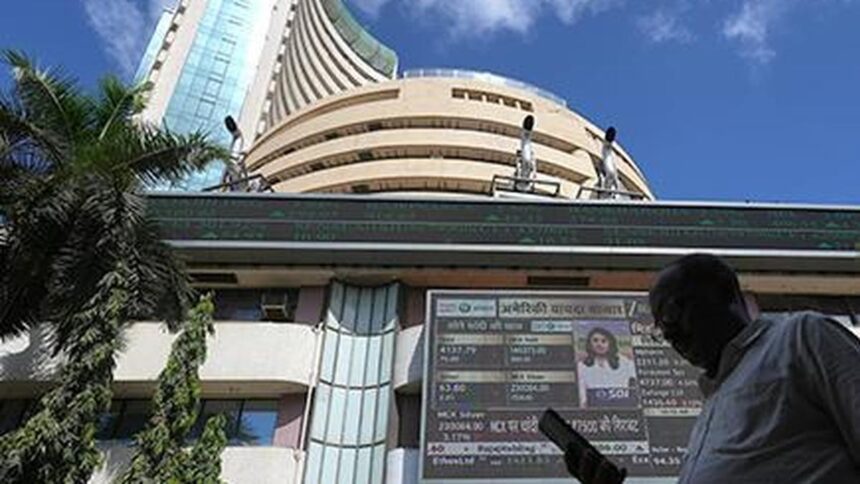

India’s stock market landscape is undergoing a significant shift as the Bombay Stock Exchange (BSE) is set to replace Wipro in the Nifty 50 index effective September 30. This change is part of the National Stock Exchange’s (NSE) biannual review, reflecting the evolving market dynamics within key indices.
BSE’s Inclusion in Nifty 50
The decision to include BSE in the Nifty 50 index stems from its impressive market performance. With a six-month average free-float market capitalisation of ₹1,40,879 crore, BSE surpasses Wipro’s average of ₹55,930 crore significantly. This inclusion is indicative of BSE’s growth trajectory and the increasing prominence of stock exchanges amidst the broader financial landscape in India.
The criteria for inclusion necessitates that a company’s free-float market capitalisation must be at least 1.5 times that of the smallest constituents within the Nifty 50. BSE’s compliance with this guideline earmarks it as a formidable player in the index, signaling potential gains in investor confidence and market interest.
Other Index Composition Changes
Alongside BSE’s addition, the Nifty 100 and Nifty 200 indices will also see important changes. Notable inclusions in the Nifty 100 will be Hitachi Energy India, Polycab India, Vedanta Aluminium Metal, and Vodafone Idea. Conversely, Indian Hotels, Lodha Developers, REC, Shree Cement, and United Spirits will exit this index.
The Nifty 200 index will expand its roster with new entries such as Life Insurance Corporation of India, Meesho, Bank of Maharashtra, Hindustan Copper, NLC India, and REC. Meanwhile, the vibrancy within the Nifty Midcap 100 will be adjusted as stocks like BSE, Coromandel International, and Tata Elxsi make exits, reflecting the constant rebalancing efforts that adapt to market conditions and investment metrics.
Implications for the Indian Market
These index changes may have broader implications for the Indian stock market, particularly in terms of market dynamics and investor sentiment. The exit of well-established companies like Wipro from the Nifty 50 may lead to concerns among current and potential investors regarding the overall technology sector’s performance. These shifts could pressure other firms to evaluate their strategies and improve their market positions.
Moreover, BSE’s entry into the Nifty 50 may spark renewed interest in investments associated with stock exchanges, potentially boosting liquidity and trading volumes. The inclusion of new constituents often emphasizes the sectoral strengths within the indices, showcasing India’s economic diversity and growth potential.
What This Means
For the average Indian investor, the changes in these indices offer mixed implications. On one hand, the inclusion of BSE in the Nifty 50 can be seen as a strong signal for institutional investment. On the other hand, the exit of well-performing companies like Wipro could imply a landscape where technology stocks might struggle against emerging competitors. Understanding these dynamics is essential for making informed investment strategies.
Furthermore, the changes reflect a broader trend in the Indian market where adaptability is becoming vital for sustained growth. Investors are encouraged to keep an eye on emerging sectors and understand the regular adjustments within index compositions as they can directly impact portfolio performance.
Frequently Asked Questions
What criteria must a stock meet to enter the Nifty 50 index?
A stock needs to have a free-float market capitalisation of at least 1.5 times that of the smallest Nifty 50 constituents to qualify for inclusion.
When will the changes to the indices take effect?
The changes, including BSE’s entry and Wipro’s exit, will be effective after the close of trading on September 29.
What will happen to Wipro after its exit from the Nifty 50?
Following its exit from the Nifty 50, Wipro will be transferred to the Nifty Next 50 index.
How often does the NSE review its index compositions?
The NSE conducts biannual reviews of its benchmark and broader market indices, assessing the eligibility of stocks for inclusion or exclusion.