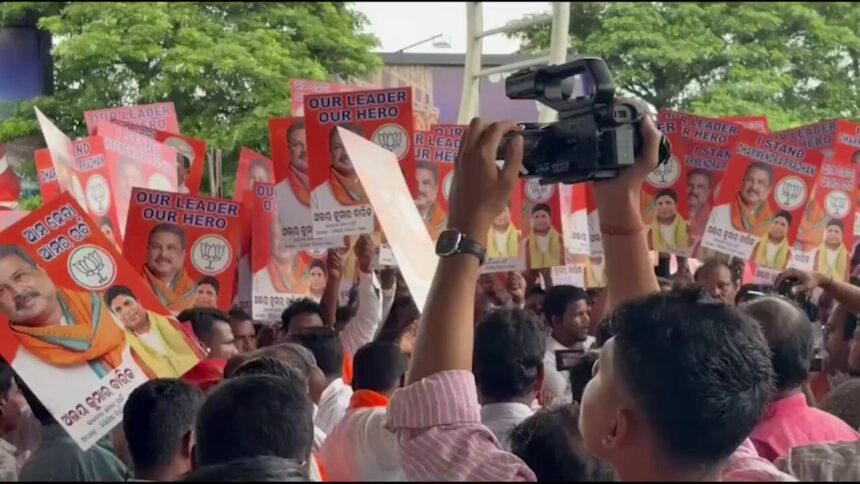

A recent event in Bhubaneswar saw a considerable turnout for former Union Education Minister and BJP MP Dharmendra Pradhan, who received a warm welcome at the airport. This moment raises questions about the characterization of attendees as a ‘large crowd’ by some commentators, particularly amidst discussions about political support and public engagement.
Context of the Welcome
Dharmendra Pradhan recently vacated his role as Union Education Minister, which has made him a focal point for discussion within the BJP and its supporters. His return to Bhubaneswar was marked by significant media attention and a notable presence of supporters, which has sparked discussions on social media platforms about the nature of such political receptions. The phrase “large crowd” has been used by various sources, including ANI, to describe the gathering, which suggests a committed base of constituents but also invites scrutiny regarding the actual scale of support.
BJP’s Political Landscape
The Bharatiya Janata Party (BJP) has been known for its strong grassroots organization, often seen through large public gatherings that reflect party loyalty and support. Political analysts often interpret these crowds as indicators of the party’s vitality in a specific region or constituency. Such events coincide with ongoing party campaigns and strategies, especially given the approaching election cycle, where every public appearance could shift public sentiment and reinforce voter allegiance. This highlights not only Pradhan’s role within the party but also the broader implications of his public reception.
Social Media and Public Perception
The reactions on social media, where individuals like @zoo_bear scrutinize the characterization of such events, reflect a more critical stance toward the media’s portrayal of political attendance. The discussions often dissect how phrases like ‘large crowd’ can influence public perception. On platforms like Twitter, commentary around these events can oscillate between genuine support and skepticism regarding the motivations behind such public gatherings. This dynamic plays a crucial role in shaping the narrative around politicians and their connections to the electorate.
Why This Matters
Understanding political gatherings and their portrayals in the media is essential for Indian readers, especially as the nation moves towards crucial elections. The characterization of crowds not only serves as a metric for political support but also influences voter perceptions and behaviors. Misrepresentation or embellishment of attendance figures can lead to misinformation, thereby altering public opinion on a politician’s efficacy or popularity. In a political landscape that is increasingly dependent on digital media, how events are framed has real implications for electoral strategies and outcomes.
Frequently Asked Questions
What does Dharmendra Pradhan’s resignation signify for the BJP?
Pradhan’s resignation from the role of Union Education Minister indicates a significant shift within the BJP, reflecting ongoing changes in party strategy and leadership. His welcome back points to continued support from his constituents.
How does crowd size impact political narratives?
Crowd size can heavily influence media narratives and public opinion, often acting as an indicator of a politician’s popularity. A large, well-covered crowd can suggest strong support and momentum, impacting voter decisions.
Why do commentators scrutinize the term ‘crowd’?
Commentators question the use of the word ‘crowd’ to better understand the dynamics of political support. This scrutiny is essential, as it can reveal either genuine grassroots engagement or orchestrated events designed to project strength.
What role does social media play in political events?
Social media serves as both a platform for real-time public engagement and analysis of political events. It allows individuals to voice their opinions and question the narratives presented by traditional media, shaping the political discourse.