
Summary
The recent outreach efforts by the Bharatiya Janata Party (BJP) in Manipur, including a political workers’ conference in the state’s Muslim-majority constituency of Lilong, underscore the complexities surrounding communal relations in a region shattered by ethnic violence. Chief Minister Yumnam Khemchand Singh emphasized unity and reconciliation amidst ongoing tensions, competing narratives, and the challenges of restoring peace in a historically fragmented society.
Political Initiatives in a Fragile Context
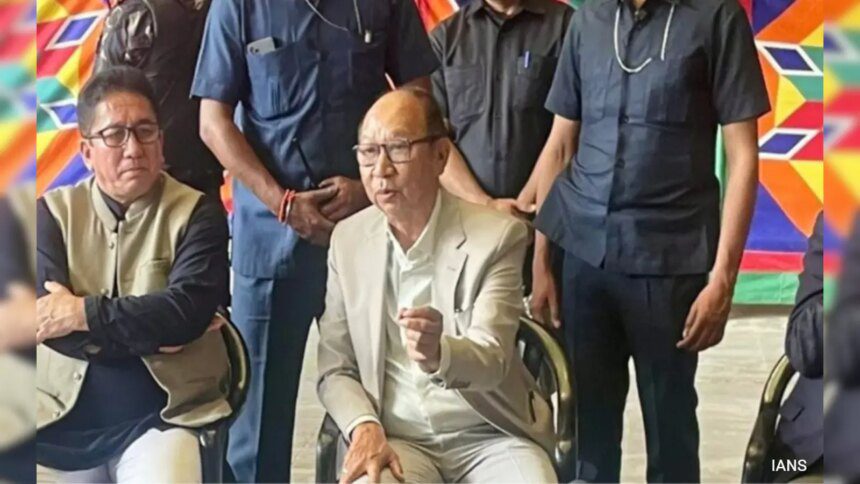
In a bid to mend communal rifts, the BJP convened a one-day mandal-level political workers’ conference, recognizing the need for inclusivity in its political strategy. The conference aimed to engage with the Muslim community, which has been a focal point of migration and violence in the recent past. Chief Minister Singh articulated his goals of uniting the diverse populations of Manipur, particularly after three years marked by escalated ethnic skirmishes.
Singh’s remarks reflect a growing awareness of the complexities associated with the state’s demographics, where numerous ethnic groups live in close proximity yet often in discord. His focus is not only on political alliances but also on fostering a sense of shared identity among the communities in Manipur.
Historical Context and Leadership Legacy
In his speech, Singh paid homage to former Chief Minister Mohammed Alimuddin, who played a crucial role in establishing Manipur’s political landscape post-statehood in 1972. Alimuddin, praised for promoting harmony among communities, serves as a symbolic reminder of an era when hope for coexistence was more palpable.
By invoking Alimuddin’s legacy, Singh positioned the BJP’s outreach as a continuation of his predecessor’s vision—an implicit acknowledgment of the historical communal challenges that have often undermined peace initiatives in the region. Singh emphasized the importance of rekindling Alimuddin’s ideals based on mutual respect and collaborative living.
Current Challenges to Peace and Stability
Despite these positive intentions, Singh identified “vested interests” as barriers to peace, claiming that certain groups are exploiting the atmosphere of unrest for their benefit. He warned that such elements cannot be allowed to dominate the narrative indefinitely, emphasizing his commitment to an honest and sincere peace process. This reflects a larger narrative across India, where political factions often exploit societal divisions for electoral gain.
Singh’s confidence in overcoming these disruptions is steeped in the belief that collective will can prevail over discord. However, the enduring nature of ethnic violence in Manipur indicates that building a cohesive civil society requires more than political rhetoric; it necessitates actionable policies and community engagement rooted in understanding.
Why It Matters
The outreach initiative by the BJP in Manipur highlights significant socio-political dynamics relevant to understanding communal relations in India today. It brings to the forefront issues of discrimination, social exclusion, and economic marginalization affecting Muslims and other minorities. By taking steps towards inclusivity, the BJP may aim to alter historical perceptions and drive socio-economic benefits for these communities. However, effective implementation of policies that promote genuine integration, rather than superficial political engagement, remains critical to ensuring long-term stability and peace in Manipur.
Frequently Asked Questions
What is the significance of the BJP’s outreach to the Muslim community in Manipur?
The BJP’s outreach signifies an effort to address historical communal tensions and build political alliances, particularly in light of recent ethnic violence, which has strained intercommunity relations.
Who was Mohammed Alimuddin and why is he referenced?
Mohammed Alimuddin was the first Chief Minister of Manipur after it gained statehood in 1972. He is referenced as a model of leadership that emphasized harmony among the state’s diverse communities, making his legacy relevant to ongoing peace efforts.
What challenges does the BJP face in achieving unity in Manipur?
The BJP faces challenges from groups with vested interests that fuel discord, and overcoming deep-rooted ethnic rivalries will require sustained political and social engagement.
Why is the pursuit of peace and unity critical in regions like Manipur?
Peace and unity in regions like Manipur are essential for fostering economic development, improving social cohesion, and ensuring the welfare of all communities amidst the backdrop of historical conflicts.