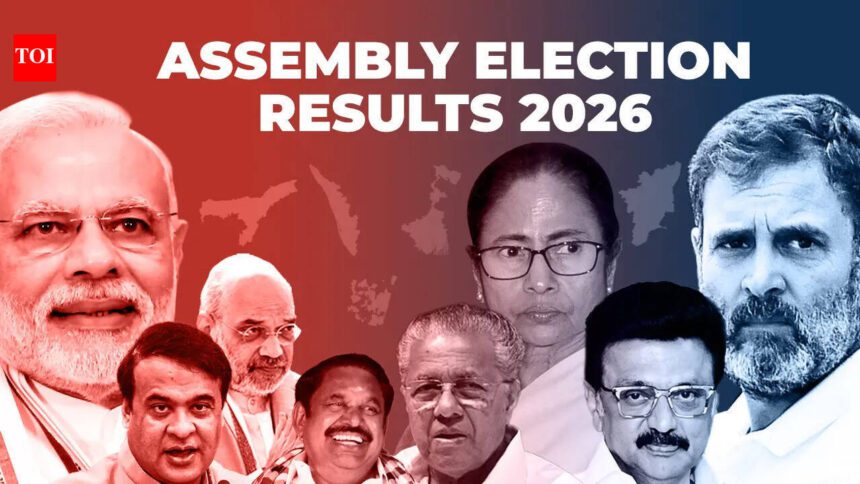

BJP’s recent electoral victories mark a significant shift in Indian politics, particularly in Tamil Nadu and Assam, where the party has made substantial inroads. Himanta Biswa Sarma’s leadership led BJP to its first-ever majority in Assam, overcoming a decade of Congress dominance. Despite being at the helm for twelve years, Prime Minister Narendra Modi’s sustained popularity underpins BJP’s success, which is particularly impactful given the anti-incumbency sentiment against the ruling parties in various states.
In Tamil Nadu, film star Vijay’s political debut may alter the longstanding DMK-AIADMK duopoly that has prevailed for the past fifty years. By leveraging his celebrity status and appealing to the youth and women voters, Vijay’s coalition is poised to compete fiercely against traditional political contenders. His approach contrasts sharply with DMK’s more divisive tactics, as his candidacy symbolizes a new shift that resonates well with Tamil voters, especially women and underrepresented communities.
Meanwhile, Congress secured a much-needed victory in Kerala, countering the CPM and reaffirming its influence, albeit amid rising perceptions of Hindu sentiment in the region. This win allows Congress to reclaim its presence, but it faces challenges in managing alliances, particularly with the Indian Union Muslim League and other regional players.
BJP’s performance in West Bengal signifies its expansion beyond the Hindi heartland, allowing it to negotiate with diverse regional narratives while maintaining its core ideologies. The party’s political strategy appears effective, as evidenced by its improved electoral performance even in traditionally hostile territories like Kerala, where it won three seats compared to none in previous elections.
Despite facing criticism for anti-Muslim rhetoric, Sarma successfully amassed non-Muslim support by labeling Bangla-speaking Muslims as infiltrators, a tactic that has raised concerns regarding Congress’s image as it strives to appeal to various voter bases amid changing dynamics.
Vijay’s victory not only challenges the establishment but also fosters a more competitive landscape in Tamil Nadu, which could benefit emerging political players. The shifting political landscape invites potential collaborations between the Centre and state dynamics, reflecting the evolving nature of Indian politics characterized by unprecedented alliances and voter realignments.