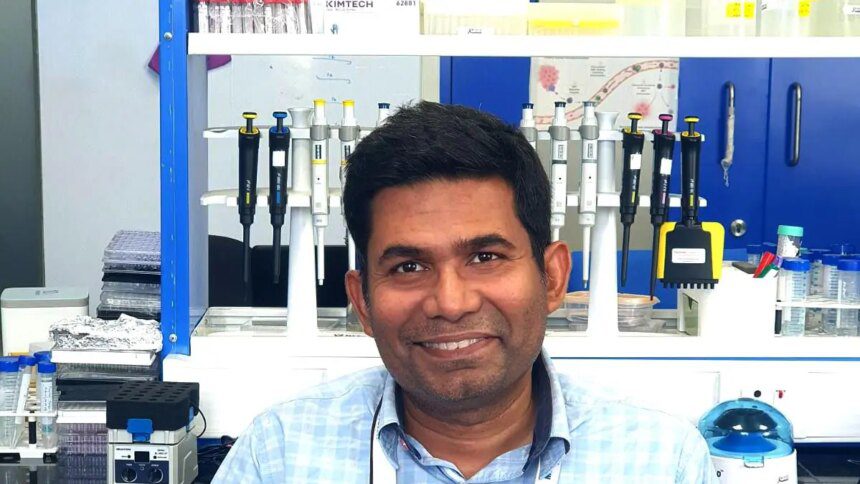

Bengaluru-based biotech startup Mestastop is gearing up to initiate a phase II clinical trial aimed at delaying metastasis in colorectal cancer, an area widely recognized as a significant challenge in oncology care.
While current cancer therapies predominantly focus on reducing primary tumors, nearly 90% of cancer fatalities are attributed to metastasis, which involves the spread of cancer cells to other organs. According to Mestastop founder Arnab Roy Chowdhury, this disparity in cancer treatment methodologies motivated him to establish the company, which is dedicated to creating solutions that specifically target the biology of metastasis.
Chowdhury highlights that the traditional approach in oncology has been influenced by the belief that the risk of metastasis increases with tumor burden. This has led to years of emphasis on eliminating rapidly growing tumor cells. However, existing treatments aimed at destroying tumors or preventing the movement of cells from the primary site have failed to stop metastasis.
Mestastop’s research has identified a different perspective: only certain cancer cells are capable of metastasizing, and their success is contingent not on their ability to escape the primary tumor, but rather on their capacity to adapt and survive in a secondary organ. “Our therapies aim to inhibit this adaptation and prevent the establishment of metastatic colonies,” Chowdhury states.
To achieve this, Mestastop has developed three integrated platforms: METAssay, which recreates the entire metastasis process in a laboratory setting, breaking it down into 30 steps to highlight the variances in behavior between cancer cells and those prone to metastasis; METSCAN, which examines primary tumor cells at these stages and correlates them with long-term clinical outcomes, employing machine learning to identify critical events that facilitate metastatic success, thus aiding in drug discovery and patient stratification; and METVivo, which accelerates preclinical validation by condensing the traditional four to six months into a six-week, high-throughput animal model.
The company is now preparing for clinical trials with two repurposed drugs that were originally approved for non-oncology purposes and were identified as strong candidates against metastasis through its platforms. A retrospective analysis indicated that cancer patients who used one of these medications experienced statistically significant enhancements in survival and deferred metastasis. After fulfilling regulatory requirements, Mestastop plans to recruit at least 60 patients who have undergone surgery for colorectal cancer into a two-year treatment protocol, with results anticipated within three years.
Mestastop’s business strategy revolves around licensing its platforms and assets to pharmaceutical and biotech partners, generating upfront payments, milestones, and royalties. Nonetheless, establishing a metastasis-focused biotech firm in India has demanded considerable patience. Chowdhury noted that while a similar global company might raise around $50 million, Mestastop has secured only $2 million over seven years. Yet, he remains optimistic that the scientific merit of their work will ultimately prevail.
The article was published on April 12, 2026.