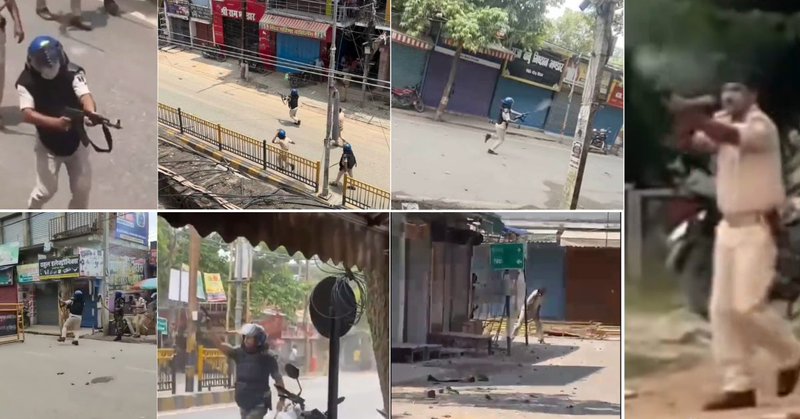

In a shocking incident during a student protest in Siwan, Bihar, the police reportedly fired at least nine rounds from an AK-47. This has raised serious questions about the conduct of the Bihar police, especially in how they handle civil unrest.
Context of the Incident
The tumultuous events unfolded on July 25, when student organizations, particularly the All India Students’ Association (AISA), called for a ‘Bihar Bandh’ (Bihar Shutdown) in response to a series of concerning events, including exam paper leaks. What began as a peaceful protest escalated into violence, prompting police to resort to extreme measures.
Details of the Police Response
Videos reviewed by Alt News show police officials firing multiple rounds from an AK-47 into the crowd. This extreme response is startling, as it raises concerns about the use of lethal force in crowd control situations. The footage reportedly captured nine rounds being fired, underscoring the aggressive posture taken by law enforcement.
Critics argue that such a heavy-handed approach signifies a failure of police strategy in de-escalating potential violence and suggests a willingness to use militaristic tactics against citizens rather than employing dialogue and negotiation.
Broader Implications for Civil Rights
This incident sheds light on the growing trend of police brutality in India, particularly concerning student protests and civil rights movements. The government’s handling of these protests reflects broader issues of governance and accountability in the Indian state.
Many observers are concerned that heavy-handed police responses may intimidate citizens, discourage peaceful protests, and create an atmosphere of fear. The situation in Bihar serves as a crucial case study that could have implications for how protests are managed across the country.
Why This Matters
The firing incident during the student protest in Siwan is not merely a localized event; it has the potential to spark nationwide debates about civil liberties and state power in India. Students have historically played a pivotal role in political movements in the country. The heavy police response may discourage activism, particularly among young people who feel their voices are legitimized through peaceful protest.
Moreover, as students across India increasingly mobilize over issues affecting their educational and job prospects, incidents like these could lead to wider social unrest and undermine the credibility of state authorities. Policymakers and political leaders must address the growing concerns about police conduct to maintain public trust and ensure stability in civil society.
Frequently Asked Questions
What triggered the student protests in Bihar?
The protests were triggered by a series of issues, particularly related to the leaking of exam papers, leading to widespread discontent among students. The All India Students’ Association (AISA) called for a ‘Bihar Bandh’ to express these grievances.
How did the police respond to the protests?
In a shocking act, police fired multiple rounds from an AK-47 at the protesting students, with reports indicating that at least nine rounds were discharged. This action has raised significant concerns about the use of excessive force.
Why is the use of AK-47 significant in this context?
The use of an AK-47 in crowd control is noteworthy because it represents a militarized response to civil unrest. Such actions raise ethical questions about the appropriate levels of force that law enforcement can use against civilians, especially during protests.
What are the potential repercussions for the Bihar police?
This incident could lead to increased scrutiny of police practices and may incite calls for reform in how protests are managed. If accountability measures are not taken, it might contribute to a rising tension between citizens and law enforcement across India.