
A Muslim preacher from Bangladesh, Md Abdullah, has gained attention for his controversial statements about entering India to convert Hindus, specifically targeting the Siliguri-Darjeeling region. His intentions, shared widely on social media, have raised significant concerns for Indian security agencies regarding cross-border religious conversions and regional stability.
Profile and Social Media Activities of Md Abdullah
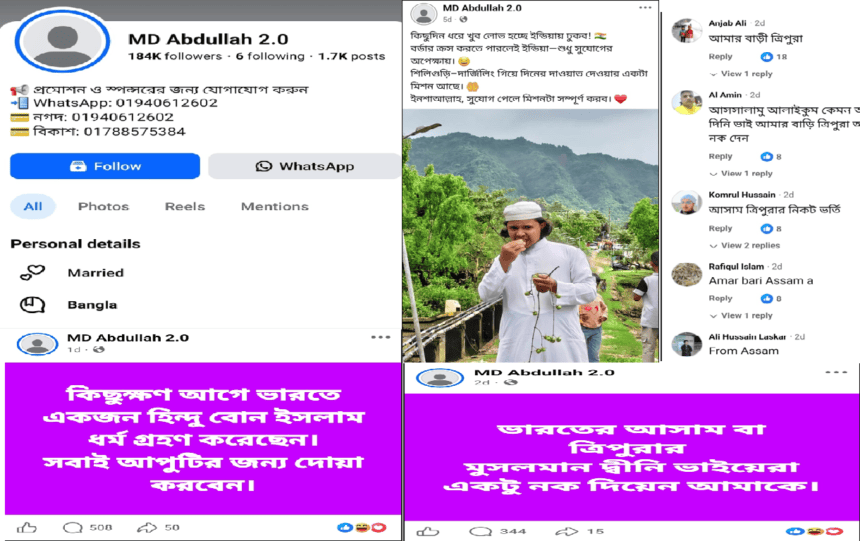
Md Abdullah, a prominent preacher from Mymensingh, boasts a Facebook following of over 184,000. His posts have included claims of facilitating conversions from Hinduism to Islam and expressing his intent to expand these efforts into India. On August 9, he shared a photo with a Hindu woman, alleging her conversion and announcing his mission to propagate Islam in the Darjeeling and Siliguri areas.
His social media presence has included provocative remarks, such as questioning where to find beef in India, emphasizing that it is his favorite food. This has been particularly contentious given India’s cultural and religious significance surrounding beef consumption among Hindus. Abdullah’s declarations about eagerly waiting for the opportunity to breach the Indian border for conversion activities further underline a troubling trend that Indian authorities cannot overlook.
Implications of Religious Conversion Efforts
Abdullah’s activities coincide with rising nationalism within India, particularly among Hindus who feel marginalized by the increasing visibility and assertiveness of other religious communities. This atmosphere can exacerbate religious tensions and fuel discrimination against certain groups. For instance, his posts soliciting communication from Muslims in Assam and Tripura have led to multiple invitations from local supporters, showcasing how social media can galvanize communal identity and mobilization across borders.
This begs the question: How do Indian authorities balance freedom of expression with national security? The government’s response plays a crucial role in maintaining social harmony, protecting vulnerable communities from potential backlash, and ensuring the security framework is robust enough to mitigate risks arising from cross-border religious activities.
Strategic Importance of the Siliguri Corridor
The Siliguri Corridor, often referred to as India’s Chicken’s Neck, is a vital geographic region that connects the northeastern states to the rest of India. Given its strategic significance, the move of a foreign preacher openly targeting Hindus in this area should not be taken lightly. Abdullah’s openly declared mission could destabilize an already sensitive intersection of cultures and communities.
Moreover, with rising political rhetoric involving the Northeast from Bangladeshi political leaders, attention must be given to how these narratives play out in terms of national integrity and community relations. The implications are far-reaching and could lead to increased scrutiny and tensions between communities residing in border areas.
Why It Matters
The digital footprint of figures like Md Abdullah illustrates how social media is transforming the landscape of religious outreach. For Indian security agencies, understanding these digital communications is essential. Open-source intelligence and social media scrutiny should complement traditional border security measures, as a significant threat can emerge without the physical crossing of borders. If left unchecked, this form of influence can spiral into social unrest, making it crucial for authorities to examine and possibly act upon statements and intentions declared through various online platforms.
Frequently Asked Questions
Who is Md Abdullah?
Md Abdullah is a Muslim preacher from Mymensingh, Bangladesh, known for his significant online presence and controversial statements regarding religious conversions targeting Hindus in India.
What are his intentions regarding India?
Abdullah has expressed a desire to enter India, pursue the conversion of Hindus, particularly in the Siliguri-Darjeeling area, and establish connections with local Muslim communities.
Why is the Siliguri Corridor important?
The Siliguri Corridor is strategically crucial for India as it connects the northeastern states to the mainland. Any attempts at religious conversions in this area could have broader implications for regional stability.
What should Indian authorities do in response?
Indian security agencies should investigate Abdullah’s activities and intentions. An integrated approach incorporating social media intelligence with traditional security measures is essential for maintaining social and communal harmony.