
Summary
Ayush Malik’s voluntary conversion to Islam in Shamli, Uttar Pradesh, has sparked controversy following allegations from his father that he was manipulated into the faith for property gains. Ayush has publicly refuted these claims, asserting his conversion was based on personal belief, not coercion. This incident highlights the complex dynamics of family, faith, and societal pressures within interfaith relationships in contemporary India.
The Conversion and Its Implications
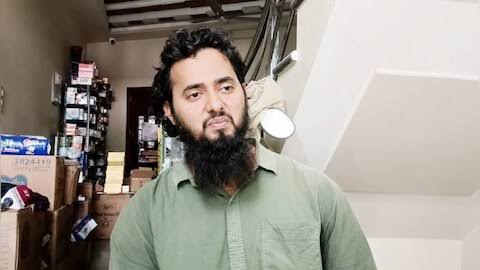
Ayush Malik, a 30-year-old man from a prominent family in Shamli, has publicly expressed that his decision to convert to Islam was a personal journey nurtured over many years. Speaking to the media, he stated unequivocally, “I was in no way forced or cheated. I have known about Islam since my childhood. I converted because I felt good about it. Now I am a Muslim, Alhamdulillah.” His comments intend to offer clarity against the backdrop of his father’s allegations suggesting that Ayush’s conversion was executed with ulterior motives related to familial wealth.
The conflict has escalated since Ayush’s father, Devraj Malik, a well-established medical trader who owns multiple showrooms, filed a police complaint against Chandni Qureshi and her father, Islam Qureshi. The complaint alleges that they manipulated Ayush into marrying Chandni, purportedly to gain access to family property. Chandni and Islam are currently in judicial remand following their arrest by local authorities, further complicating the already tense situation.
Family Dynamics and Societal Pressures
The family’s affluent status accentuates the tensions that arise from Ayush’s conversion. Reports indicate that Devraj Malik, who has three married daughters and one son, feels betrayed by Ayush’s decision to embrace Islam, especially because it appears to distance him from traditional family values. Ayush has adopted a radically altered appearance—sporting a long beard, an Islamic topi, and a kurta-pyjama—marking a significant shift in his identity that has raised concerns within his family.
Ayush has refuted claims of radicalization or property motives behind his conversion, insisting that his exploration of Islamic teachings, particularly those of late scholar Dr. Israr Ahmed, were personal choices made over time. He openly acknowledges his fondness for Israr’s Quranic exegesis videos, stating, “It is not like one day I got an epiphany… No one forced me to follow Dr. Israr.” His relationship with his family remains strained but cordial, as he articulately professes, “They are still my family and I love both sides.” This sentiment underscores the emotional struggle faced by individuals involved in similar interfaith relationships amidst societal scrutiny and familial expectations.
The Role of Right-Wing Influence
Amid the unfolding dispute, Ayush alleged that his father might be under pressure from right-wing elements in India, raising questions about the broader societal implications of communal tensions that pit personal faith against familial allegiance. The situation reflects the growing climate of nationalism where interfaith marriages and conversions are scrutinized under a lens of suspicion and underlying motives, often leading to societal exclusion and discrimination against individuals from religious minorities, particularly Muslims.
This incident is emblematic of a greater issue affecting Indian Muslims, who frequently navigate a sociopolitical landscape fraught with discrimination and exclusion. The intersection of faith, family, and societal expectations remains a sensitive area for many, highlighting the need for broader discussions on religious freedom and tolerance within Indian society.
Why It Matters
This situation illustrates significant socio-political dynamics within India, especially under the current government led by the BJP. The incident emphasizes a growing trend of marginalization faced by minority communities, particularly Muslims, who often encounter societal and institutional discrimination. Ayush Malik’s commitment to his faith amid pressure from familial and societal expectations reveals the intricate complexities of identity in a diverse nation. The repercussions of such incidents resonate beyond individual lives, influencing communal relations and interfaith dialogues, thus underscoring the necessity for tolerance and understanding in a pluralistic society.
Frequently Asked Questions
What sparked the controversy regarding Ayush Malik’s conversion to Islam?
Ayush’s father, Devraj Malik, filed a police complaint alleging that Chandni Qureshi and her father manipulated Ayush into conversion for access to family property. Ayush has publicly refuted these claims and insists his conversion was voluntary.
What claims did Ayush Malik make regarding his conversion?
Ayush stated that his conversion to Islam was a gradual and voluntary process, rooted in years of study and reflection. He expressed no interest in his family’s property distribution and claimed he informed his family of his decisions beforehand.
How have societal dynamics played a role in this situation?
The incident highlights the complex interplay of familial expectations, societal pressure, and personal faith within interfaith relationships in contemporary India, exposing the discrimination and marginalization often faced by Indian Muslims.
What does this incident reveal about the current socio-political climate in India?
This case exemplifies the rising communal tensions and pressures faced by minority communities, particularly Muslims, under the BJP government, indicating a broader trend of intolerance towards religious conversions and interfaith relationships.