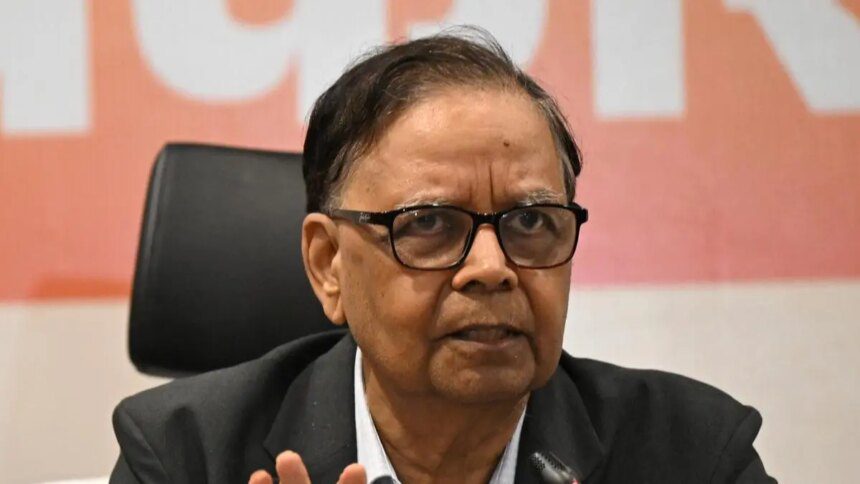

Economist Arvind Panagariya has advised the Reserve Bank of India (RBI) to not let concerns over the rupee potentially crossing the 100-per-dollar threshold dictate its policy decisions. He emphasized that allowing the rupee to naturally depreciate is the appropriate response amid rising oil prices and external economic pressures.
“Whether the oil shortage is temporary or prolonged, the right course of action now is to let the rupee depreciate,” stated Panagariya, who chairs the 16th Finance Commission, in a series of posts on X on Thursday. He suggested that the RBI should permit the rupee to weaken instead of aggressively defending a specific exchange rate, arguing that numbers like 100, 99, or 101 are essentially arbitrary and should not be treated as economically significant.
His comments coincide with increasing scrutiny of the rupee’s value as surging crude oil prices and global energy supply concerns exert pressure on India’s trade balance. Panagariya noted that if the oil crisis is temporary—lasting from three months to a year—the rupee might depreciate initially but would likely recover once import costs stabilize and foreign investments return due to the appeal of a cheaper currency. Conversely, if the oil supply crisis persists, attempts to defend the rupee would only deplete foreign-exchange reserves without addressing the underlying challenges.
“A strategy other than depreciation will be a losing proposition,” Panagariya warned, adding that the central bank would eventually need to surpass the psychological milestone of ₹100 per dollar after exhausting reserves.
He contrasted the current situation with that of 2013 during the “taper tantrum,” when the rupee experienced sharp declines amid high inflation and significant capital outflows. Panagariya argued that present macroeconomic conditions differ significantly. “This is not 2013: Inflation was in double digits back then. Thanks to prudent monetary management, that is not the case now. Thus, the economy is well-equipped to handle some inflationary pressure that may accompany depreciation,” he explained.
Additionally, the former vice chairman of NITI Aayog cautioned against overly relying on expensive dollar-denominated sovereign borrowing or high-interest foreign-currency deposits from non-resident Indians to bolster reserves. He asserted that such strategies are costly and primarily benefit wealthy NRIs, as India pays significantly higher interest rates on these liabilities compared to the returns earned on foreign-exchange reserves.
Published on May 21, 2026.