
Summary
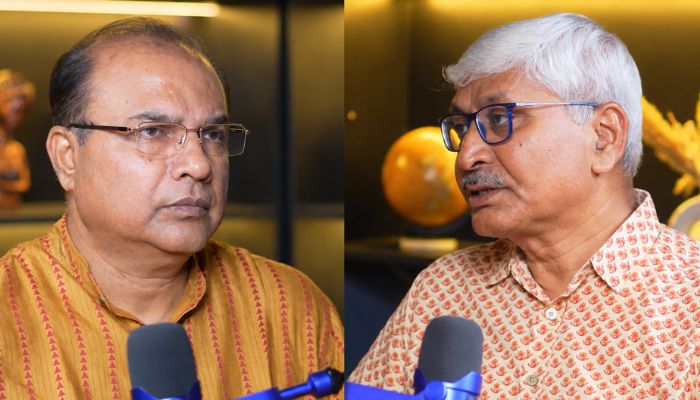
The recent discourse on the Ashutosh-owned YouTube channel Satya Hindi highlighted troubling narratives regarding the portrayal of Hindus and Muslims in contemporary India. The conversation featured self-styled academic Apoorvanand and Mukesh Kumar, who made sweeping and incendiary claims about Hindu society, casting it as inherently violent and radical, while presenting Muslims as perpetual victims. Such discussions raise serious concerns about discrimination, social exclusion, and the marginalization of communities in India.
Divisive Narratives: Hindus as the Perpetrators
Apoorvanand’s comments during the “Baat Bolegi” segment framed Hindu households as breeding grounds for potential violence. He claimed that many Hindu homes contain “potential murderers” or “potential rapists,” suggesting that such violent tendencies are now embedded within Hindu society. This unfounded generalization paints a bleak picture of Hindus, sidestepping the complexities of communal relations in India.
He also connected these assertions to past incidents, such as the Sulli Deals and Bulli Bai controversies, which sparked outrage regarding online misogyny and hate. By generalizing Hindu behavior based on these examples, the conversation veered into harmful territory, contributing to an atmosphere of fear and distrust between communities.
Victimhood Narrative: Muslims in Peril
The dialogue also depicted Muslims as a continually endangered community, suggesting that they live in fear of violence from their Hindu neighbors. Apoorvanand asserted that Muslims were unsafe in various public settings, a notion that goes hand-in-hand with the claim that violence against them is not only rampant but deemed acceptable within Hindu households.
Apoorvanand’s portrayal of Muslims as victims draws attention to rising communal tensions, particularly in an era marked by socio-political polarization. This narrative, if left unchecked, risks perpetuating cycles of hostility and marginalization, undermining efforts for communal harmony.
Institutional Bias: A Broader Reflection
Apoorvanand’s remarks extended beyond individual acts of violence, suggesting an institutional bias against Muslims in Indian society. He pointed to the judiciary, police, and bureaucracy as entities infected by “majoritarian hatred,” claiming these institutions are complicit in the systematic oppression of minorities. This argument highlights a growing concern about judicial integrity and the role of state mechanisms in perpetuating social injustice.
In identifying organizations like the RSS and Bajrang Dal as contributors to this atmosphere of violence, the conversation reinforces the narrative of an organized conspiracy to subdue minority voices, further deepening societal divisions. The claim that these groups have transformed ancient prejudices into organized violence necessitates scrutiny into the historical context and the political undercurrents that fuel such rhetoric.
Why It Matters
The implications of such conversations extend far beyond mere dialogue. They shape public perception and influence policy discussions in a country grappling with its identity. For developers and users of technology, the normalization of communal narratives can have significant ramifications in terms of content moderation, algorithmic bias, and information dissemination. The spread of divisive content online can exacerbate existing tensions, making it essential for tech platforms to adopt a more nuanced approach to ensuring communal harmony while supporting free expression.
Frequently Asked Questions
What sparked the discussion on Satya Hindi regarding Hindus and Muslims?
A recent episode featured Apoorvanand and Mukesh Kumar discussing societal violence and polarization in India, which led to controversial statements regarding Hindus and their portrayal in the context of communal relations.
How did Apoorvanand characterize Hindu society?
Apoorvanand described Hindu society as inherently violent, asserting that many households contain individuals capable of committing serious crimes like murder or rape.
What were the implications for Muslims as discussed in the conversation?
The discussion painted Muslims as living in a state of fear and uncertainty, alleging that they face violence and discrimination in various aspects of daily life while perpetuating a victimhood narrative.
How do these views represent broader societal issues in India?
The assertions reflect significant challenges regarding communal harmony, the role of state institutions, and the rising trend of social exclusion and discrimination against minority communities in India.