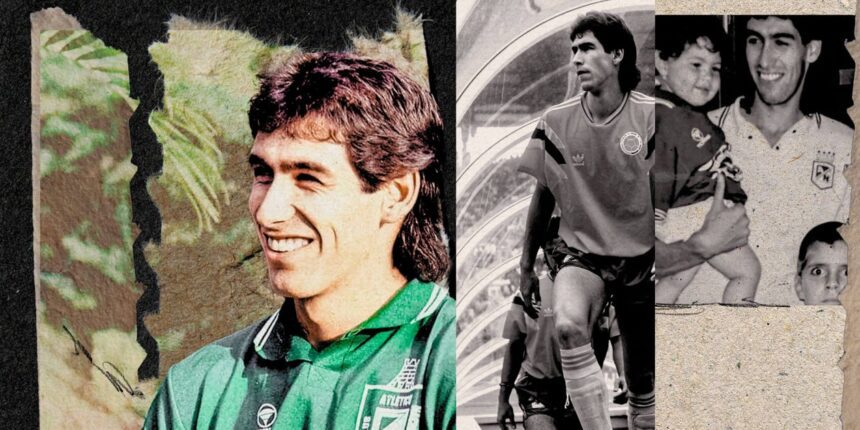

The story of Andrés Escobar, the Colombian footballer tragically murdered in 1994, has resurfaced as Colombia participates in another World Cup. His brother, Santiago Escobar, reflects on their family’s heartbreak, the pressures of fame, and the enduring legacy of a talented young player whose life was cut short under grim circumstances.
The Dark Shadow of Fame
Andrés Escobar was not just a footballer; he was an emblem of hope for a nation grappling with challenges far beyond the sport. He gained international recognition after he scored an own goal during the 1994 FIFA World Cup, a moment that haunted him until his untimely death just days later. Santiago, his older brother, recalls the family’s pain during that tournament, saying, “It was really hard for us as a family… because we were there in the stadium, and it was just so painful to see Andrés on the ground like that, holding his head.”
This was not merely the failure of a player but a reflection of the immense pressure placed on athletes in Colombia, especially amid the violent backdrop of narco-terrorism. As Santiago describes, “The country had spent the last decade grappling with a war between the state and the myriad narco-terrorist cartels.” The loss of his brother culminated in societal outrage and sorrow, exposing the critical intersection of sports, media scrutiny, and societal expectations in Colombia.
Legacy and Mourning
Even nearly 32 years after his death, Andrés Escobar’s legacy remains alive. His brother recalls, “Andrés is still alive in our hearts. Andrés hasn’t gone, we haven’t let him go.” Their mother, brother, and sister also succumbed to cancer, making the family’s struggle even more poignant. Today, murals dedicated to Andrés can be found throughout Medellín, and local children play in sports centers named after him, symbolizing the hope he represented.
The grief of losing a loved one in such tragic circumstances lingers heavily on Santiago, who is currently battling cancer himself. He often reflects on how life took a different turn after the shocking event, mentioning, “His death hit me really hard. I loved him. I wanted him here for longer.” Despite losing several family members, Santiago holds fast to the values and principles that his brother embodied, making it essential for him to keep Andrés’s memory alive through stories and shared experiences.
Andrés: A Professional Player with a Bright Future
Andrés Escobar’s rise to stardom was remarkable. He debuted professionally at just 18 and was celebrated for his exceptional skills and commitment to the game. Despite facing adversity, his professional relationship with football remained strong. Santiago recalls, “Andrés was very professional. He lived for the profession.” His character stood out beyond the pitch, as he also explored his talents in journalism, writing for Colombia’s leading newspaper, El Tiempo.
In a chilling final column published shortly before his death, Andrés spoke of self-reflection and the importance of respect, underscoring his commitment to sportsmanship. His life story continues to serve as an educational narrative, especially in Colombia, about the dangers athletes can face beyond the confines of a stadium. Santiago advocates for remembering his brother not for the tragedy that befell him but for the impeccable human being he was.
Why This Is Trending
The topic of Andrés Escobar has resurfaced largely due to the ongoing FIFA World Cup, stirring memories and emotions in a country that still feels the ripples of his tragic end. Colombia’s participation in the tournament brings the story back into collective consciousness, compelling fans and the media to revisit the life of an athlete who symbolized hope but faced the harsh realities of fame and violence. This has intrigued Indian football fans as well, leading to discussions on the pressures athletes face globally.
Frequently Asked Questions
Who was Andrés Escobar?
Andrés Escobar was a Colombian footballer who rose to fame as a defender for Atlético Nacional and the Colombia national team, tragically remembered for his own goal during the 1994 FIFA World Cup and his subsequent murder shortly afterwards.
What happened to Andrés Escobar after the 1994 World Cup?
After the 1994 World Cup, Andrés returned to Colombia, where he was shot and killed just days later. His death shocked the nation and highlighted the violent climate surrounding Colombian society at that time.
How has his legacy been preserved in Colombia?
Andrés’s legacy is preserved through murals, sports centers named in his honor, and ongoing public discussions about his life and career. He is remembered as a talented player and a beloved figure in Colombian football history.
What impact did the murder have on Colombian society?
Andrés Escobar’s murder brought attention to issues of violence and crime in Colombia, significantly impacting both public sentiment and the media’s portrayal of football in the country. His story continues to resonate with discussions about safety for athletes.