
Shifting Alliances in the Islamic World: A New Defense Pact Emerges
The recent signing of the Mecca Joint Defense Agreement by Turkey, Saudi Arabia, and Pakistan marks a significant shift in the geopolitical landscape of the Islamic world. This pact illustrates a growing trend among traditional U.S. allies in the region to forge independent security arrangements that lessen their reliance on American support, particularly in the face of uncertain U.S. foreign policy under the Trump administration.
The Mecca Defense Pact: A New Alliance Framework
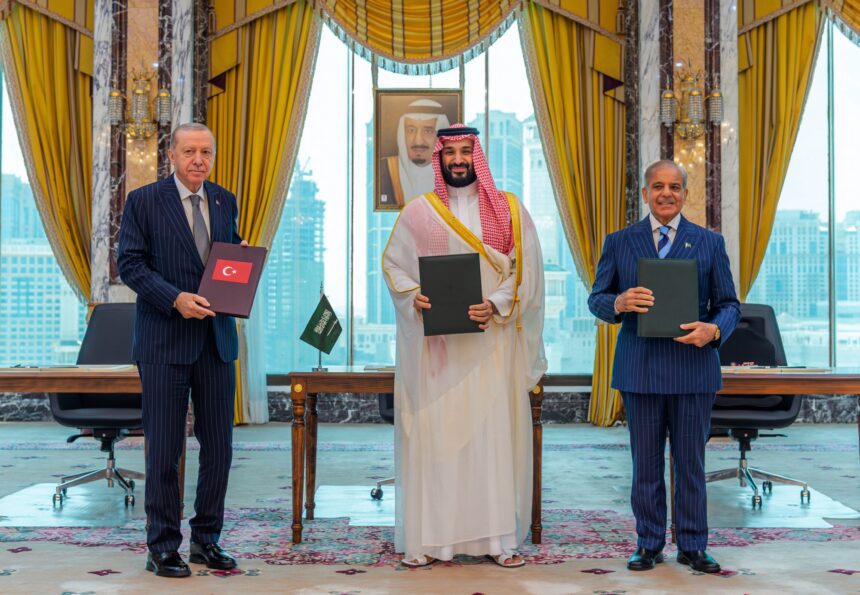
Signed on August 7, 2026, the Mecca Joint Defense Agreement symbolizes a collective commitment to mutual defense, pledging that “an attack on one is an attack on all.” This agreement not only establishes mechanisms for military coordination and intelligence sharing but also promotes defense-industrial cooperation among the three countries. The choice of Mecca, a site of profound significance in the Islamic world, to host the signing adds a layer of pan-Islamic identity to the alliance.
Turkey’s involvement is particularly noteworthy; as a NATO member, its decision to participate in an autonomous defense alliance sends a clear signal about its aspirations for strategic independence. This development is indicative of a wider trend where nations within the U.S.-led alliance system seek greater autonomy, revealing a discontent with the existing security arrangements.
Regional Reactions and Implications
The emergence of this trilateral pact has sparked discussions among other U.S. allies in the region, particularly Egypt, which initially engaged in mutual-defense dialogues but ultimately opted out of joining due to potential financial and diplomatic repercussions. The decision reflects the precarious balancing act that many nations are facing; aligning too closely with a new defense structure may jeopardize existing treaties, such as Egypt’s peace agreement with Israel.
The geopolitics surrounding this development also reveals a turning tide among Gulf monarchies, who are beginning to explore options for détente with Iran and reevaluate their longstanding reliance on U.S. military support. Amidst fears of Iranian reprisals against critical infrastructure, these states are moving away from previous containment strategies, suggesting a significant shift in the Middle East’s security calculus.
The Evolving Nature of Geopolitical Alliances
The Mecca alliance stands out for its unique composition. Saudi Arabia provides financial resources, Turkey contributes technological and military capabilities, and Pakistan adds a large standing military and nuclear arsenal. Critics argue that the lack of an integrated command structure may limit the effectiveness of the pact; however, the primary goal appears to be enhancing each member’s security by pooling resources rather than establishing a unified military force.
America’s longstanding allies may perceive this pact as a response to the diminishing credibility of U.S. commitments. The recent history of American interventions, particularly the unconsulted initiation of the Iran war and the subsequent lack of support for Gulf states during conflicts, has fueled concerns over their reliance on Washington for security.
Why It Matters
The formation of the Mecca alliance is significant as it illustrates a broader trend of decoupled defense strategies among once-dependable U.S. allies. For the international community, this development signals a growing need for the U.S. to reconsider its foreign policy strategies in the Islamic world. The erosion of American primacy necessitates a more cooperative and understanding approach, rather than one that insists on dependency. This emerging reality compels policymakers to reassess how they engage with allies who are increasingly willing to secure their interests through alternative partnerships.
Frequently Asked Questions
What is the Mecca Joint Defense Agreement?
The Mecca Joint Defense Agreement is a trilateral defense pact signed by Turkey, Saudi Arabia, and Pakistan, committing members to mutual defense and establishing mechanisms for military cooperation and intelligence sharing.
Why did Egypt choose not to join the Mecca alliance?
Egypt opted out of the Mecca pact due to concerns over financial risks and potential diplomatic repercussions, particularly regarding its peace treaty with Israel.
How does the Mecca alliance affect U.S. interests in the Middle East?
The emergence of the Mecca alliance highlights a diminishing reliance on U.S. security guarantees among traditional allies, suggesting a reevaluation of American influence and military commitments in the region.
What are the implications of independent defense arrangements for global geopolitics?
Independent defense arrangements may lead to a shift in global power dynamics, as nations pursue collaboration outside of U.S. influence, requiring the U.S. to adapt its strategies in order to remain relevant to its allies.