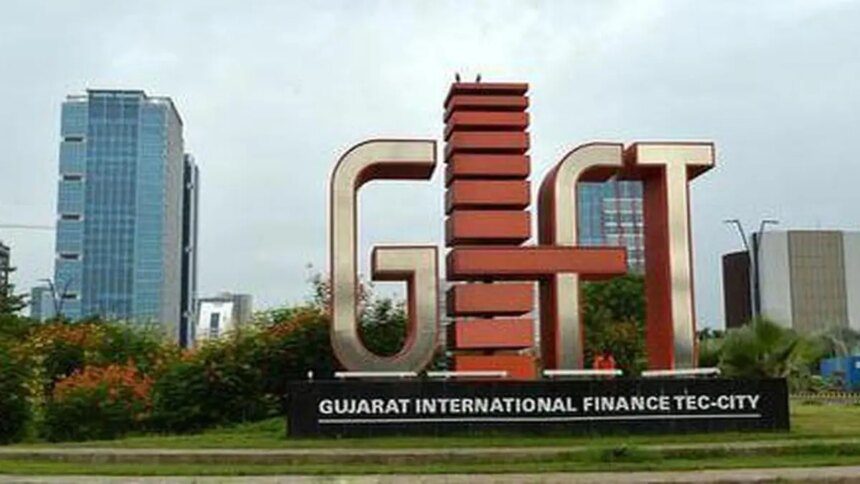

Members of India’s aircraft leasing sector, including representatives from Indigo and Air India, are urging the government to implement employee tax incentives, housing support, and specific aviation financing measures to bolster the ambitions of Gujarat’s GIFT City in becoming a competitive global leasing hub alongside established markets like Ireland and Dubai.
During the ‘Aircraft Leasing and Financing Summit 2.0’ held at GIFT City, industry stakeholders voiced their concerns about tax challenges encountered by aircraft lessors in India. These challenges include extensive tax scrutiny, litigation, and uncertainty regarding the General Anti-Avoidance Rules (GAAR). Industry participants emphasized that clearer tax regulations and strengthened double taxation avoidance agreements with other nations could enhance the confidence of global leasing firms and make leasing aircraft from India more feasible.
A report released by KPMG India at the aviation summit, titled “Advancing the aircraft leasing ecosystem in India,” highlighted that attracting and retaining specialized aviation finance professionals in GIFT IFSC is crucial. The report recommended targeted measures, including competitive personal taxation and professional mobility options, to draw global talent to GIFT City. It also stressed the importance of developing residential, social, and community infrastructure to support the long-term relocation of aviation finance professionals.
Krishan Bhargava, CEO of InterGlobe Aviation Financial Services IFSC, emphasized the difficulty in acquiring specialized talent in GIFT City. He proposed that incentives such as reduced income tax, housing support, and educational or club memberships could help attract skilled professionals.
Bhargava also expressed concerns over stringent tax scrutiny and litigation faced by aircraft lessors. He noted that the lack of objective criteria regarding GAAR creates uncertainty for global leasing firms. Bhargava suggested establishing clear parameters related to expenses and employee strength to mitigate confusion arising from tax authorities.
Additionally, he advocated for India to enhance its double taxation avoidance treaty framework to make domestic leasing more competitive on a global scale, pointing out that Ireland has established such agreements with several countries, streamlining the leasing process from there.
Abhijit Menon, Divisional Vice-President (Commercial) at Air India, echoed the need for a stable tax environment, particularly regarding GAAR and double taxation treaties. He also highlighted the importance of facilitating better access to financing, including the growth of Indian Rupee-based funding within both GIFT City and the broader domestic market. According to Menon, recognizing aircraft financing as part of the infrastructure sector could drive increased involvement from Indian banks in aircraft trade finance.
The KPMG report also recommended amending the Banking Regulation Act and Reserve Bank of India (RBI) regulations to explicitly allow aircraft leasing as an authorized banking activity. Other suggestions included extending IFSC-linked tax incentives to maintenance, repair, and operations (MRO) and component repair activities, enabling direct customs clearance of aircraft parts within IFSC, and facilitating seamless transfer of aircraft ownership among IFSC-based lessors without necessitating physical export and re-import.
Moreover, the report called for extending Rule 29A and associated Special Economic Zone (SEZ) provisions to cover aircraft parts and major components for direct customs clearance within IFSC, avoiding routing through domestic airports for inspection.
Published on May 9, 2026.