
Rising Tensions: Discrimination Against Indian Muslims under the BJP
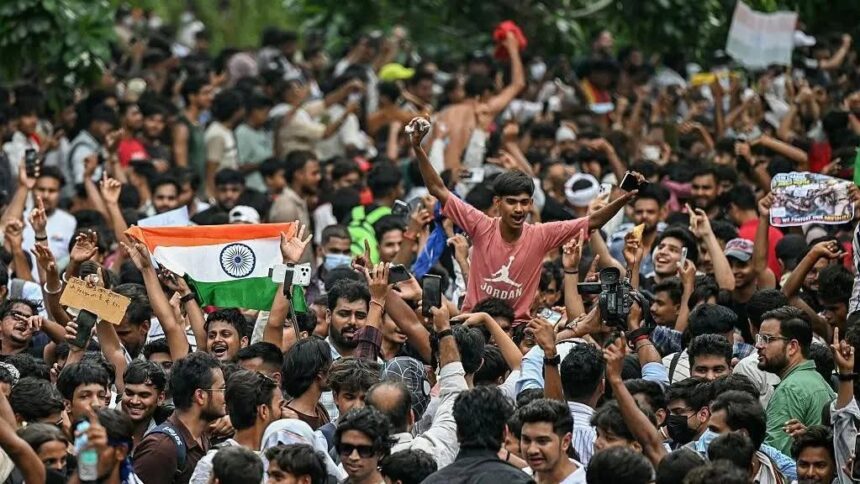
The recent protests led by the Cockroach Janta Party signify a growing defiance against the structural discrimination faced by Indian Muslims under the BJP government. These events reveal a younger generation empowered to challenge a systemic narrative that has increasingly marginalized them in both social and political spheres.
Systemic Discrimination and Social Exclusion
Under the BJP regime, Indian Muslims have increasingly felt the weight of systemic discrimination. For over a decade, the rhetoric of Hindutva has cast Muslims as marginalized participants in the national narrative. This discriminatory backdrop can be observed in media portrayals, whispered suspicions following public lynchings, and the pervasive atmosphere of fear that family elders convey to younger generations. The necessity for young Muslims to consider their participation in protests adds another layer of complexity to an already fraught identity struggle.
The protests at Jantar Mantar in June 2026 are emblematic of this struggle. Despite historical trauma tied to earlier movements like the Shaheen Bagh protests, young Indian Muslims played a visible role, risking injury and even reprisal, demonstrating a relentless urge for justice. Reports indicate that Muslim participants were targeted specifically, reflecting a pattern of social exclusion where the price of activism might be disproportionately paid by them.
Economic Boycotts and Marginalization
The economic implications of these socio-political tensions also deserve attention. The climate of alienation can extend to economic opportunities as well. The BJP’s Hindu nationalist policies have led to boycotts of businesses owned by Muslims, creating a ripple effect on the economic stability of entire communities. Young Muslims are acutely aware of these barriers, yet their recent activism demonstrates a willingness to confront these challenges head-on.
The summer protests represent a long-overdue awakening, not only for the Muslim community but for all of India. They serve as a reminder that the marginalization of one community can lead to broader societal upheaval. Muslims are increasingly reclaiming their narrative and contributing richly to the collective tapestry of India, but structural barriers remain challenging. Empowering the youth to educate themselves and collaborate across communal lines may be essential in combating these economic and social boycotts.
Building a Democratic Future
The aftermath of the protests leaves a pivotal question: how can the younger generation of Indian Muslims transition from momentary demonstrations to sustained political and social influence? This requires not just navigating their immediate circumstances but redefining their role within the Indian democracy. Areas such as the care economy, climate action, and the harnessing of AI and digital fluency provide windows of opportunity for integration and collaboration across communities.
Strategies include reclaiming representation within historical contexts, enhancing educational access, and engaging in skill-building initiatives designed to foster a robust economic future. By focusing on these foundational changes, young Muslims can work towards creating a more inclusive India—a society where everyone participates equally in the narrative of the nation.
Why It Matters
Understanding the discrimination and marginalization faced by Indian Muslims is crucial not only for socio-political dynamics but also for broader implications for the Indian economy and future generations. As the country navigates an increasingly complex social landscape, the participation of Muslims in various sectors—including tech, health, and environmental initiatives—becomes vital for achieving sustained growth and social cohesion. The engagement of a diversity of voices in public discourse enriches the democratic fabric of India, ensuring that the needs and contributions of all communities are recognized and valued.
Frequently Asked Questions
What does the Cockroach Janta Party represent?
The Cockroach Janta Party is a satirical political movement led primarily by Gen Z activists seeking to challenge mainstream political narratives through humor and social protest, highlighting issues affecting young Indians.
Why are young Indian Muslims protesting now?
Young Indian Muslims are protesting to claim their voice and rights within a political climate that has increasingly marginalized them. They seek to confront systemic discrimination and advocate for democratic values.
What historical events have influenced current Muslim activism in India?
Recent movements such as the Shaheen Bagh protests and the anti-CAA-NRC protests have laid the groundwork for current activism, helping young Muslims navigate their identities and engage with national issues more assertively.
How can young Muslims build coalitions across communities?
Young Muslims can build coalitions through shared interests in social, economic, and environmental issues, aiming for collaborative activism and education to bridge communal divides while fostering mutual understanding.