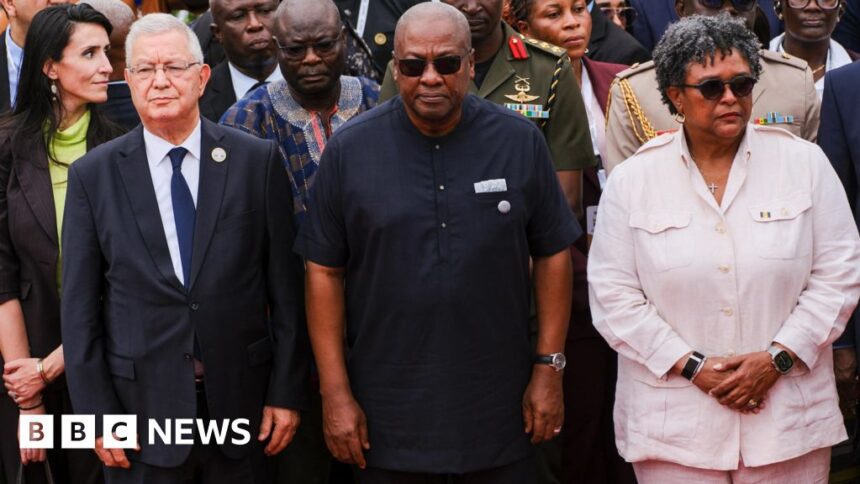

Leaders from Ghana and Barbados recently gathered in Accra for a significant wreath-laying ceremony meant to honor victims of slavery and discuss the United Nations resolution on human trafficking. The event underscores the ongoing global dialogue on reparative justice and the ethical implications of slavery’s legacy.
Significance of the High-Level Conference
Ghana’s President John Dramani Mahama and Barbados’ Prime Minister Mia Amor Mottley led a distinguished gathering at the Christiansborg Castle, a former slave post, on June 19, 2026. This high-profile event aimed to outline the next steps following the landmark United Nations resolution addressing the trafficking of enslaved Africans. The choice of venue itself is deeply symbolic, echoing the painful history associated with the transatlantic slave trade.
During the ceremony, dignitaries paid homage to those who suffered at the hands of slavery, recognizing the need for a constructive dialogue about reparations and sustaining the memory of victims. Such actions reaffirm their commitment to addressing historical injustices while working towards a future defined by equality and respect for human rights.
The Role of International Collaboration
Discussions at the conference included the necessary steps for countries to take in order to fulfill the promises made within the United Nations framework aimed at combating human trafficking. Experts emphasized that international cooperation is critical to dismantling the networks that perpetuate modern-day slavery.
Both Ghana and Barbados are key players in advocating for international accountability on these issues. They recognize that collaboration among nations is essential not just for legal frameworks but also for societal change. By joining forces, countries can work towards meaningful solutions that acknowledge and rectify the long-standing consequences of slavery.
Memory and Recognition: A Global Imperative
The ceremony was not just about commemorating the past but also about ensuring that lessons learned are integrated into current practices and policies. Initiatives aimed at raising awareness about the impacts of slavery must become central to educational curricula across nations.
This event reflects a growing trend of recognizing and honoring the histories of enslaved peoples, and it serves as a reminder that the scars left by slavery continue to affect societies today. Countries like India, with their own complex histories of social injustice, can take inspiration from this movement towards recognition and reparative justice.
Why This Is Trending
The topic of reparations and the legacy of slavery has gained heightened attention globally, resonating deeply in India, particularly due to its rich tapestry of social justice issues and historical injustices. As the world increasingly re-evaluates its past and present, conversations about reparations become more crucial.
Furthermore, social media buzz and coverage by global news outlets have catalyzed local interest. Indian audiences are not only tuning in to discussions on global human rights but are also reflecting on their own national narrative and the universality of struggles against oppression, making this a timely subject of discussion.
Frequently Asked Questions
What was the purpose of the wreath-laying ceremony in Ghana?
The ceremony aimed to honor the victims of slavery and discuss the next steps in moving forward with the United Nations resolution on the trafficking of enslaved Africans.
Who were the notable leaders participating in the event?
Ghana’s President John Dramani Mahama and Barbados’ Prime Minister Mia Amor Mottley were key figures at the ceremony, along with other dignitaries.
Why is the Christiansborg Castle significant?
The Christiansborg Castle served as a former slave post, making it a poignant location for discussions on the historical injustices surrounding the transatlantic slave trade.
Why is the topic of slavery and reparations relevant to India?
India’s own complex historical narratives around social injustice create a parallel interest in global dialogues on reparations and recognizing past injustices, fostering a broader understanding of human rights issues.