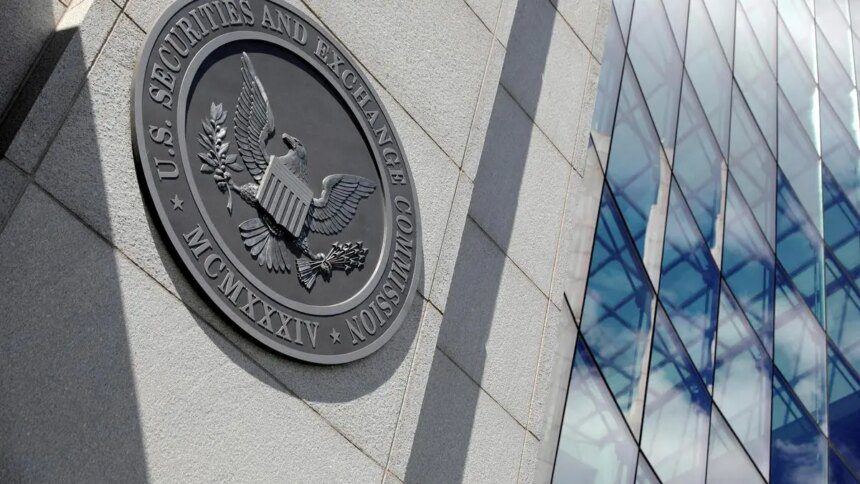

Legal experts indicate that a proposed settlement between the US Securities and Exchange Commission (SEC) and the Adani Group could lead to the conclusion of civil proceedings in the United States without requiring an admission of wrongdoing.
According to reports from Reuters, the SEC has reached a settlement in a civil lawsuit against Adani Group Chairman Gautam Adani, pending court approval. Court documents reveal that Gautam Adani has agreed to pay civil penalties amounting to USD 6 million, while his nephew, Sagar Adani, will pay USD 12 million. Notably, the settlement does not involve an admission of guilt.
The SEC had previously alleged that Gautam and Sagar Adani, alongside others, were involved in a bribery scheme exceeding USD 250 million between 2020 and 2024 to secure solar energy contracts in India.
Legal Perspective on SEC Powers and Settlements
Former Additional Solicitor General (ASG) and Senior Advocate Sidharth Luthra stated that, similar to the Securities and Exchange Board of India (SEBI), the SEC is empowered to resolve regulatory matters through financial penalties. He noted, “The SEC can require an individual or company to pay a fine and enter into a settlement. The United States has strict regulations with substantial penalties for violations under the Foreign Corrupt Practices Act.”
Luthra explained that the US legal framework allows regulators to address such issues without resorting to criminal prosecution. “If the SEC allows for a settlement, the matter is resolved through the payment of penalties, as seen here,” he said, indicating that this settlement could preclude any criminal prosecution regarding the issue in the United States.
He emphasized that settlements of this nature are typically constructed without any admission of liability. “This is a no-fault admission settlement. The Adani Group is not admitting guilt but is willing to pay the penalty to resolve the matter without accepting liability,” he added.
Implications for Adani Group’s Global Operations
Raian Karanjawala, Managing Partner at Karanjawala & Co., remarked that the proposed settlement could have significant ramifications for the Adani Group’s international business operations and investor perception. He noted that concurrent proceedings had been initiated by both the SEC and the US Department of Justice (DOJ). Reports suggest that while the SEC’s proceedings may conclude with this monetary settlement, the DOJ might also consider dismissing any criminal case.
“If the DOJ decides to drop its case, Gautam Adani would effectively have no pending legal issues in the United States. This would provide him with a clean slate, enabling him to pursue global business operations without the burden of ongoing litigation,” Karanjawala said, adding that resolution of the US proceedings could bolster the group’s prospects for attracting foreign investments.
“International investors have expressed concerns regarding the outstanding legal proceedings in the United States. If these matters are settled, prospective investors would assess the group based on its business fundamentals rather than any pending litigation,” he concluded, underscoring the importance of significant Indian industrial players in enhancing the country’s economic stature on the global stage.
Published on May 15, 2026.