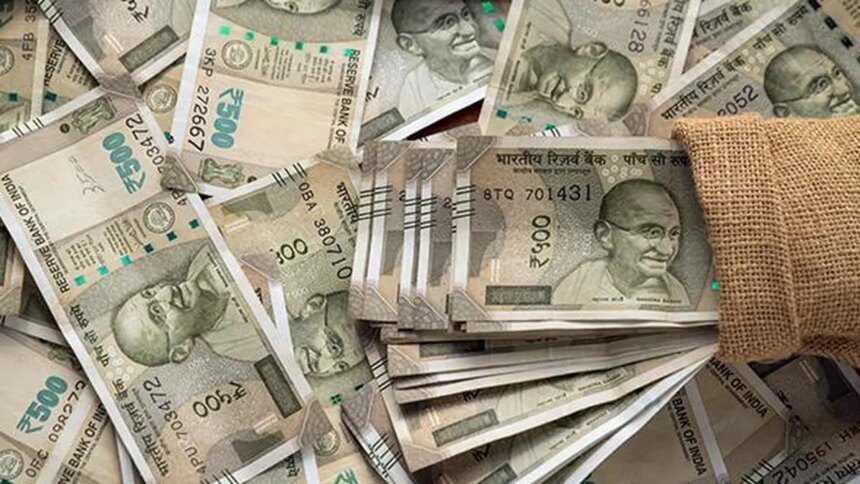

Rupee Strengthens Against US Dollar Amid Foreign Investment Influx
The Indian rupee showed resilience in early trading on November 20, 2026, appreciating by 17 paise to reach 93.15 against the US dollar. This uptick was largely supported by robust foreign institutional investment in domestic equities and a weakening of the dollar against major currencies.
Rupee’s Recent Performance and Influencing Factors
In the interbank foreign exchange market, the rupee initially opened at 93.25 before strengthening to 93.15, reflecting a rise of 17 paise from its previous closing of 93.32. This growth follows a sequence of gains, as the rupee rallied for the fourth consecutive session on Thursday, closing 9 paise higher than the previous day. Notably, over the preceding three sessions, the rupee gained a total of 78 paise, or 0.83 percent, from a closing level of 94.19 on November 13.
According to Anuj Choudhary from Mirae Asset Sharekhan, despite rising crude oil prices and bearish trends in the stock market, the rupee remains buoyant. He indicated that recent declines in crude oil prices, along with drops in gold and silver, might reduce import bills, providing additional support to the local currency.
Market Dynamics and Global Influences
The dollar index, which measures the strength of the US dollar against a basket of currencies, was noted at 103.76, down by 0.07 percent. This decline in the dollar’s strength is a favorable development for the rupee, particularly in contexts where foreign capital flows are pivotal to market resilience. Concurrently, Brent crude, a global oil benchmark, experienced a 0.40 percent uptick, trading at $92.35 per barrel, adding complexity to the import scenario for a net oil importer like India.
In terms of equity market performance, the Sensex fell by 217.03 points, or 0.26 percent, settling at 82,804.72, while the Nifty dropped 58.70 points, or 0.23 percent, to 25,455.60. Interestingly, foreign institutional investors remain active, purchasing equities worth ₹7,411.41 crore on Thursday, suggesting ongoing interest in the Indian market despite short-term volatility.
What This Means
The recent appreciation of the rupee can have significant implications for the Indian economy. A stronger rupee may ease the financial burden of imports, particularly for crude oil and commodities, which have been a challenge for trade balances. However, fluctuations in crude oil prices can continue to exert pressure on the local currency.
Additionally, the foreign fund inflows reflect confidence in the Indian equity markets, potentially stabilizing market conditions. Nonetheless, investors should remain cautious of external variables, including global economic indicators and the Federal Reserve’s monetary policy stance, which could influence the USD-INR exchange rate moving forward.
Frequently Asked Questions
What causes fluctuations in the Indian rupee against the US dollar?
The rupee can fluctuate due to various factors, including foreign direct investment inflows, changes in crude oil prices, global market conditions, and monetary policy decisions by central banks, among others.
How do foreign institutional investors affect the Indian equity market?
Foreign institutional investors play a critical role by injecting liquidity into the markets, providing valuations, and influencing market sentiment. Their buying patterns can lead to significant price movements in equities.
What is the impact of a stronger rupee on the Indian economy?
A stronger rupee typically reduces the cost of imports, which can help control inflation. However, it may negatively impact export competitiveness as Indian goods could become more expensive for foreign buyers.
What trends are forecasted for the USD-INR exchange rate?
Market analysts suggest that the USD-INR exchange rate may range between ₹92.85 and ₹93.40, influenced by factors like crude oil prices and changes in US treasury yields.