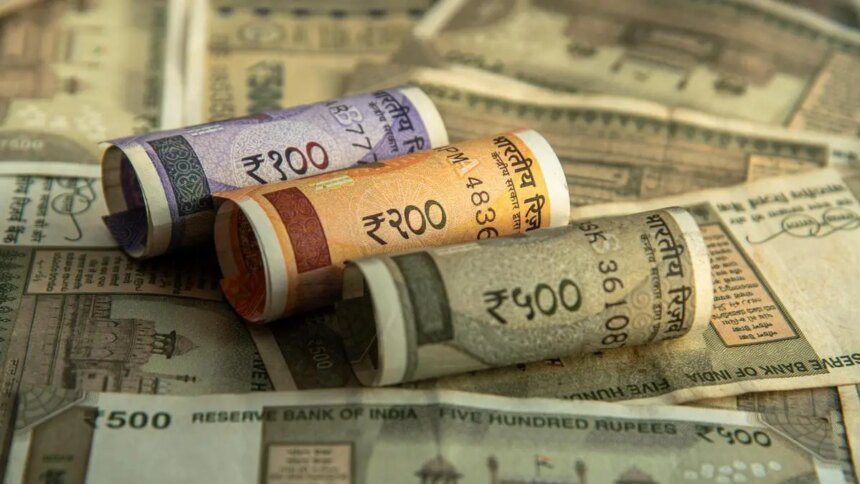

The Indian rupee appreciated by 43 paise, closing at 93.51 against the US dollar on Tuesday, buoyed by softer crude oil prices and strong foreign fund inflows. However, a robust dollar and rising US bond yields threaten this positive momentum.
Market Drivers for the Rupee’s Strength
Forex traders attribute the rupee’s gains to a combination of fresh foreign fund inflows and a decline in crude oil prices. The interbank foreign exchange market saw the rupee open at 93.72, reaching an intra-day high of 93.40 before settling provisionally at 93.51. This marks a notable recovery from Monday’s close of 93.94, where the rupee appreciated by 25 paise.
Brent crude, a pivotal factor influencing India’s import bills, was trading 0.38 percent lower at $92.79 per barrel. Investors are hopeful that the recent downturn in oil prices could lead to reduced inflationary pressures, benefiting the Indian economy.
Equity Markets and Foreign Investments
The positive sentiment surrounding the rupee was mirrored in the Indian equity market, where the Sensex surged by 427.40 points to 82,532.19, and the Nifty rose by 96.30 points to 25,387.40. This alignment of equity and currency market performances supports a broader bullish outlook among investors.
Moreover, foreign institutional investors (FIIs) showcased their confidence in the Indian market by buying equities worth ₹4,864.68 crore on Monday. Such inflows are crucial for maintaining currency stability, particularly in an economy like India’s, where fluctuations in the dollar and oil prices can have substantial effects on economic health.
Challenges Ahead for the Rupee
Despite the rupee’s recent appreciation, several challenges loom. A strong dollar, evidenced by a dollar index at 103.54, remains a significant hurdle. Moreover, heightened US Treasury yields are contributing to concerns over capital flight from emerging markets, including India. Traders are advised to monitor upcoming US economic data, particularly retail sales and industrial production figures, since these may influence the dollar’s strength and, in turn, impact the rupee.
Market analysts, including Anuj Choudhary from Mirae Asset Sharekhan, predict that while the rupee may trade with a positive bias due to declining crude prices and favorable domestic conditions, any substantial upside could be restrained by external pressures from the dollar and US bond yields. The expected trading range for the USD/INR spot price is pegged between 93.20 and 93.75 in the near term.
What This Means
The rupee’s recent rise offers a glimmer of hope for the Indian economy amidst swirling global pressures. A stronger rupee could ease inflationary burdens on consumers due to lower import costs for goods, especially oil, which is crucial for India’s growth trajectory. However, the macroeconomic environment remains precarious, with external factors like a strong US dollar and rising bond yields potentially reversing gains in currency value.
For businesses, a stronger rupee might reduce the cost of imports, benefiting sectors reliant on raw materials from abroad. Conversely, exporters might feel the pinch as a stronger currency can make Indian goods more expensive in foreign markets. Thus, the interplay between the rupee’s value and global economic conditions will continue to be of paramount importance for industry stakeholders in India.
Frequently Asked Questions
Why did the rupee appreciate against the dollar?
The rupee appreciated due to softer crude oil prices, positive domestic market performance, and fresh foreign fund inflows into Indian equities.
What is the predicted trading range for the rupee against the dollar?
Analysts expect the USD/INR spot price to trade between 93.20 and 93.75 in the short term, influenced by factors like US economic data and global oil prices.
How do crude oil prices affect the rupee?
As India is a significant importer of crude oil, rising oil prices can lead to increased import costs, negatively impacting the rupee’s value. Conversely, falling oil prices can support the rupee.
What does a strong dollar mean for the Indian economy?
A strong dollar can lead to capital outflows from emerging markets like India, make imports more expensive, and create challenges for exporters, affecting overall economic stability.