
Summary
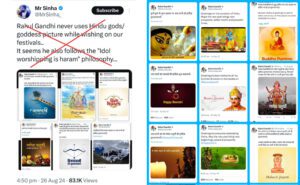
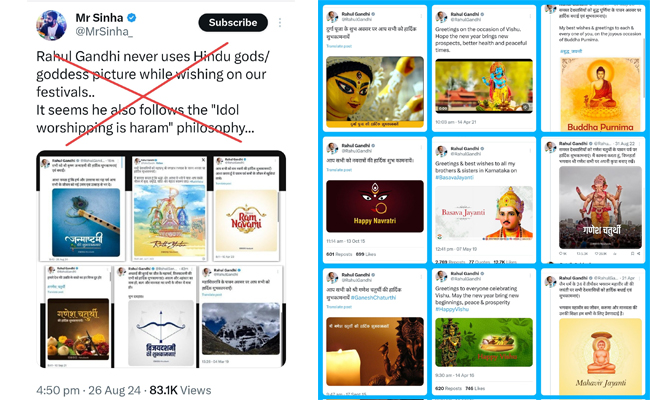
Prominent right-wing social media accounts have been accused of disseminating misinformation regarding Congress leader Rahul Gandhi, specifically suggesting that he deliberately neglects to include images of Hindu gods in his festival greetings, indicating a supposed opposition to idol worship. This narrative aims to portray Gandhi as anti-Hindu, potentially alienating him from Hindu voters.
The Misinformation Campaign
Accounts such as @MrSinha_, @OpIndia_com, @OpIndia_in, and @UnSubtleDesi have been instrumental in circulating this disinformation, which has gained traction on platforms like X (formerly Twitter). They present selectively edited tweets and content that imply Gandhi’s greetings—especially during Hindu festivals—lack any acknowledgment of Hindu deities. This is intended to craft an image of him as someone who disregards Hindu traditions and sentiments.
This calculated framing is designed to shift public perception, making Gandhi appear detached from a significant portion of India’s demographic. By pushing this narrative, these accounts have successfully generated substantial engagement on social media, with followers amplifying the claim that Gandhi’s political beliefs conflict with Hindu values.
Efforts to Counter Disinformation
Fact-checkers, particularly Mohammed Zubair, co-founder of Alt News, have been proactive in refuting these claims. Zubair has documented instances where Gandhi has included images of Hindu deities in his festival greetings, presenting this evidence on his X handle. His efforts aim to dismantle the false narrative constructed by the right-wing accounts and underscore the significance of Gandhi acknowledging Hindu culture during festivals.
Despite Zubair’s endeavors to spotlight the truth, the disinformation narrative shows resilience and continues to circulate with minimal challenge from Congress members or supporters. In his remarks on X, Zubair expressed concern over the lack of substantial response from the party in countering false narratives aimed at Gandhi.
Political Significance
The implications of this ongoing campaign against Rahul Gandhi are profound, particularly as the political landscape in India becomes increasingly polarized. By labeling Gandhi as anti-Hindu, these accounts may undermine his credibility and support base among Hindu voters, which is crucial for any political aspirant in India. The narrative fits within a broader strategy often utilized by right-wing groups to consolidate their power by framing opponents as enemies of certain cultural values.
Gandhi’s response—or lack thereof—to these narratives will likely influence his political future and the Congress party’s dynamics in upcoming elections. As disinformation campaigns become more prevalent in the digital space, the need for effective counter-strategies from political entities becomes increasingly important, not just for Congress but for the integrity of public discourse in India as a whole.
Why This Matters
Understanding the mechanisms behind disinformation campaigns is crucial for the Indian electorate. Misinformation can distort public opinion, skew electoral outcomes, and deepen societal divisions. For voters, discerning truth from falsehood is vital in making informed choices, especially in a country where religious identity plays a significant role in politics. Political narratives that exploit cultural sentiments can significantly influence the democratic process and require vigilance from both political leaders and the electorate to ensure fair representation of all views.
Frequently Asked Questions
What is the origin of the claim that Rahul Gandhi is anti-Hindu?
The claim has emerged from selective editing and sharing of Gandhi’s festival greetings by right-wing social media accounts, suggesting he deliberately omits Hindu deities to indicate opposition to idol worship.
Who is Mohammed Zubair and what role is he playing in this situation?
Mohammed Zubair is a prominent fact-checker and co-founder of Alt News. He is actively working to counter the misinformation surrounding Rahul Gandhi by highlighting instances where Gandhi has acknowledged Hindu deities in his greetings.
Why are narratives like these important in Indian politics?
Such narratives can significantly impact public perception of political leaders, especially in a diverse country like India where religious sentiments hold substantial sway. Misleading information can alienate voters and alter electoral dynamics.
What can be done to combat misinformation in politics?
Combating misinformation requires proactive engagement from political parties, effective communication strategies, and the efforts of fact-checkers and independent media to provide accurate information and counter false narratives.