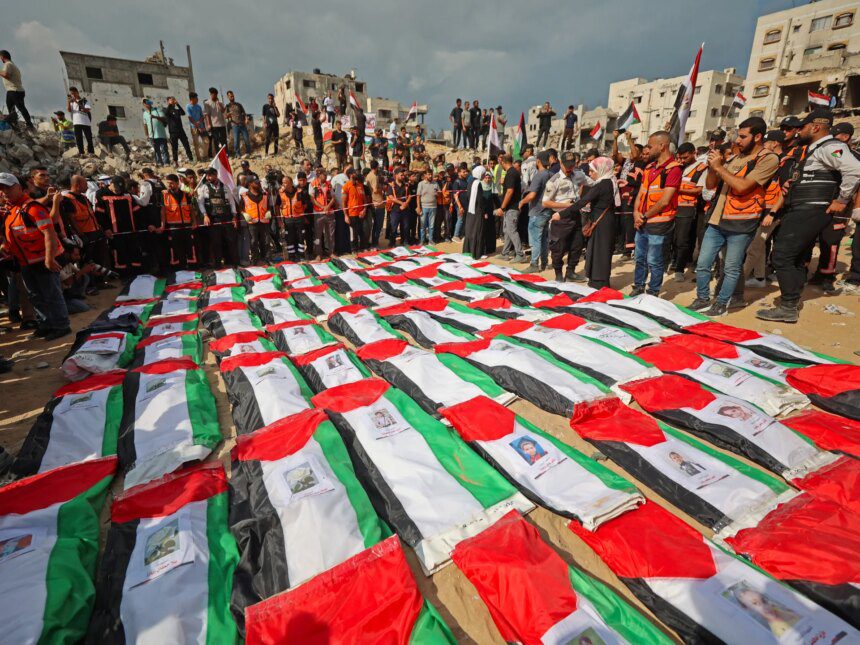

In a tragic reminder of the ongoing conflict in Gaza, Palestinians recently laid to rest the remains of 105 individuals killed during Israeli air strikes nearly three years prior. The air strikes, which occurred on October 25, 2023, involved at least 20 bombs targeting residential buildings, including the seven-storey Al Taj 3, in the Yarmouk Square area of Gaza City.
Details of the Air Strikes
On that fateful afternoon in October 2023, the Israeli air strikes devastated the Yarmouk Square neighbourhood. Eyewitnesses reported a scene of chaos as explosions rocked the area, leading to the destruction of multiple residential buildings. The Al Taj 3 building, which housed numerous families, was completely levelled. The sheer scale of the attacks reportedly combined over 20 separate bombs, impacting lives indiscriminately.
Despite the collateral damage, the immediate aftermath was complicated by challenges in recovering victims. Abdul al-Majdalawi, the civil defence operations director, stated that it was “impossible” to reach the bodies in the chaos that ensued following the strikes. This delayed recovery operation ultimately resulted in the burial of 105 individuals three years later, a somber act bowing to both respect and grief.
The Funeral Procession
On what became a day of mourning, the remains were transported through Gaza City in a large funeral procession. This event drew significant crowds, as families and friends came together to pay their respects to those lost in the conflict. The burial took place in the Sheikh Radwan cemetery, located northwest of Gaza City, highlighting the ongoing plight of families still grappling with loss.
The cemetery has become a poignant symbol of the human cost of the conflict. Each grave represents not only individual lives lost but also the deep-rooted sorrow, anger, and hope that persists among Palestinians. Ibrahim al-Khalili, a correspondent for Al Jazeera, reported that this recovery operation marks the fifth largest since Israel initiated its military offensive against Palestinians in the region in October 2023.
Contextualizing the Conflict
This latest tragedy serves as a stark reminder of the enduring conflict between Israelis and Palestinians, a situation complicated by historical grievances, geopolitical interests, and international responses. In recent years, tensions have escalated, with increased military operations leading to significant civilian casualties.
For Indian readers, understanding the intricate web of this conflict is crucial, particularly as India has historically maintained a stance of support for Palestinian rights, advocating for a two-state solution. The loss of civilian lives and the associated humanitarian crises resulting from military actions have far-reaching implications that resonate with India’s own experiences in conflicted regions. The emotional weight of such losses highlights the universal nature of grief in times of war.
What This Means
The burial of these 105 individuals underscores the ongoing humanitarian issues facing civilians in conflict zones globally. For Indian observers, the situation illustrates the profound impacts of military conflict on ordinary lives, emphasizing the need for a renewed focus on diplomatic efforts aimed at conflict resolution. It calls for greater empathy toward the civilian toll in international conflicts, a sentiment that echoes India’s advocacy for peace and dialogue.
Frequently Asked Questions
What led to the air strikes in Gaza City on October 25, 2023?
The air strikes were part of a broader military offensive by Israel in response to escalating tensions and violence in the region, leading to significant destruction in civilian areas.
Why were the remains buried nearly three years later?
The remains were not accessible immediately following the air strikes due to the chaotic aftermath, making recovery operations difficult and ultimately leading to the delayed burial.
What has been the international response to the conflict in Gaza?
The international community has seen divided responses, with some nations condemning the violence and calling for restraint, while others support Israel’s right to defend itself, leading to varied opinions on humanitarian aid and intervention.
How does this incident reflect broader trends in the Israeli-Palestinian conflict?
This incident emphasizes the ongoing cycle of violence and retaliation, the impact on civilian populations, and the urgent need for meaningful dialogue to prevent future tragedies.