
Summary
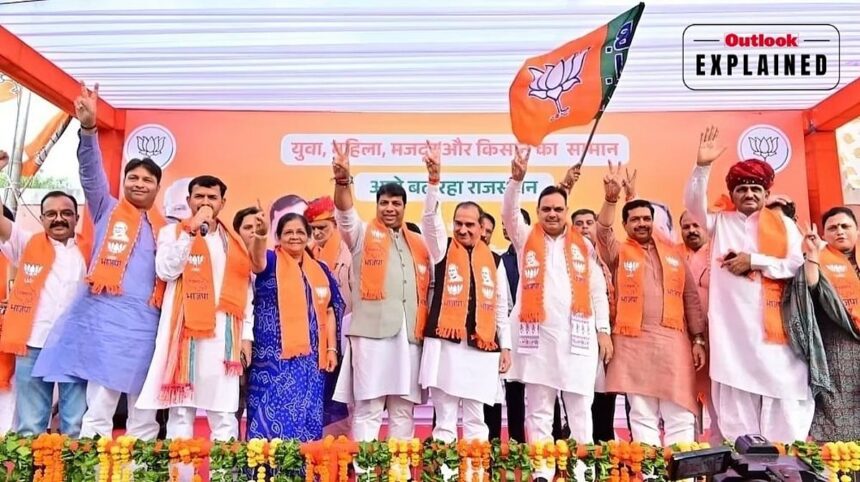
The recent decision by the Bharatiya Janata Party (BJP) to field eight Muslim candidates in the Jaipur civic elections represents a notable shift in their electoral strategy. This marks the first time the BJP has included Muslim candidates since they excluded this community from representation in the previous 2023 Assembly and 2024 Lok Sabha elections.
Context of the Decision
After completely sidelining Muslim candidates in their last two major electoral contests, the BJP’s choice to include eight Muslim candidates in the upcoming municipal elections in Jaipur prompts many questions. Among these candidates is Shabab Jahan, the party’s only Muslim representative in the 2020 civic elections. The BJP attributes this change to considerations of local electorate composition and urgent local issues.
BJP spokesperson Ramlal Sharma emphasized the party’s focus on government welfare schemes to attract Muslim votes, asserting, “The composition of the electorate was considered before finalizing the candidates. We will do well as Muslims will vote for development.” The eight candidates span various wards, showcasing a strategic pivot aimed at shifting the party’s image and courting a demographic they have systematically excluded in recent history.
Challenges and Implications for Muslim Representation
This shift comes amid strong criticism and skepticism from commentators and rival parties like the Congress, which see the inclusion of Muslim candidates as an attempt by the BJP to soften its traditionally anti-Muslim image. Moreover, Congress leaders argue that the BJP is reacting to growing discontent among Muslim voters and attempting to mitigate persistent allegations of discrimination against this community. A senior Congress leader stated, “The BJP, which is usually seen as anti-Muslim, is trying to soften its image.”
The participants in the electoral race are positioning their campaigns around local issues, with candidates like Shabab Jahan emphasizing the need for improved civic infrastructure. Jahan mentioned, “I have been associated with the BJP for 15 years… Muslims have no problems with Prime Minister Narendra Modi.” This underscores a delicate balancing act the BJP must navigate, as it attempts to engage Muslim voters while maintaining its broader political narrative.
Strategic Electoral Changes in Jaipur
This year’s Jaipur civic polls also reflect a break from past practices regarding candidate selection, as neither the BJP nor the Congress released formal candidate lists before the nomination deadline. Instead, candidates were informed over the phone. This informal process may allow the BJP to control internal disputes and stave off potential disruptions from disappointed aspirants.
The BJP’s strategy has focused not only on Muslim candidates but also on maintaining a balance within its ranks, as seen by their nomination of 52 women among the 146 candidates for Jaipur. The adjustment comes amid a changing electoral landscape where both local and national dynamics significantly impact party strategies.
Why It Matters
The BJP’s decision to field Muslim candidates signals a potential evolution in the party’s approach to minority communities, which could have implications for future electoral strategies and community relations in India. As the largest political party in the country, BJP’s actions set precedents that may influence not just local but national political discourse. For policymakers and social activists, understanding these nuanced shifts in party behavior is crucial when advocating for social justice and equitable representation.
Frequently Asked Questions
Why has BJP included Muslim candidates now?
The BJP is attempting to recalibrate its image and engage an electorate that it previously marginalized, particularly in light of local issues that impact Muslim voters.
What are the candidate’s main focus areas?
The candidates, including Shabab Jahan, emphasize civic infrastructure and welfare schemes aimed at improving local community conditions.
How does this affect BJP’s relationship with Muslim voters?
This move is seen as a strategic attempt to mitigate perceptions of the BJP as anti-Muslim and aims to attract Muslim voters by focusing on development-centric issues.
What criticism is the BJP facing for this decision?
The Congress and other parties are arguing that this is merely a façade to improve the BJP’s image among Muslims, questioning the sincerity of their outreach efforts.