
Significance of Barawafat Celebrations in Kanpur
On Wednesday, members of the Muslim community in Kanpur will celebrate Barawafat, commemorating the birth of Prophet Muhammad. This celebration, which begins on Tuesday night, includes a large procession through the city, bringing together community members in a public and religious expression of faith.
Cultural Decorations and Community Participation
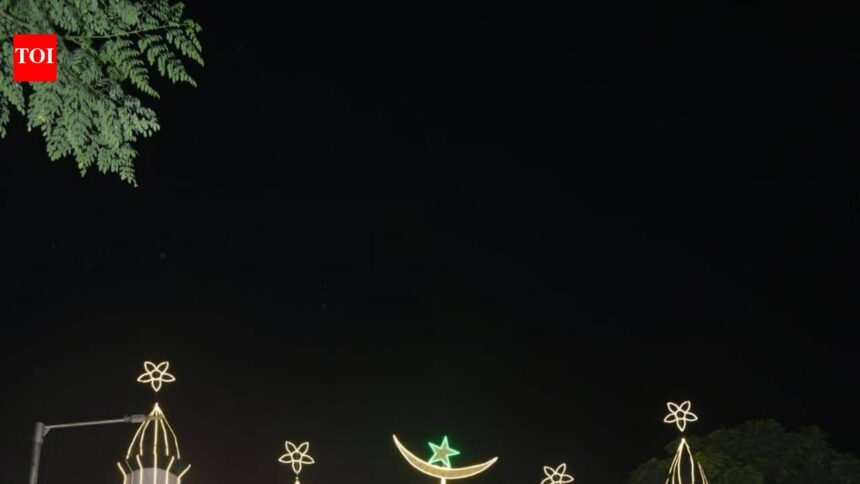
As part of the festivities, the city is being adorned with decorations at prominent crossings, as well as in narrow lanes. Temporary gates have been set up in Muslim-dominant areas such as Jajmau, Talaq Mahal, Rajbi Road, Shutarkhana, Nawabganj, and Babu Purwa. These streets are being festooned with frills, LED bulbs, and traditional jhumars, creating a vibrant atmosphere for the community to engage in prayers and celebrations.
Religious Significance of Eid-e-Milad-un-Nabi
Eid-e-Milad-un-Nabi, also known as Barawafat, is celebrated on the 12th of Rabi’ al-Awwal, the third month of the Islamic calendar. The day is significant not only for marking the birth of Prophet Muhammad but also serves as a day of reflection, as coincidentally, it is also the day he passed away. Maulana Maroof emphasized the importance of this day in Islamic history, noting its observance began in the 11th century by the Sultans of the Fatimid dynasty in Egypt, making it a revered occasion for Muslims globally.
Why It Matters
The observance of Barawafat in Kanpur highlights the cultural richness and diversity within Indian society, especially in light of ongoing contemporary issues surrounding religious tolerance and acceptance. Efforts to marginalize certain communities, including Muslims, often lead to broader discussions about social inclusion, identity, and community relations. By publicly celebrating such festivals, the Muslim community not only asserts their right to cultural expression but also fosters inter-religious dialogue, essential for communal harmony in a multi-religious country like India.
Frequently Asked Questions
What is Barawafat?
Barawafat, also known as Eid-e-Milad-un-Nabi, celebrates the birth of Prophet Muhammad and is observed on the 12th of Rabi’ al-Awwal in the Islamic calendar.
Why is the celebration significant?
This day is significant as it marks both the birth and the death of Prophet Muhammad, making it a focal point for reflection, reverence, and community unity among Muslims worldwide.
How do communities celebrate Barawafat?
Communities often celebrate with prayers, recitation of ‘Naats’, and large processions, accompanied by decorations in streets and mosques to create a festive atmosphere.
What challenges do Indian Muslims face regarding public celebrations?
Indian Muslims often face societal discrimination, economic boycotts, and marginalization, especially under political climates influenced by Hindu nationalism, making public celebrations both an act of cultural assertion and a potential point of contention.