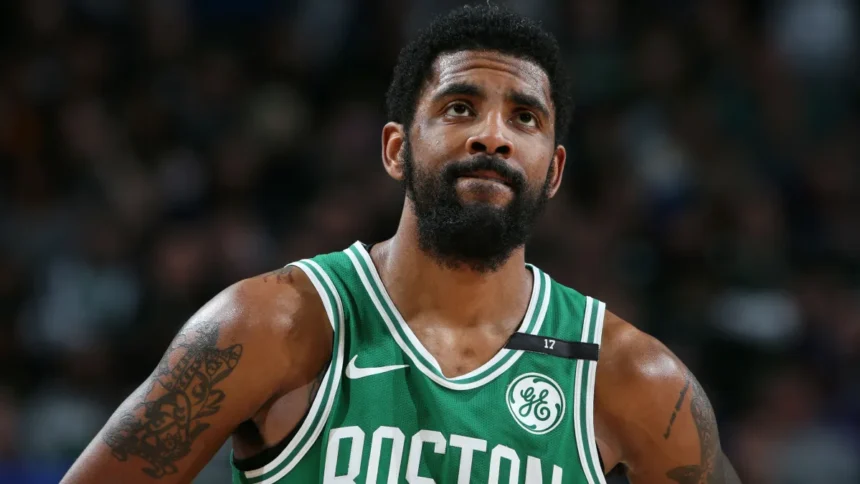

Former NBA All-Star Jeff Teague sparked conversation when he claimed that Kyrie Irving would have been even more legendary than Michael Jordan if he were just four inches taller. This bold assertion raises intriguing questions about player performance related to physical attributes and the nature of greatness in sports.
The Hypothetical Greatness of Kyrie Irving
Jeff Teague recently shared his perspective on Kyrie Irving’s potential during an appearance on the Club 520 Podcast. He stated, “If Kyrie Irving was 6-6…he would have been the best NBA player ever. He would have been better than Michael Jordan.” Teague’s assertion highlights the extraordinary talent Irving possesses, which many argue isn’t fully reflected in his career statistics due to injuries and other setbacks.
Teague’s insistence on Irving’s skill set raises a fascinating point regarding the importance of height in basketball. At a current height of 6-2, Irving has often excelled in dribbling, shooting, and clutch moments, yet the added stature could have enabled him to dominate even more defensively.
Comparing Eras: Jordan vs. Irving
Michael Jordan is often celebrated as the greatest basketball player of all time, known for his work ethic, clutch performance, and competitive spirit. Teague posits that if Kyrie were taller, he would possess “no weakness in his game.” However, being 6-6 may not guarantee better performance, as Jordan’s mental toughness and competitive drive played pivotal roles in his success.
While both players exhibit clutch shooting abilities, Jordan’s aggressive nature set him apart. The narrative suggests that even if Irving had a height advantage, matching Jordan’s competitive edge is another matter entirely. This comparison forces fans to evaluate what truly makes a player “great.” Is it skill, size, or tenacity?
The Broader Debate: Size and Skill in Basketball
Teague’s remarks have reignited a common discussion about height in basketball. Many fans often wonder how different the careers of players like Steph Curry would have been if they were taller. Height can provide advantages, especially in defensive situations and at the rim, but it does not replace fundamentals and skill.
For instance, a taller player like LeBron James exhibits a blend of size and skill that allows him to dominate in various aspects of the game. However, the case of Kyrie Irving serves as a reminder that incredible ball-handling skills can sometimes overshadow physical disadvantages, making the debate even more complex.
Why This Is Trending
Indian basketball fans are increasingly engaging in discussions surrounding NBA legends, expanding the conversation to critical evaluations of players’ abilities. The rise of international basketball talent has allowed many Indians to follow the NBA closely, leading to interest in such hypotheticals. Additionally, with a growing basketball culture in India, the perspectives of former players like Jeff Teague resonate with fans eager to find context in player comparisons, especially concerning giants like Michael Jordan.
Frequently Asked Questions
What did Jeff Teague say about Kyrie Irving?
Jeff Teague claimed that if Kyrie Irving were 6-6, he would have been the best player in NBA history, even better than Michael Jordan, emphasizing Irving’s all-around skill set.
What are the main factors that define greatness in basketball?
Greatness in basketball often includes a combination of skill, intelligence, physical attributes, and mental toughness. Players like Jordan are remembered not only for their skill but also for their competitive drive and clutch performances.
How does height influence basketball performance?
Height can provide advantages in both offensive and defensive situations, allowing for better shot-blocking and rebounding. However, skill and fundamentals remain crucial aspects of overall performance.
Why are discussions about player hypotheticals popular among fans?
Discussions about player hypotheticals allow fans to engage in what-if scenarios that explore athlete potential and capabilities. These debates enrich fan experiences and often reflect broader societal interests in sports narratives.