
Summary: In a recent exchange of humorous remarks, Iran mocked US President Donald Trump’s proposal to claim the Strait of Hormuz as a new US territory by jokingly designating California as the “new territory” of Iran. This light-hearted retort appears amidst elevated tensions between the two nations, reflecting an ongoing dispute that has significant geopolitical implications.
Trump’s Assertion and Its Implications
President Donald Trump recently suggested that the Strait of Hormuz, a critical global trade route for oil, could be claimed as US territory after ongoing conflicts are resolved. This proposal was visually represented on his Truth Social account with a map illustrating the waterway. Subsequently, the White House endorsed his remarks, sharing messages that appear to assert US dominance over the strategically vital maritime passage.
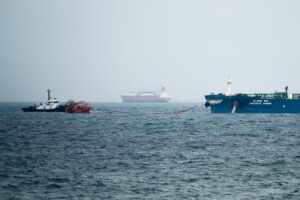
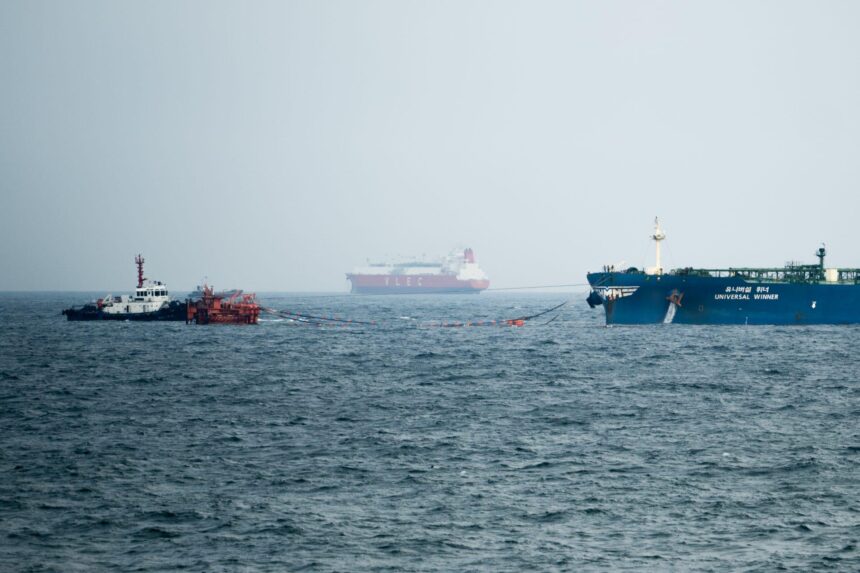
The Strait of Hormuz is essential not only to regional politics but also to global energy markets, with approximately 20% of the world’s oil passing through these waters. Trump’s bold suggestion raises critical questions about international law and the perspectives of regional stakeholders, especially Iran, which views the strait as vital to its national sovereignty.
Iran’s Response and Historical Context
In a playful yet pointed counter, an official Iranian government account on social media highlighted California on a map of the US, calling it the “new territory of the Islamic Republic of Iran.” This move capitalizes on California’s substantial Iranian-American population, especially in areas like Los Angeles, which has been dubbed “Tehrangeles.” Over 141,000 individuals of Iranian descent call Los Angeles County home, and this demographic became prominent following the 1979 Islamic Revolution in Iran.
Iranian officials, including Deputy Foreign Minister Kazem Gharibabadi, remarked on Trump’s stance, suggesting it highlights a delusion that might need to be corrected either by greater Iranian assertiveness or a shifting US perspective. This light hearted response underscores deeper national sentiments in Iran, particularly at a time when diplomatic relations are strained.
The Broader Context of US-Iran Relations
The exchange comes against a backdrop of heightened tensions between Washington and Tehran. In June, both countries had signed a memorandum of understanding, intended to curtail hostilities and lead toward a broader agreement. However, the arrangement faltered amid disputes regarding its implementation, especially concerning navigation through the Strait of Hormuz.
Moreover, ongoing discussions involving Iran and Oman regarding navigation through this critical waterway are stalling, highlighting the complexities that underlie diplomacy in the region. The tension reflects not just a bilateral spat but also concerns related to global energy security and regional alliances.
Why It Matters
The ongoing tensions and humorous exchanges between Iran and the US signify more than just a diplomatic spat; they reveal underlying geopolitical dynamics that affect global energy markets and international relations. The Strait of Hormuz plays a crucial role in global trade, and any escalatory rhetoric may affect oil prices and shipping routes. For developers and users of AI in geopolitical contexts, these developments underline the necessity for models that account for not just historical events but also real-time political dynamics. Industry stakeholders must also recognize the cultural sentiments, such as the Iranian Diaspora in the US, that can influence public opinion and policy responses.
Frequently Asked Questions
What is the significance of the Strait of Hormuz?
The Strait of Hormuz is a strategic chokepoint through which about 20% of the world’s oil supply travels, making it crucial for global energy security.
How did Trump’s comments gain traction in the media?
Trump’s comments became notable through social media platforms where he shared a map visualizing his proposal, leading to reactions from both domestic and international audiences.
What is the history of Iranian-Americans in California?
California has a significant Iranian-American population, particularly in Los Angeles, which grew notably after the 1979 Islamic Revolution, establishing a cultural hub referred to as “Tehrangeles.”
What has been the state of US-Iran relations recently?
Relations have been strained, especially following disputes over agreements aimed at ending hostilities, and ongoing negotiations have seen limited progress in addressing their complex interactions.