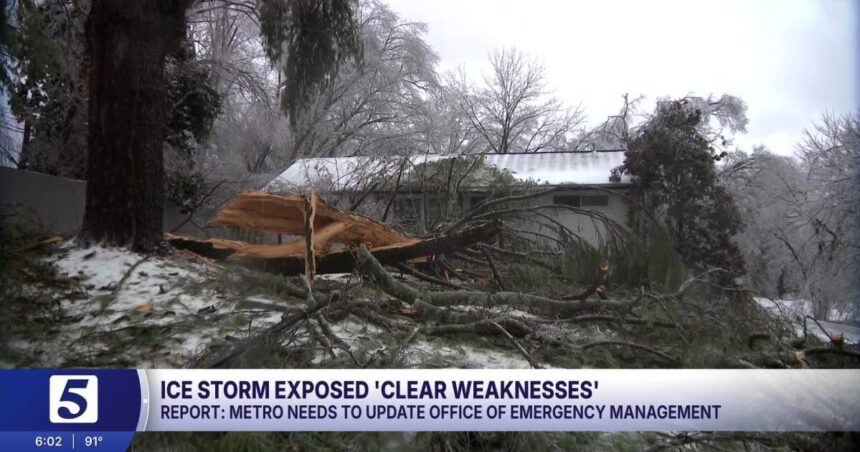

The Winter Storm Response Commission in Nashville has released a critical interim report addressing the city’s inadequate response to the January ice storm, which left over 230,000 residents without power for up to two weeks. Key findings indicate not only shortcomings from the Nashville Electric Service (NES) but also serious deficiencies within the Metro Government’s emergency preparedness protocols.
Key Findings from the Commission’s Report
The 20-page report, led by former Governor Phil Bredesen and former House Speaker Beth Harwell, has outlined several alarming issues. Among them, the Metro’s Office of Emergency Management has been criticized for its “clear weaknesses in preparedness planning.” Vice Mayor Angie Henderson noted that the office operates heavily on “institutional knowledge,” relying on personal contacts rather than comprehensive written plans.
Henderson emphasized that this approach resembles outdated practices, stating, “That is a little bit more kind of the itty-bitty-city era,” referring to the reliance on individual decisions rather than a structured emergency response framework.
Moreover, the report revealed that the mass care shelters established during the storm had confusion regarding their purpose and access. Henderson voiced disappointment regarding the delayed opening of these shelters, saying, “I wish the communication had been more clear about for whom they were open for.” This lack of clarity affected many residents who needed immediate assistance.
Issues Faced by Nashville Electric Service
The report drew attention to NES’s delayed actions in securing vital external support. It confirmed prior investigative findings indicating that the utility service postponed requests for additional resources, with outside utility crews only arriving eight days after the storm’s onset. Brandon and Emily Boyce, co-owners of Linewerx Inc., revealed that their crews were near Nashville after the storm but received no response from NES, highlighting a serious lapse in emergency coordination. Brandon Boyce commented, “Their emergency preparedness seemed like they didn’t have a plan of action,” underscoring the growing concerns around NES’s operational deficiencies.
When asked to assess NES’s overall performance, Vice Mayor Henderson did not mince her words, stating, “I would characterize it as pretty poor.” Despite this criticism, she refrained from suggesting immediate firings, indicating a cautious approach in dealing with accountability in leadership roles post-crisis.
Recommendations for Improvement
The Winter Storm Response Commission has suggested hiring a consultant to modernize the Metro’s Office of Emergency Management. This move aims to overhaul existing practices and ensure that more systematic plans are in place for future emergencies. The interim report also mentioned changes already taking place within NES, including the removal of Vice President Brent Baker from his position. He now serves as a consultant while CEO Teresa Broyles-Aplin remains at the helm. NES has acknowledged the report and is committed to enhancing its emergency preparedness strategies.
Such measures could potentially lead to a more robust emergency response in the future, protecting residents from the debilitating effects of similar storms. The expectation is that with these changes, the learnings from this event will pave the way for a more efficient and effective emergency response team in Nashville.
Why This Is Trending
The ongoing global climate crisis has drawn attention to how various cities manage emergencies resulting from extreme weather conditions. With more frequent and severe storms affecting urban areas worldwide, the situation in Nashville resonates with many, especially in India, where monsoons and floods have caused significant disruptions in recent years. The situation underscores the importance of effective emergency management systems, drawing parallels with similar challenges faced by Indian municipalities in their own management of natural disasters. As cities gear up for future storms, the lessons learned in Nashville serve as both a cautionary tale and a guide for improving local emergency preparedness.
Frequently Asked Questions
What were the primary failures highlighted in the report?
The report underscored inefficiencies in the Metro Government’s emergency preparedness planning and criticized NES for its delayed response in securing external help.
How did the mass care shelters perform during the storm?
The shelters were criticized for being “confused at first,” with a lack of clear communication regarding their availability to residents needing assistance.
What actions are being proposed for future improvements?
The commission recommends hiring a consultant to help modernize the Office of Emergency Management and improve preparedness for future emergencies.
How has NES responded to the criticism?
Nashville Electric Service has acknowledged the commission’s interim report and is currently reviewing its findings to implement improvements in their emergency response strategies.