
Summary
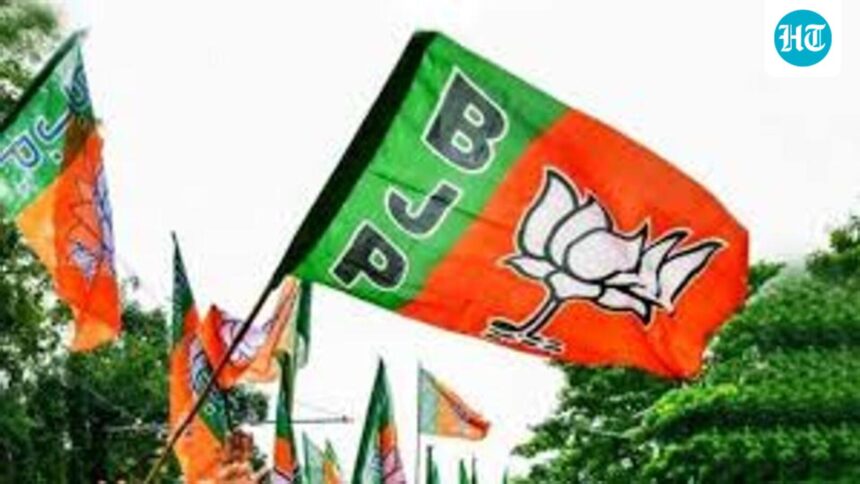
As Uttar Pradesh gears up for assembly polls, the BJP has formed a new national team that seeks to strike a balance between various social and demographic factors. The move, which includes significant representation from marginalized communities, particularly aims to bolster the party’s outreach to Muslim voters, including the Pasmanda community, potentially reshaping political dynamics in the state.
Representation in the New National Team
The BJP’s organizational reshuffle features eight leaders from Uttar Pradesh, demonstrating an effort to accommodate diverse social identities. This lineup includes three women, three leaders from the Other Backward Classes (OBC), a Scheduled Caste representative, and a Brahmin. Such social composition aims to reflect a spectrum of community interests within the party, potentially attracting a broader voter base ahead of the elections.
Significantly, the team also retains Muslim representatives, including Tariq Mansoor, a former vice-chancellor of Aligarh Muslim University, and Kunwar Basit Ali, the new president of the Minority Morcha. Their induction symbolizes a strategic outreach to the Pasmanda Muslims, a community that has historically felt marginalized within both the BJP and wider Indian society. This outreach effort is especially important given UP’s unique demographic composition, where Muslim voters form a crucial electoral segment.
Efforts to Engage Pasmanda Muslims
The BJP has made strategic moves to engage with Pasmanda Muslims as part of its broader political strategy. Political scientist Shashi Kant Pandey emphasizes that the recent inductees are from regions in western UP that have significant Muslim populations. The BJP’s representation in communities previously viewed as oppositional is an attempt to solidify its historical support among other groups while also making inroads into the Muslim vote, particularly targeting the voter base of the Samajwadi Party (SP).
Tariq Mansoor and Kunwar Basit Ali both expressed gratitude for their new roles and articulated a vision to bridge the gap between Muslim communities and BJP ideologies. Mansoor stressed that welfare schemes under the Modi government have aimed to benefit all sections of society, regardless of religious affiliation. This statement is part of a broader narrative aimed at contesting perceptions that the BJP remains uninviting to Muslims.
Political Implications for Uttar Pradesh
The BJP’s aim to present a more inclusive face is critical given Uttar Pradesh’s socio-political landscape. The integration of Muslim representatives into the party’s leadership is a pragmatic approach to counteract historical biases and economic boycotts faced by the community under past governance models. Harish Dwivedi, representing Brahmin interests, and Bhola Singh from the Scheduled Caste community further reflect the party’s calculated balancing of representation across different societal segments.
However, challenges remain as perceptions of discrimination and social exclusion continue to linger among Indian Muslims. Previous policies and rhetoric may cast shadows over these outreach efforts, making potential voters skeptical of the sincerity behind the BJP’s initiatives. As the political landscape shifts, these tensions will be key to understanding the dynamics in Uttar Pradesh.
Why It Matters
The composition of the BJP’s new team and its implications for the Muslim community in Uttar Pradesh are significant not just for local politics but also for the broader narrative of community representation in India. The party’s outreach attempts could either reinforce historical biases or pave the way for greater political inclusivity. Understanding this shift is crucial for grasping the interplay between government policies and social realities, particularly for communities that have faced systematic disadvantages.
Frequently Asked Questions
What is the significance of the BJP’s new national team in Uttar Pradesh?
The new team aims to represent diverse social identities, including marginalized communities like the Pasmanda Muslims, in a bid to broaden the BJP’s electoral appeal ahead of upcoming assembly polls.
Who are the key representatives from the Muslim community in the new team?
Tariq Mansoor and Kunwar Basit Ali are the two prominent Muslim representatives, with roles intended to foster connections between the BJP and Muslim voters.
How does this new team address historical biases against Muslims?
The BJP’s inclusion of Muslim leaders is a strategic effort to counteract perceptions of discrimination and to demonstrate that the party is working towards inclusivity in governance.
What are the potential challenges for the BJP in reaching out to the Muslim community?
Long-standing skepticism regarding the BJP’s motives and concerns over past discriminatory policies may hinder effective outreach and acceptance among Muslim voters.