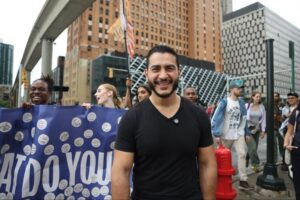
Recent political discourse in the United States has illuminated a disturbing trend: the rampant anti-Muslim rhetoric targeting Muslim candidates. Figures such as Abdul El-Sayed and Zohran Mamdani have faced fierce criticism rooted in their religious identities, a reflection of the systemic racial capitalism that fuels exclusionary politics. This article explores the implications for marginalized groups and what such discrimination reveals about broader societal structures.
Racial Capitalism and the Dynamics of Exclusion
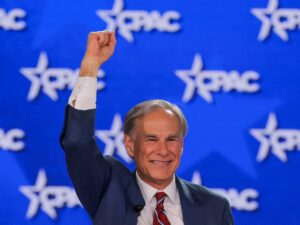
Racial capitalism, a term coined by Cedric Robinson in his seminal work Black Marxism, describes the disproportionate valuation of lives based on race, driving economic and political power dynamics. Recent attacks on Muslim candidates like El-Sayed and Mamdani highlight how these dynamics manifest in contemporary politics. For example, Senator Tommy Tuberville’s inflammatory comments labeling El-Sayed a “terrorist” and Rep. Nancy Mace’s assertion that “every single Muslim holding public office in America” represents a national security threat are instances of this systemic prejudice.
While individual experiences of racism—like microaggressions—often dominate discussions, they divert attention from the more significant structures at play. The public vilification of Muslim candidates illustrates a concerted effort to maintain power within a racially hierarchical system. Such exclusion not only denies these individuals equal citizenship but reflects a broader societal problem where certain lives are deemed less valuable.
The Legacy of Supremacist Rhetoric
The rhetoric directed at Muslim candidates today echoes historical prejudices held by supremacists and segregationists. Throughout American history, various marginalized groups have encountered similar backlash when attempting to gain political voice. For instance, during Reconstruction, approximately 2,000 Black men served in elected positions despite vehement opposition from political leaders who proclaimed that extending voting rights would bring about “tyranny.”
Just as Black Americans faced violent suppression of their civic participation, modern-day Muslim candidates encounter a resurgence of racially charged claims meant to stifle their influence. Public figures perpetuating these narratives are essentially echoing sentiments long seen in the discourse around racial supremacy in the United States. They share a desire to preserve power dynamics reliant on exclusion, fearing any challenge to the existing order.
Building Collective Power
The anti-Muslim discourse is not merely an isolated issue but rather a manifestation of a broader struggle against systemic racism and exclusion. Historical examples, such as the Mississippi Freedom Democratic Party (MFDP) from the 1960s, demonstrate the importance of not merely seeking acceptance within oppressive systems. The MFDP did not ask for crumbs but instead fought for structural changes that promote equitable power distribution beyond matters of race, gender, or class.
In the face of ongoing discrimination, it is essential for marginalized communities to focus on building their own power, uniting against those who wish to perpetuate division. Engaging in dialogue or presenting legal arguments is often insufficient against a mindset entrenched in supremacist ideology. Instead, collective action and the rejection of the current power structures should be the priority, forging alliances across communities to demand a just and equitable system.
Why It Matters
The plight of marginalized groups, especially in political spheres, encapsulates significant implications for societal harmony and justice. The rhetoric surrounding Muslim candidates illustrates a concerning trend toward exclusion that affects various sectors, including social cohesion and political engagement. Understanding these dynamics is crucial for tech developers and AI users who aim to create fair systems. Addressing these biases within technology can foster better inclusion and representation of diverse communities, promoting an equitable approach to AI deployment.
Frequently Asked Questions
What is racial capitalism?
Racial capitalism refers to the systemic exploitation of racialized labor and resources that contributes to wealth accumulation, emphasizing the uneven valuation of human life based on race.
How does anti-Muslim rhetoric impact political participation?
Anti-Muslim rhetoric discourages individuals from participating in politics, undermining their legitimacy and reinforcing barriers to entry in governance and public service, thereby limiting representation for marginalized communities.
What historical examples reflect similar discrimination faced by minorities today?
Throughout history, minority groups, including Black Americans during Reconstruction and civil rights movements, faced political exclusion and violent suppression, mirroring contemporary anti-Muslim sentiments aimed at stifling their civic contributions.
What can marginalized communities do to combat exclusion?
Marginalized communities can focus on building collective power through unity, advocacy, and demands for structural change, while rejecting the current oppressive systems and seeking equitable representation in governance.