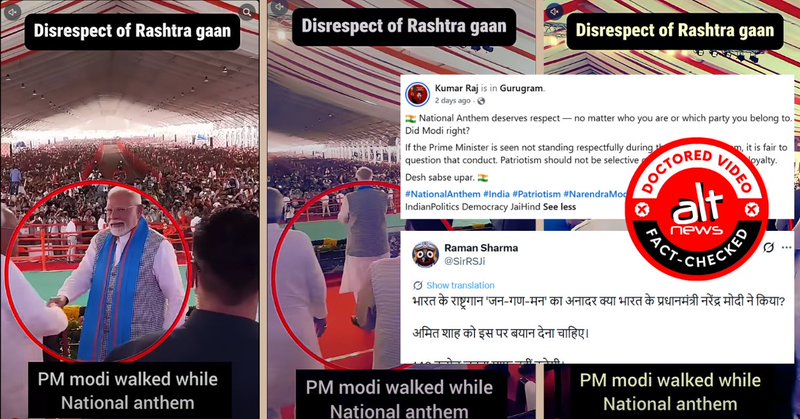

A viral video circulating on social media claims to show Prime Minister Narendra Modi walking around on stage while the national anthem plays in the background. However, investigations reveal that the video has been doctored, and the original footage contains no such audio. This incident raises questions about the use of misinformation in political narratives.
Video Manipulation Revealed
Recent fact-checking by Alt News has established that the widely shared clip portraying PM Modi during the national anthem is misleading. The original footage does not feature any rendition of the national anthem; instead, the audio has been altered to fit the narrative propagated by certain social media users. This manipulation serves as a stark reminder of the lengths to which some will go to fabricate politically charged content.
The video has gained traction primarily through platforms like Facebook, showcasing the rapid spread of misinformation. The alteration to the original clip is clear to those who scrutinize the details closely, yet it raises alarm over how narratives can be shaped in the digital age. With increasing reliance on digital platforms for information, understanding the origins of such content is essential.
Backdrop of Political Indoctrination
Misinformation and propaganda have long been tools in political maneuvering, particularly in India, where political allegiance often influences media representations. Modi’s administration has been under scrutiny for how it manages its image and interacts with its critics. During election seasons, the stakes are high, and any semblance of impropriety can sway public opinion.
The use of doctored videos is not unique to this instance; similar tactics have been employed across various platforms to either vilify or glorify political figures. Past instances, such as edited speeches or misleading clips from rallies, have had significant impacts on voter perceptions and behavior, highlighting the intricate relationship between media and politics in contemporary India.
Implications for Political Discourse
The manipulation of videos presents severe implications for political discourse in India. This incident underscores the necessity for digital literacy among the electorate, as voters must discern facts from misinformation to make informed decisions. With political officials like PM Modi at the center of such discussions, the authenticity of their actions becomes scrutinized under the lens of media interpretation.
Combatting misinformation requires not only fact-checking from credible sources like Alt News but also a commitment from social media platforms to flag or remove misleading content. Unless these steps are actively taken, the problem will continue to erode public trust and skew political dialogues.
Why This Matters
The distortion of factual content, particularly concerning high-profile political figures, significantly impacts public perception and voter behavior. In an era where misinformation spreads rapidly, protecting the integrity of political discourse is crucial. This incident not only reflects the ongoing battle between truth and falsehood in political communication but also highlights the responsibilities of both content creators and consumers.
In a diverse democracy like India, understanding the implications of misinformation can help safeguard democratic principles and encourage a more informed electorate. The tendency for sensational stories to gain traction can obscure critical issues, leading to polarized views and undermining the political process.
Frequently Asked Questions
What is the main claim about PM Modi in the viral video?
The viral video suggests that PM Modi was walking around on stage while the national anthem was playing, showing a lack of respect. However, this claim has been debunked.
Who fact-checked the video and what did they find?
Alt News fact-checked the video and found that it has been doctored; the original video contains no national anthem audio.
Why is misinformation around political figures a concern?
Misinformation can significantly alter public perception and decision-making, potentially influencing electoral outcomes and undermining democratic processes.
How can voters discern misinformation?
Voters can discern misinformation by consulting credible fact-checking sources, verifying content through multiple platforms, and being critical of the sources from which they receive information.