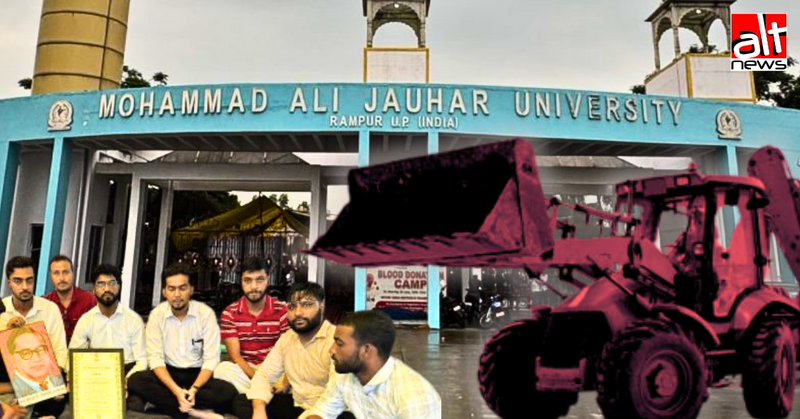

A demolition order against Mohammad Ali Jauhar University has led to significant uncertainty for thousands of students and raised concerns about educational rights and governance in India. This situation unfolds within the wider backdrop of a long-standing feud between Azam Khan, a prominent political figure, and the Uttar Pradesh government.
Context: The Demolition Order
Mohammad Ali Jauhar University, located in Rampur, Uttar Pradesh, has found itself at the center of a contentious legal fight following a demolition order issued by local authorities. The order reportedly stems from a dispute involving the Rampur Development Authority (RDA), which claims that the university was built without proper permissions or adhered to zoning laws. Students have expressed their distress over the situation, fearing disruption to their education and future prospects.
Background: The Long-standing Feud
At the heart of this conflict is the ongoing feud between Azam Khan, the university’s founder and a key political figure within the Samajwadi Party, and the ruling Bharatiya Janata Party (BJP) in Uttar Pradesh. Khan has been a vocal critic of the state government’s policies, alleging that the demolition order is politically motivated. This feud has intensified in recent years, revealing broader tensions in Uttar Pradesh politics, especially concerning educational institutions and minority rights.
Students’ Perspectives: Voices of Concern
Many students have rallied to voice their frustration over the demolition order. Some have expressed fears that their educational futures are in jeopardy due to what they perceive as political vendetta. Social media has become a platform for students to share their stories and concerns, amplifying their calls for justice and intervention from higher authorities. These voices are critical, as they emphasize the personal impact of political conflicts on education and societal stability.
Why This Matters
The demolition order against Mohammad Ali Jauhar University is significant for several reasons. Firstly, it serves as a touchpoint for discussions on educational policy, regulatory enforcement, and the right to education in India. With an alarming rate of youth unemployment, preserving educational institutions is vital for social progress. Additionally, the case illustrates how political rivalries can directly impact educational environments, raising questions about governance and the politicization of academic institutions. For Indian readers, this situation is a reminder of the fragile balance between education, politics, and community aspirations in the country’s democratic framework.
Frequently Asked Questions
What led to the demolition order for Mohammad Ali Jauhar University?
The order was issued by the Rampur Development Authority, citing alleged violations of zoning laws and lack of proper permissions in the university’s construction.
What are the implications of this situation for current students?
Students face significant uncertainty regarding their educational futures, with fears that the order could lead to the closure of the university or disrupt academic activities.
How does Azam Khan fit into this scenario?
Azam Khan is the founder of the university and a prominent political figure who has been vocal against the state government’s actions, framing the demolition order as politically motivated.
Why is this issue critical for Indian politics?
This situation reflects broader political dynamics in Uttar Pradesh and raises critical questions about the relationship between education, governance, and political power in India.