
Summary
A prominent Muslim student leader in India has accused police of targeting her family in response to her activism against examination paper leaks. Despite no formal criminal charges against her, Danish Ali’s situation reflects broader concerns regarding discrimination and policing practices directed towards Muslim activists in the country.
Police Targeting in Madhya Pradesh
Danish Ali, joint secretary of the Jawaharlal Nehru University Students’ Union (JNUSU) and a key figure in the All India Students’ Association (AISA), recently reported that police officers visited her family’s home in Bandarbarru village in Madhya Pradesh. The officers questioned her relatives about her whereabouts, raising alarms about potential harassment linked to her participation in nationwide protests demanding accountability for examination paper leaks.
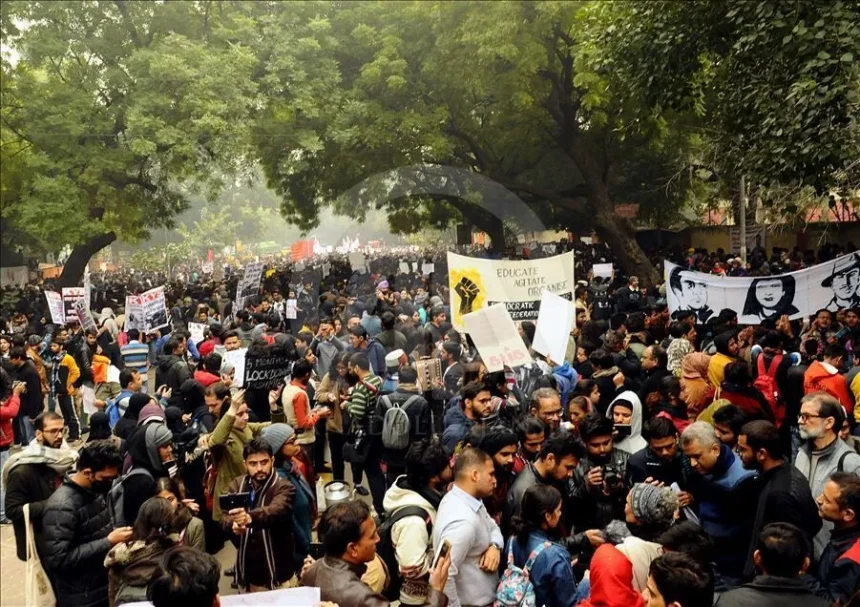
This incident comes in the wake of nationwide demonstrations, marking one of the largest youth-led movements against Prime Minister Narendra Modi’s government in recent years. Ali’s visible involvement during the protests, including a hunger strike at Jantar Mantar in New Delhi, highlights the heightened scrutiny faced by activists, especially those from marginalized communities.
Concerns of Broader Anti-Muslim Hostility
Ali alleged that while she was singled out by police, many other activists involved in the same protests have not faced similar harassment. Speaking out about her experience, she emphasized the fear within her family over the police visit, suggesting it underscores a growing pattern of anti-Muslim sentiment within Indian governance. The targeting of individuals based on their religion, particularly in the context of political dissent, raises significant ethical and societal questions.
In her direct appeal, Ali criticized the police for bypassing her and choosing to interrogate her family instead, stating, “Contact me directly. I’m openly available at the JNU students’ union office.” This public assertion not only advocates for her rights but also echoes a broader call for transparency and integrity within law enforcement operations.
Political Backlash and Activism
The actions against Ali have drawn condemnation from various political entities, including the Communist Party of India (Marxist-Leninist) Liberation. The party criticized the police’s actions as a form of intimidation against political activists, demanding an end to what they view as systemic harassment of young leaders advocating for change. The ongoing climate of fear surrounding student activism in India raises significant concerns about the political and civil rights of marginalized communities.
With allegations surfacing about police questioning other Muslim organizers of the protests, the atmosphere for dissent is becoming increasingly fraught. This treatment of Muslim activists can lead to chilling effects on political participation, especially among youth who may feel discouraged from standing up for their beliefs due to fear of repercussions.
Why It Matters
The situation involving Danish Ali illustrates the broader implications of political marginalization and discrimination within society. As the challenges faced by Muslim communities escalate, the need for attentive governance and respectful civil rights practices becomes critical. For developers in AI and civil society technology, this case underscores the importance of responsibly engaging with issues of social justice and the potential role of technology in documenting and addressing inequalities. Awareness and accountability can enhance the effectiveness of various sectors in advocating for equitable treatment of all citizens, regardless of their background.
Frequently Asked Questions
What prompted the protests led by Danish Ali?
The protests were driven by demands for accountability over repeated examination paper leaks, which highlighted systemic issues within India’s educational framework.
Why are police questioning Danish Ali’s family?
Police visited her family to inquire about her whereabouts, allegedly as part of an intimidation tactic aimed at deterring her activism, despite no formal criminal case being filed against her.
What risks do Muslim activists face in India today?
Muslim activists in India are increasingly facing governmental scrutiny and harassment, reflecting broader societal tensions and potential discrimination against the Muslim community in political and civic engagement.
What has been the response from political parties regarding this targeting?
Political entities such as the Communist Party of India (Marxist-Leninist) Liberation have openly condemned the police actions, voicing their concerns about the harassment of student activists and calling for an end to such intimidation practices.