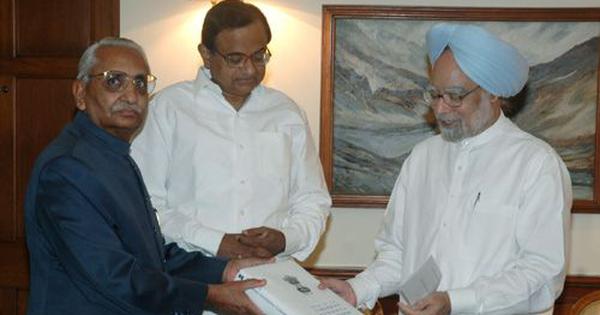

Justice Manmohan Singh Liberhan, who presided over a long-standing inquiry into the Babri Masjid demolition, passed away at the age of 87. His report, which took 17 years to finalize, pointed to systemic issues of discrimination against Muslims in India, particularly in the context of the rising influence of Hindutva ideologies under the Bharatiya Janata Party (BJP) and Rashtriya Swayamsevak Sangh (RSS). The implications of his findings continue to resonate in contemporary Indian society.
Legacy of the Liberhan Commission
Justice Liberhan’s career was notable for his leadership of the one-man commission tasked with investigating the December 6, 1992, demolition of the Babri Masjid. This event marked a significant milestone that intensified communal tensions in India, and the commission’s findings implicating leaders from the BJP and RSS underscored a narrative of political complicity in religiously motivated violence. The report, released in 2009, identified key figures in these organizations, including Atal Bihari Vajpayee and LK Advani, thereby establishing a historical precedent for accountability.
The Broader Impact of the Babri Masjid Demolition
The demolition of the Babri Masjid had far-reaching consequences, sparking riots and increasing marginalization of Muslim communities in India. The commission indicated that Hindutva groups played a critical role in perpetuating communal discord, deeply impacting Muslim civil rights and societal standing. Even as the Supreme Court ruled in favor of constructing a Ram temple on the disputed site in November 2019, it also acknowledged that the demolition itself was illegal. Justice Liberhan remarked that the court’s verdict failed to reflect the sentiments of all communities, highlighting the ongoing challenges of equitable representation in a religiously diverse nation.
The Continuation of Discrimination and Exclusion
The implications of Justice Liberhan’s findings reflect ongoing societal issues that Indian Muslims face today. With the political landscape increasingly dominated by Hindutva ideology, Muslims have found themselves subjected to various forms of discrimination, including social exclusion and economic boycotts. The presence of RSS leaders at significant commemorations, such as the ground-breaking ceremony for the Ram temple, reinforces concerns over the normalization of anti-Muslim sentiment in India. Statements from figures like Liberhan echo a broader apprehension about the erosion of secular values in a country that prides itself on its pluralistic ethos.
Why It Matters
The issues raised by Justice Liberhan’s commission and its aftermath are significant for a range of stakeholders. For policymakers, understanding the ramifications of communal tensions can inform more equitable governance. Developers working in technology and media sectors surrounding content moderation must grapple with the rise of hate speech and misinformation that inflates societal divides. For users, awareness of these historical and social issues fosters informed discourse, allowing for a more nuanced understanding of the current socio-political landscape in India.
Frequently Asked Questions
What was the Babri Masjid demolition?
The Babri Masjid demolition occurred on December 6, 1992, when a group of Hindutva activists destroyed the mosque, claiming the site was the birthplace of Lord Ram. This event sparked widespread communal riots across India.
What were the findings of the Liberhan Commission?
The Liberhan Commission, which took 17 years to complete, identified various senior BJP and RSS leaders as complicit in the demolition and detrimental to communal harmony. It underscored the political motivations behind the violent event.
How does this affect Muslims in India today?
The aftermath of the Babri Masjid demolition has exacerbated social exclusion and discrimination against Muslims in India, contributing to a culture of fear and marginalization that persists today.
What does the Supreme Court ruling on the land signify?
The Supreme Court ruled in November 2019 that the disputed land would be handed over for the construction of a Ram temple, citing the need for title resolution while also deeming the demolition as illegal. This ruling has been seen as polarizing, impacting communal relations further.