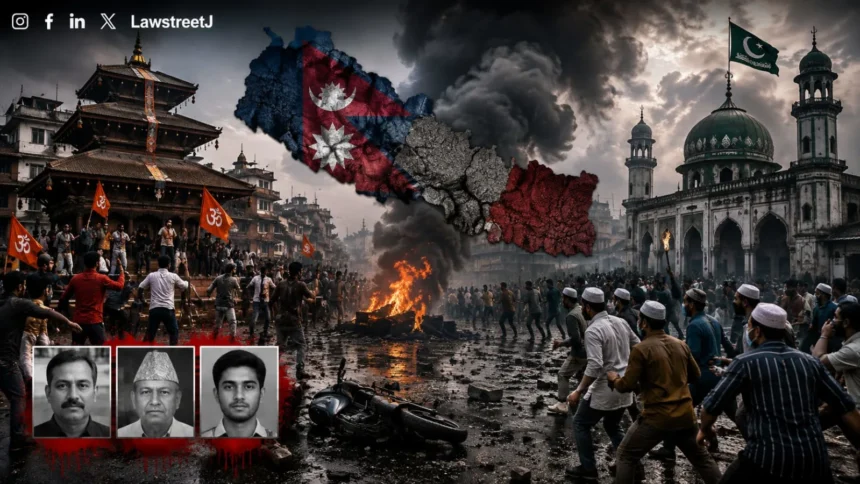

Nepal’s recent communal violence has revealed significant underlying tensions between Hindus and Muslims, ignited by a dispute over a DJ sound system at a religious event. Following the violent clashes that erupted on July 26, 2026, resulting in three deaths and numerous injuries, the Nepali government has been scrutinized for its delayed and inadequate response, raising questions about communal relations and institutional preparedness.
Recent Violence: A Spark Ignites Tensions
The violence in Diwanganj, a town in Nepal’s Sunsari district bordering India, began with a late-night altercation between communities over loud music and religious flags during a Hindu ritual. This initial clash escalated quickly, leading to stone-pelting and armed confrontations. The altercations resulted in police opening fire, claiming the lives of three individuals, including Ganesh Yadav, Om Prakash Mehta, and Jay Prakash Mehta, with approximately two dozen others sustaining injuries.
The unrest spread quickly beyond Sunsari, affecting neighboring districts like Saptari, Siraha, Dhanusha, and Parsa, prompting curfews and security deployments. On July 30, public protests erupted in Janakpurdham, where demonstrators voiced their frustrations against the government. The violence illustrates a troubling escalation of communal tensions that have been brewing for some time in Nepal’s southern regions.
Underlying Patterns of Communal Strife
The Sunsari incident did not occur in a vacuum. Over the course of 2026, Nepal’s southern districts have faced escalating communal conflicts. Earlier clashes began the year with a controversial TikTok video and vandalism against religious sites, culminating in curfews and unrest across Dhanusha and Parsa districts. Each event pointed to a broader societal issue where local disputes could spiral out of control due to inadequate institutional responses to tensions.
Despite the establishment of District Peace and Social Harmony Committees initiated by the then Home Minister Om Prakash Aryal, most districts still lack the necessary infrastructure to mitigate communal tensions. Political analysts have raised alarms over the role of social media, which often exacerbates local disputes, turning manageable conflicts into widespread crises.
The Government’s Response and Criticism
The Nepali government faced severe backlash for its perceived delayed response to the violence. Prime Minister Balendra Shah issued a statement two days into the crisis and delivered a formal address four days later. Local residents and opposition leaders criticized the government for inaction while curfews were in effect and tensions escalated. Critics argue that this delay in leadership sent a message of neglect to those most affected.
Furthermore, the government’s reliance on security measures rather than proactive dialogue with stakeholders has come under scrutiny. The Prime Minister’s late engagement resonated poorly especially given his roots in the Madhesh region. As violence sparked anger across communities, the political vacuum was filled by other leaders, highlighting the demand for better governance and crisis management.
Why It Matters
The unfolding events in Nepal raise essential questions about communal harmony and governance in a multi-religious society. The Sunsari violence underscores the importance of effective conflict resolution mechanisms and timely governmental actions to prevent local disputes from escalating into larger crises. It also reflects a trend seen in several countries where communal identity politics play a critical role, necessitating deeper engagement and dialogue between communities to foster social stability and harmony.
Frequently Asked Questions
What caused the communal violence in Nepal?
The violence erupted from a dispute over loud music and religious flags during a Hindu ritual, leading to violent clashes between Hindus and Muslims in Diwanganj, Sunsari district.
How did the government respond to the violence?
The Nepali government was criticized for its delayed response. The Prime Minister issued a statement two days after the violence and provided a national address only four days later.
What are the implications of this unrest for communal relations in Nepal?
The violence highlights existing tensions between Hindus and Muslims in Nepal, questioning the country’s communal fabric and revealing the inadequacy of institutional mechanisms meant to foster harmony.
What measures have been suggested to prevent future conflicts?
Experts suggest the establishment of effective local conflict resolution mechanisms, continuous community dialogue, and timely governmental intervention to address grievances before they escalate.