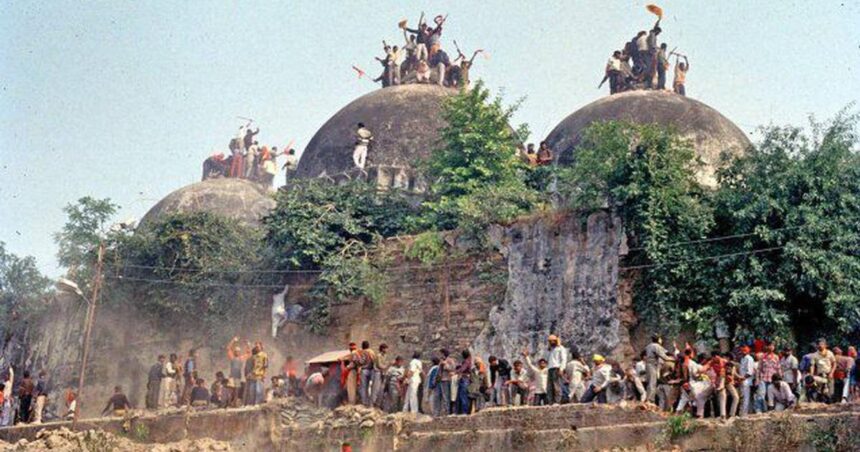

The Bombay High Court recently declared that expressing the opinion that the Babri Masjid in Ayodhya should not have been demolished does not constitute “anti-national” sentiment. This legal ruling highlights ongoing issues surrounding discriminatory practices taken against individuals associated with certain political views, particularly those critical of the current government.
The Court’s Direct Challenge to State Actions
Justice Madhav Jamdar of the Bombay High Court quashed an externment order against Firoz Abdul Wahab Khan, a member of the Social Democratic Party of India (SDPI). This order had barred Khan from entering Mumbai for a year based on his participation in protests related to the Babri Masjid and other social issues. The court underscored that the citizens possess the right to hold differing opinions, particularly on historically contentious matters. During the hearing, Justice Jamdar emphasized the selective enforcement of the law, questioning why only certain dissenters faced repercussions when members of other political parties participated in similar protests.
Government Justifications Under Scrutiny
The Maharashtra government’s position was that Khan’s involvement in protests could disturb social harmony and pose risks to law enforcement. However, the High Court dismissed these claims, asserting that fundamental rights, including the right to free movement, cannot be restricted based on speculative fears. Justice Jamdar reiterated that any significant limitation on a person’s fundamental rights necessitates a stringent legal framework. This ruling reinforces the notion that expressing dissenting views, especially in a democratic setup, should not be stifled by governmental authority.
Discriminatory Allegations and Selective Targeting
Throughout the case, the state sought to connect the petitioners to the banned organization, Popular Front of India (PFI). The court rebuffed these claims, stating that such allegations did not stem from the original notice and thus could not serve as a basis for externment. This highlights systemic issues of discrimination within the legal framework, especially when targeting individuals based on their religious or political identity. Justice Jamdar’s ruling also signifies an acknowledgment of the broader context of communal tensions and the need for equal treatment under the law, irrespective of political affiliations.
Why It Matters
This ruling from the Bombay High Court is significant for several reasons. It challenges the pattern of discrimination that has been growing in India, particularly against Muslim communities and those who express dissent against the ruling government. The court’s insistence on protecting fundamental rights is crucial in a climate where such rights are increasingly under threat. This case exemplifies the importance of upholding democratic principles and the rule of law. For policymakers and civil society, it serves as a critical reminder of the need to ensure inclusivity and equal representation in political discourse, especially in multicultural societies like India.
Frequently Asked Questions
What was the basis for the externment order against Firoz Abdul Wahab Khan?
The externment order was issued by the Mumbai Police based on Khan’s participation in protests against the Waqf Amendment Bill, air pollution, and the Babri Masjid demolition, among other social issues.
What did the Bombay High Court say regarding the protests linked to the Babri Masjid?
The court stated that merely expressing the opinion that the Babri Masjid should not have been demolished does not amount to anti-national activity. It affirmed that everyone has the right to hold differing opinions on such matters.
What concerns did the Maharashtra government raise in court?
The Maharashtra government argued that Khan’s participation in protests could threaten social harmony and lead to law and order problems, but the court rejected these claims as speculative and unsubstantiated.
Are there further legal proceedings related to this case?
Yes, while the externment order against Firoz Abdul Wahab Khan has been quashed, another case involving a fellow SDPI member, Mohammad Rafiq Gulam Rasul Ansari, is still pending in court.