
In a notable ruling on the selective enforcement of law, Justice Madhav Jamdar criticized the externment orders against two Muslim individuals stemming from protests. The court underscored the unsustainability of these actions, especially when other political entities were involved in similar demonstrations. This observation raises concerns about potential discrimination based on religion in the actions of the authorities.
Judicial Critique of Selective Action
Justice Madhav Jamdar’s remarks came during a court hearing where he pointed out that the externment orders appeared biased against the two Muslim petitioners. He questioned the rationale behind singling out these individuals while failing to take similar actions against representatives from other political parties, such as the Congress Party and the Shiv Sena (Uddhav Balasaheb Thackeray faction).
“FIR is against all political parties, but these petitioners are singled out. Action can’t be taken selectively,” stated the judge. This assertion spotlights the legal and ethical implications of enforcing laws in a manner that disproportionately affects certain communities, fueling further debate on equality before the law.
Implications of Religious Discrimination
The court’s observations highlight a growing concern about the role of religion in political and legal actions in India. Many analysts argue that such selective enforcement reflects deeper societal issues, including systemic discrimination against Muslims. The implications of this ruling may resonate beyond the immediate case, serving as a precedent for other instances where religious identity intersects with legal accountability.
Legal experts warn that these trends, if left unaddressed, could lead to broader societal divisions and exacerbate existing tensions. Critics argue that the legal system must uphold its integrity by ensuring that all individuals, regardless of their religious background, are treated equally under the law.
Freedom of Expression and the Ayodhya Issue
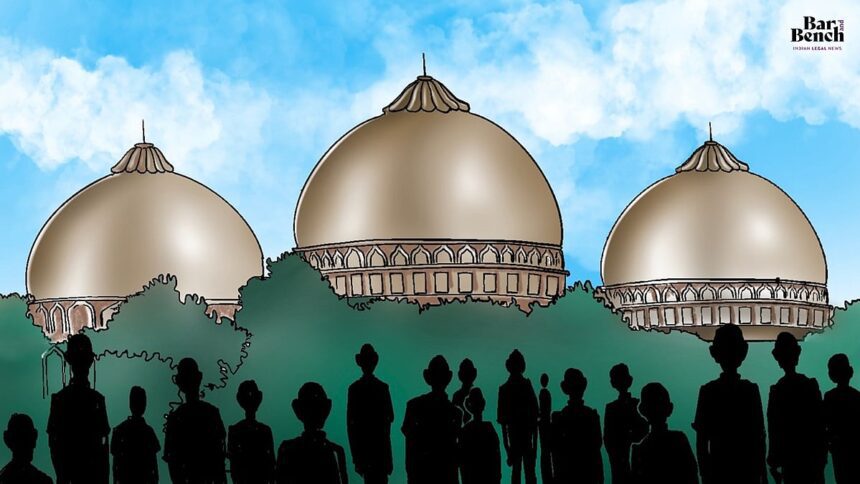
Another significant point raised in the ruling was the affirmation of free speech concerning sensitive issues like the Babri Masjid mosque in Ayodhya. The court stated that expressing the opinion that the mosque should not have been demolished does not equate to being anti-national. This stance is critical in a climate where vocal dissent by minorities is often met with suppression.
The court’s defense of freedom of expression challenges the narrative that dissent related to national issues, particularly when it involves religious sentiments, is inherently unpatriotic. This legal perspective underscores the importance of protecting diverse viewpoints in a democratic society, allowing for dialogue and debate rather than censorship.
Why It Matters
The significance of this ruling extends beyond the legal framework to broader societal implications. For the artificial intelligence and technology sectors, it raises questions about algorithmic bias and the handling of sensitive demographic data. With increasing scrutiny on how AI systems are trained and deployed, understanding dynamics of discrimination may influence the development of fair algorithms that avoid perpetuating societal biases.
Moreover, developers are encouraged to consider ethical implications in their applications, ensuring they do not unintentionally facilitate discrimination. Awareness and proactive measures can help create technology that supports inclusiveness and fosters social harmony, reflecting the principles emphasized in judicial rulings.
Frequently Asked Questions
What were the charges against the two Muslim petitioners?
The petitioners were subjected to externment orders based on FIRs that arose from protests, which included participation from multiple political parties.
What is the significance of the Babri Masjid issue in this context?
The Babri Masjid issue remains a contentious topic in India; the court’s ruling affirms that expressing views on its demolition does not constitute anti-national sentiment, reinforcing the need for free speech.
How does this ruling impact the treatment of minorities in India?
This ruling highlights the judiciary’s role in addressing potential discrimination, advocating for equal treatment under the law regardless of religious identity, which may influence future legal and societal standards.
What are the broader implications of selective legal enforcement?
Selective legal enforcement may lead to societal divisions, systemic injustice, and erosion of trust in legal institutions, necessitating a critical examination of law enforcement practices in India.