
Political Turmoil in Indian Education Amid Protests
In a recent display of political discord, BJP leaders welcomed former Union Education Minister Dharmendra Pradhan to the Parliament, amidst ongoing backlash over his resignation linked to the NEET paper-leak controversy. Opposition members, particularly from Congress, raised concerns about the ruling party’s priorities in education, suggesting that instead of making genuine reforms, the government celebrates figures associated with controversies.
Controversial Reception and Allegations of Misconduct
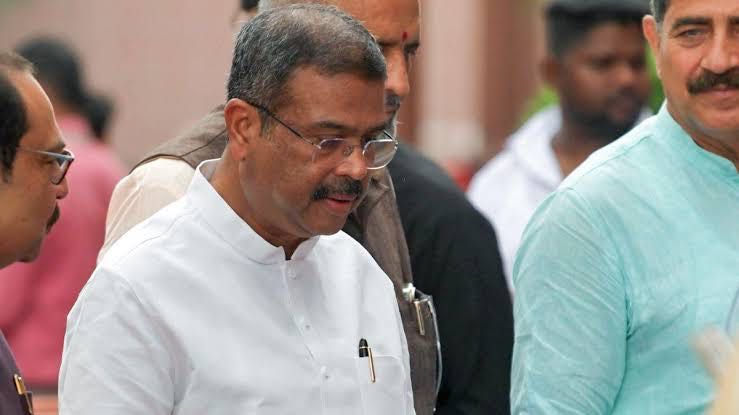
On Monday, Pradhan was greeted with traditional honors inside the Parliament complex, marked by chants of “Pradhan Zindabad.” This reception came despite widespread student protests that forced his resignation due to issues surrounding the National Eligibility cum Entrance Test (NEET) paper leak. Opposition MPs from Congress responded by chanting “Chor Chor, Paper Chor,” accusing the BJP of ignoring accountability in favor of celebrating a minister tied to a corruption scandal.
Congress MP Pawan Khera criticized the BJP’s actions, drawing parallels between Pradhan’s welcome and the earlier reception given to individuals convicted in the Bilkis Bano case. Khera labeled Pradhan as an “RSS hero” for his ties to the Rashtriya Swayamsevak Sangh and alleged that the public perception of him is shifting negatively. “People now know his true self,” Khera asserted, indicating a growing frustration with perceived governmental leniency toward controversial figures.
Government’s Education Reforms Come Under Fire
During the parliamentary session, Congress deputy leader Gaurav Gogoi expressed skepticism about the government’s commitment to education reform. He condemned the newly introduced Public Examinations (Prevention of Unfair Means) Amendment Bill, 2026, suggesting it merely serves as a cosmetic solution rather than addressing the underlying issues of exam integrity. The bill proposes severe penalties, including up to 10 years’ imprisonment and a ₹50 lakh fine for exam-related misconduct, but Gogoi indicated that previous promises of reform had yielded no tangible results. He criticized the recent announcement by Prime Minister Narendra Modi of a task force led by Infosys co-founder Nandan Nilekani, describing it as an inadequate response to a serious problem.
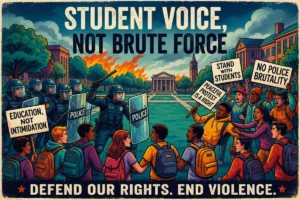
Further complicating matters, Gogoi condemned the police action against student protesters that occurred on July 20, positing that it was intended to protect Home Minister Amit Shah and instill fear in BJP-ruled regions. He reiterated demands for Shah to provide a clear statement regarding the government’s stance on student protests and exam-related grievances.
Equating Political Decisions with Social Justice
Congress MP Renuka Chowdhury reinforced the narrative of governmental hypocrisy, likening Pradhan’s elevation to celebrating a “guilty person” as a hero. This sentiment echoes existing concerns regarding the ruling party’s disregard for social justice and accountability. The contentious welcome of Pradhan amidst the protests speaks volumes about the current political landscape, where students and activists are often met with opposition rather than understanding.
Pradhan’s silence when reporters questioned him about the amendment bill and his resignation added an air of ambiguity. The Minister of State for the PMO, Jitendra Singh, tabled the amendment bill amid continuous opposition slogans, showcasing the prevailing strain between the ruling party and its critics.
Why It Matters
The ongoing political disputes surrounding Indian education reform signify a deeper rift in public trust and governance. With significant implications for students, especially in marginalized communities, the focus on punitive measures over comprehensive reforms raises critical questions about the government’s priorities. Decisions made within the education sector affect India’s socio-economic landscape, influencing access to opportunities and the overall educational ecosystem for future generations. The discourse surrounding the integrity of examinations and educational policies is paramount for fostering a transparent and equitable system.
Frequently Asked Questions
What prompted Dharmendra Pradhan’s resignation?
Dharmendra Pradhan resigned following widespread student protests regarding the NEET paper-leak controversy, which raised questions about his leadership in the education sector.
How did the opposition respond to Pradhan’s welcome in Parliament?
The opposition, particularly from Congress, greeted Pradhan’s welcome with chants accusing him of corruption, labeling him as connected to a scandal rather than deserving of celebration.
What criticisms did Congress leaders have regarding the new amendment bill?
Congress leaders criticized the Public Examinations (Prevention of Unfair Means) Amendment Bill, 2026, claiming it is a superficial response to exam integrity issues and questioning the government’s commitment to serious educational reforms.
What were the consequences of the protests on July 20?
The police action against student protesters on July 20 was criticized as an attempt to shield Home Minister Amit Shah and create a climate of fear among dissenters in BJP-ruled states.