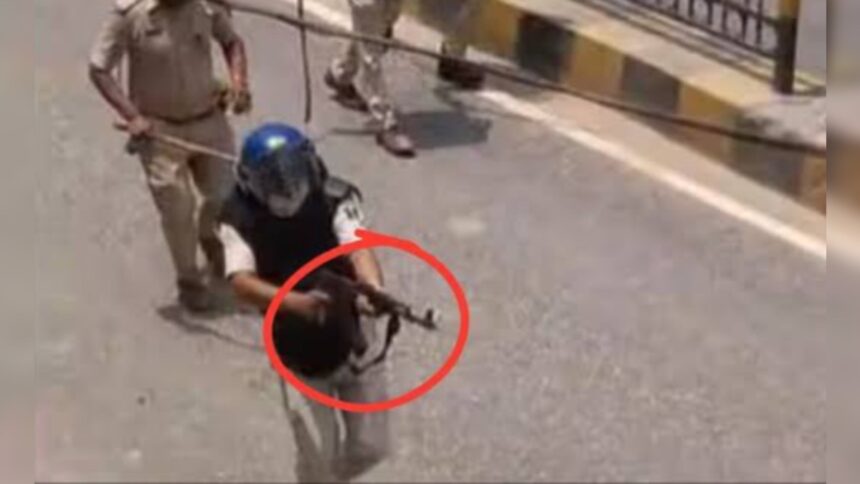

A recent incident in Siwan district, Bihar, has escalated tensions surrounding the ongoing student protests linked to the Bihar Bandh. A Bihar Police constable has been suspended following a viral video allegedly showing him firing an AK-47 rifle during the demonstrations, which were organized to protest against an alleged NEET paper leak and police actions against students. The incident underscores deepening concerns about law enforcement’s handling of civil protests and raises questions about political accountability.
Background of the Protests
The protests that took place on July 25 were fueled by student groups, particularly Left-wing organizations, advocating against the NEET (National Eligibility cum Entrance Test) paper leak. This demonstration is part of a broader climate of unrest among students, who feel marginalized by the state’s academic policies and police interventions. Although protests remained largely peaceful in several areas, violent clashes were reported in districts such as Patna, Siwan, and Saran, drawing attention to widespread discontent among the youth.
The Incident and Its Aftermath
Following the viral circulation of the video, Siwan Superintendent of Police Puran Kumar Jha confirmed the constable’s suspension and stated that departmental proceedings would be initiated. He noted that no injuries were reported from the firing, but emphasized that police were instructed not to use force during the demonstrations. This raises critical questions about operational guidelines provided to law enforcement to ensure the safety of citizens during public protests. The continued use of heavy weaponry like the AK-47 in such contexts is alarming and highlights potential overreach by local authorities.
Political Repercussions
The incident has ignited a political firestorm, particularly challenging the ruling Bharatiya Janata Party (BJP) and its leadership. Tejashwi Yadav, the Leader of Opposition, accused the police of recklessly firing on students and criticized Chief Minister Samrat Choudhary. Yadav’s remarks, which included allegations against Choudhary involving serious criminal accusations, are emblematic of a growing political friction. This episode could influence political sentiment in Bihar, particularly among student groups who may feel further alienated by their government’s response to civil dissent.
Why It Matters
The incident in Siwan is indicative of a larger trend regarding how state authorities manage dissent and public protests in India. The use of force, particularly against students, raises fundamental questions about democratic rights and the responsibilities of law enforcement. As social media amplifies incidents like these, the conversation around police accountability and human rights becomes increasingly significant. In a nation where the youth form a substantial portion of the population, how political leaders respond to their grievances can shape future electoral strategies and public policy.
Frequently Asked Questions
What were the reasons behind the Bihar Bandh protests?
The Bihar Bandh protests were organized in response to alleged irregularities related to the NEET paper leak and police actions against protesting students, highlighting a broader discontent among the youth regarding government policies.
What actions were taken against the Bihar Police constable?
The constable who purportedly fired an AK-47 during the protests was suspended, and departmental proceedings have begun to investigate the incident and its context.
How did political leaders respond to the incident?
Leader of Opposition Tejashwi Yadav condemned the police actions, accusing them of recklessly opening fire on students and questioning the Chief Minister’s character amid the accusations of police misconduct.
What implications does this incident have for students and civil rights?
This incident highlights ongoing tensions between state authorities and student groups, potentially impacting students’ willingness to protest and raising concerns about their safety and rights during demonstrations.