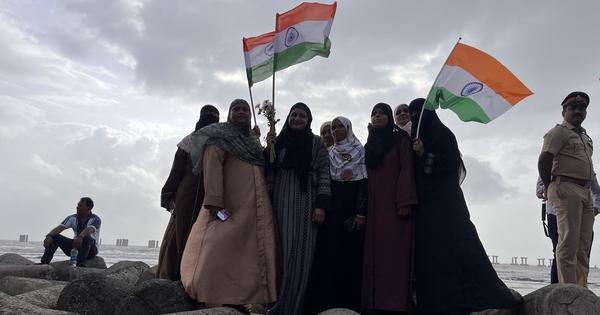

The rise of the Cockroach Janata Party movement has prompted a complex response from Indian Muslims, reflecting a broader struggle between maintaining community integrity and participating in democratic movements. While many Muslims engage fervently in protests and causes, established leaders often exhibit caution, shaped by a history of discrimination and marginalization. This highlights the tension between protecting community interests and advocating for a more inclusive democratic framework.
Historical Context of Discrimination
Indian Muslims have a long history of facing social exclusion and discrimination. With the ascendance of the Bharatiya Janata Party (BJP) and its affiliated organizations, including the Rashtriya Swayamsevak Sangh (RSS), the political landscape has increasingly marginalized Muslim voices. The BJP’s rise to power in 2014 has been characterized by policies that many perceive as anti-Muslim, fostering an environment of fear and apprehension.
The impact of communal violence, media demonization, and state surveillance has created a climate where many community leaders advocate for caution rather than active participation. The historical context of economic boycotts, where Muslim businesses have faced selective targeting, further compounds this issue. Such experiences have led to a skepticism towards new movements, creating a hesitancy to fully engage even when opportunities for democratic participation arise.
The Response of the Muslim Community
As the Cockroach Janata Party movement gains momentum, the responses from ordinary Muslims and community leaders have diverged significantly. While many individuals, often younger, have actively joined protests, organizing food distribution and logistics, community organizations have tended to adopt a more reserved stance. Reports have indicated that ordinary Muslims have provided essential services during demonstrations, reflecting a desire to contribute to the broader fight for justice and democratic accountability.
However, the apprehension felt by institutional leaders is not without reason. Given the past instances of state intimidation and targeted action against activists—such as the detention of Muhammad Junaid and his family—the fear of repercussions remains strong. This ongoing struggle illustrates the tension between individual action and collective organizational response, emphasizing a need for a balanced approach that encourages active participation while addressing legitimate concerns about safety and surveillance.
The Importance of Engaging in Democracy
The current landscape calls for a reevaluation of what it means to engage in democratic movements. Younger Muslims appear increasingly willing to shift the focus from ethnic or religious identity-based concerns to broader issues of justice and accountability. They recognize that defending democracy transcends specific community interests—it involves standing against state oppression and advocating for human rights universally.
This perspective indicates a significant shift in how communities perceive their role in governance and civil society. The once-dominant perspective that participation must first serve Muslim interests is gradually giving way to a more inclusive vision of democratic engagement. However, this transformation heavily relies on the ability of community leaders to adapt and encourage risk-taking among the next generation, preparing them to navigate a complex political landscape.
Why It Matters
The significance of these developments extends beyond immediate political outcomes; it encapsulates the ongoing struggle for representation and justice in Indian democracy. For policymakers, understanding these dynamics is crucial as it informs how democratic participation can be reinvigorated among marginalized communities. The engagement of Indian Muslims in broader movements has implications for the stability and future of pluralistic governance in India. Adaptation by community leaders could lead to more robust democratic engagement, fostering a landscape where diverse voices contribute to national dialogues.
Frequently Asked Questions
What is the Cockroach Janata Party movement?
The Cockroach Janata Party movement refers to a spontaneous mobilization aimed at challenging the political status quo in India, notably questioning the policies and practices of the BJP.
Why are many Muslim leaders hesitant to support new movements?
Many Muslim leaders exhibit caution due to historical experiences of discrimination, surveillance, and state intimidation, leading to a reluctance to fully engage with movements they perceive as potentially dangerous.
How can ordinary Muslims contribute to democratic movements?
Ordinary Muslims can contribute by participating in protests, offering logistical support, and engaging in conversations about social justice and democratic accountability beyond their community interests.
What is the significance of younger Muslims in these movements?
Younger Muslims are increasingly prioritizing issues of justice and democratic governance over specific communal interests, suggesting a shift in how marginalized communities can engage with national political discourse.