
Indian Education System Under Fire: A Political Analysis
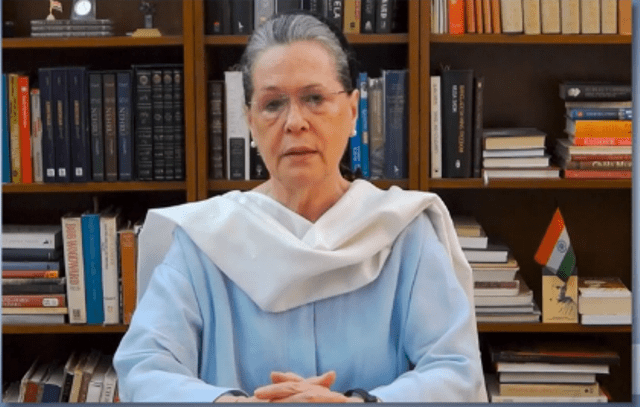
The Congress Party has sharply criticized the Modi government’s handling of the Indian educational landscape, accusing it of anti-student policies and violent suppression of dissent. In a recent article, Sonia Gandhi, Chairperson of the Congress Parliamentary Party, articulated concerns over accountability, educational reform, and the broader implications for India’s youth.
Student Protests: Voices of Discontent
In her article published in The Hindu, Gandhi highlighted the recent student protests demanding accountability from the government. She stated, “The Narendra Modi government has responded to their courage with cowardice and wanton cruelty.” This reflects a growing discontent among youth who feel marginalized, indicating a serious crisis within the education sector.
Gandhi emphasized that the government’s increasing use of violence to suppress peaceful protests is not unprecedented. Drawing parallels to past incidents, she recalled how police brutally responded to protests against the Citizenship (Amendment) Act in 2020 and the unacceptable treatment of women wrestlers. Such instances reveal a systemic pattern of oppression, which has led to widespread disillusionment among students and educators alike.
Education Policy Failures and Economic Implications
Sonia Gandhi pointed out critical failures in the Modi administration’s education policy. She claimed that the government has drastically reduced funding for public education—cutting school education spending by 50% and higher education by 33%—while prioritizing the establishment of private schools. This shift has made high-quality education increasingly inaccessible, forcing families to incur high expenses for coaching and preparation for competitive exams.
Gandhi further criticized the centralization of examination systems, stating that the introduction of the National Testing Agency (NTA) and centralized exams like the Common University Entrance Test (CUET) have led to widespread issues such as paper leaks. According to her assertions, there have been 152 paper leaks in educational institutions over the past 12 years, contributing to a crisis of trust in the examination system.
A Pattern of Marginalization and Discrimination
Beyond immediate educational concerns, Gandhi’s criticisms may also signal deeper societal issues, particularly affecting marginalized communities, including Indian Muslims. Many have reported feeling alienated under the current regime, which some accuse of pursuing a discriminatory agenda that undermines educational and economic opportunities for these groups.
Gandhi argued that the Modi government has increasingly labeled dissent as “anti-national,” a tactic that disproportionately affects marginalized communities and stifles diverse perspectives. This ongoing marginalization leads to a generational crisis for youth from these communities, exacerbating existing inequalities and hampering social cohesion in a country marked by its diversity.
Why It Matters
The controversy surrounding educational policies and government responses to protests highlights significant implications for India’s future. As the country faces mounting challenges in education, social inequality, and youth engagement, the need for effective governance becomes paramount. The lack of dialogue between the government and its citizens could further polarize society and lead to unrest, making it vital for policymakers to foster inclusivity and responsiveness. The rising tide of student protests serves as a critical moment for reflection on governance, accountability, and social justice within Indian democracy.
Frequently Asked Questions
What are the key issues raised by Sonia Gandhi regarding education in India?
Sonia Gandhi has highlighted issues such as reduced public funding for education, violence against student protests, and the centralization of examination systems leading to trust failures.
How has the Modi government responded to student protests?
According to Gandhi, the government has resorted to “cowardice and wanton cruelty,” employing violence and repression against peaceful protesters instead of engaging in constructive dialogue.
What impact does the privatization of education have on families in India?
The shift towards privatization has forced families to spend significantly on educational coaching, making it financially burdensome, particularly for those from marginalized communities.
Why are the student protests significant for India’s future?
The protests reflect a growing discontent among youth and raise crucial questions about governance, accountability, and social inclusion, essential for the development of a cohesive and prosperous society.