
U.S. Imposes New Sanctions Targeting Financial Networks of Hamas and Muslim Brotherhood
The United States has unveiled a new tranche of counterterrorism sanctions aimed at disrupting financial operations linked to Hamas and the Muslim Brotherhood. The sanctions are a continuation of Washington’s efforts to curtail funding sources that facilitate terrorist activities globally.
Details of the Sanctions
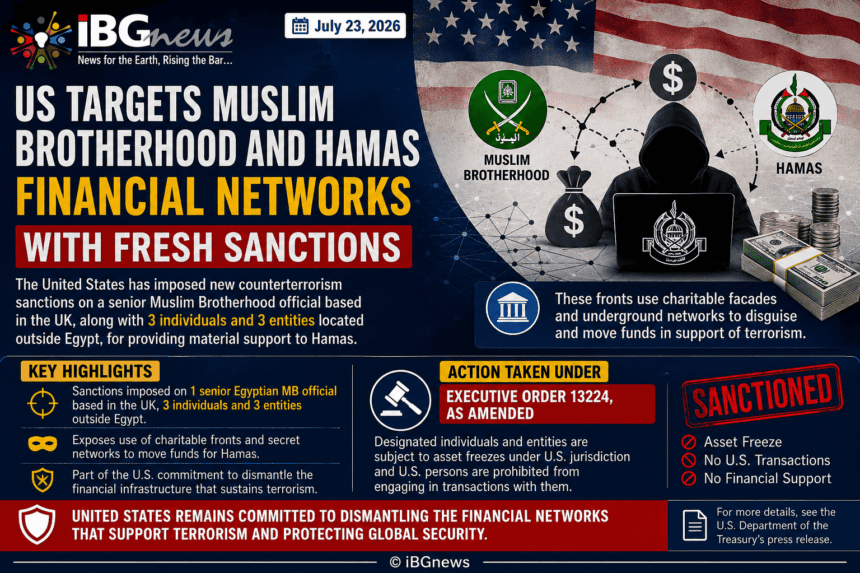
On July 23, 2026, U.S. State Department Spokesperson Thomas “Tommy” Pigott announced that the sanctions specifically target a senior member of the Egyptian Muslim Brotherhood operating from the United Kingdom. Alongside this individual, three more persons and three entities located outside Egypt have been implicated in providing financial and organizational support to Hamas.
The U.S. government claims that these organizations operated under charitable or humanitarian facades, utilizing complex international financial networks to transfer funds with the intent to bolster terrorist operations. This approach, according to U.S. officials, is designed to obscure both the funding’s origin and its final destination.
Legal Framework and Consequences
The sanctions are enforced under Executive Order 13224, which gives the U.S. government the authority to designate individuals and organizations involved in terrorist activities. Those designated face asset freezes in the U.S. jurisdiction, and American individuals or entities are prohibited from any form of transaction with them.
In a statement, the U.S. Department of State emphasized the importance of dismantling financial networks that support terrorism as part of its broader counterterrorism strategy. The latest sanctions aim to disrupt the infrastructures that allow Hamas and its affiliates to continue their operations.
Global Implications and Responses
This latest round of sanctions is likely to impact international relations, especially with countries that have significant ties to the Muslim Brotherhood or Hamas. Washington’s intensified focus on disrupting terrorism financing is expected to prompt discussions around cooperation and transparency in global financial transactions.
Moreover, additional details regarding these sanctions and the involved entities have been released by the U.S. Department of the Treasury, underlining a comprehensive approach to combating terrorism financing across borders. The move indicates a shift toward more stringent measures aimed at organizations cloaking their operations under humanitarian guises.
Why It Matters
The significance of these actions extends beyond immediate financial implications. They illustrate a continued commitment by the U.S. to combat terrorism financing through coordinated global efforts that require transparency from financial institutions. For developers in the AI and fintech sectors, this represents an opportunity to innovate solutions that could enhance financial tracing and compliance systems to aid in preventing future terrorist financing.
Furthermore, for users who engage with financial services worldwide, these sanctions signal the importance of being aware of the ethical ramifications of their financial institutions and transactions. As the spotlight on financial transparency grows, entities that can demonstrate compliance and responsible banking practices may gain a competitive edge in a conscientious marketplace.
Frequently Asked Questions
What are the implications of these new sanctions?
The sanctions are aimed at disrupting the financial infrastructure that supports organizations like Hamas and the Muslim Brotherhood, thus potentially reducing their operational capacity.
How are these sanctions enforced?
Sanctions are enforced under U.S. Executive Order 13224, which allows the government to freeze assets and prohibit transactions with designated individuals and entities.
What organizations are affected by these sanctions?
Currently, a senior Egyptian Muslim Brotherhood official and several individuals and organizations operating outside of Egypt have been targeted for their links to financial support for Hamas.
What role do humanitarian organizations play in these sanctions?
Some organizations accused of supporting Hamas purportedly operate under charitable or humanitarian identities while engaging in financial misconduct to facilitate terrorist activities.